Board-Certified Dermatologist & Injectable Specialist at Integrated Aesthetics | Nationally recognized expert in cosmetic dermatology, advanced facial balancing, neuromodulators, and non-surgical structural corrections.
Published: August 12, 2026 | Updated: August 12, 2026
Procedure at a Glance: Advanced Facial Balancing
Clinical Metric
Patient Case Specifications
Patient Profile
37-Year-Old Female | Resident from The Woodlands / Spring, TX Region
Primary Concerns
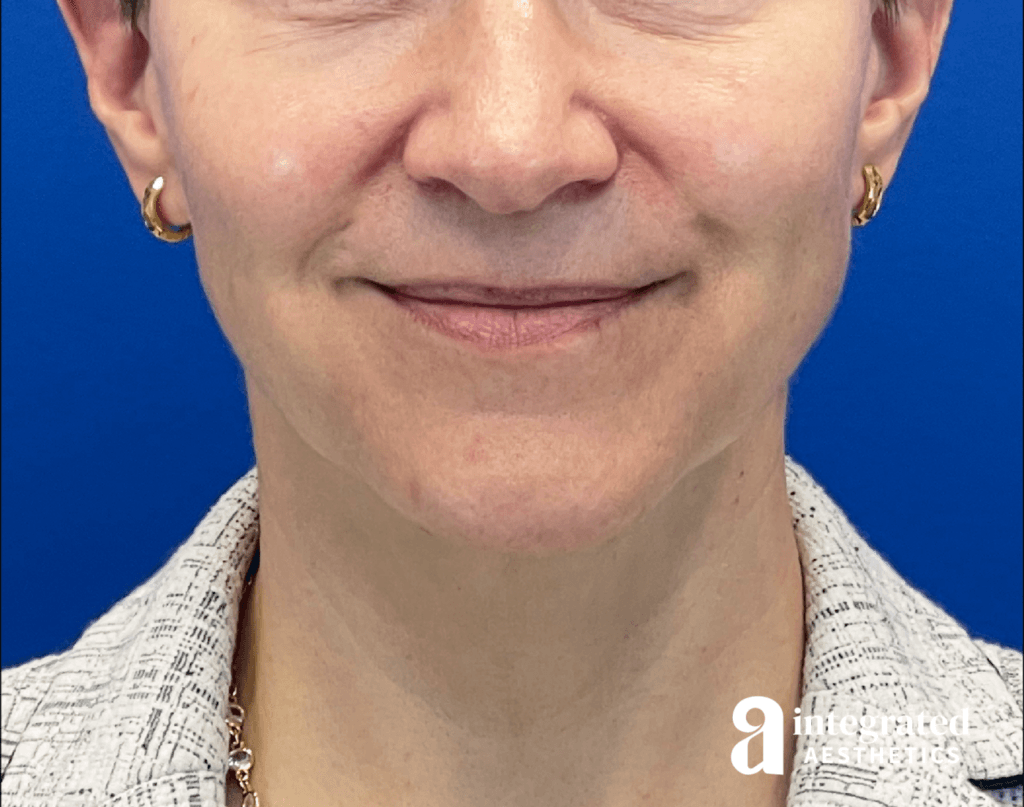
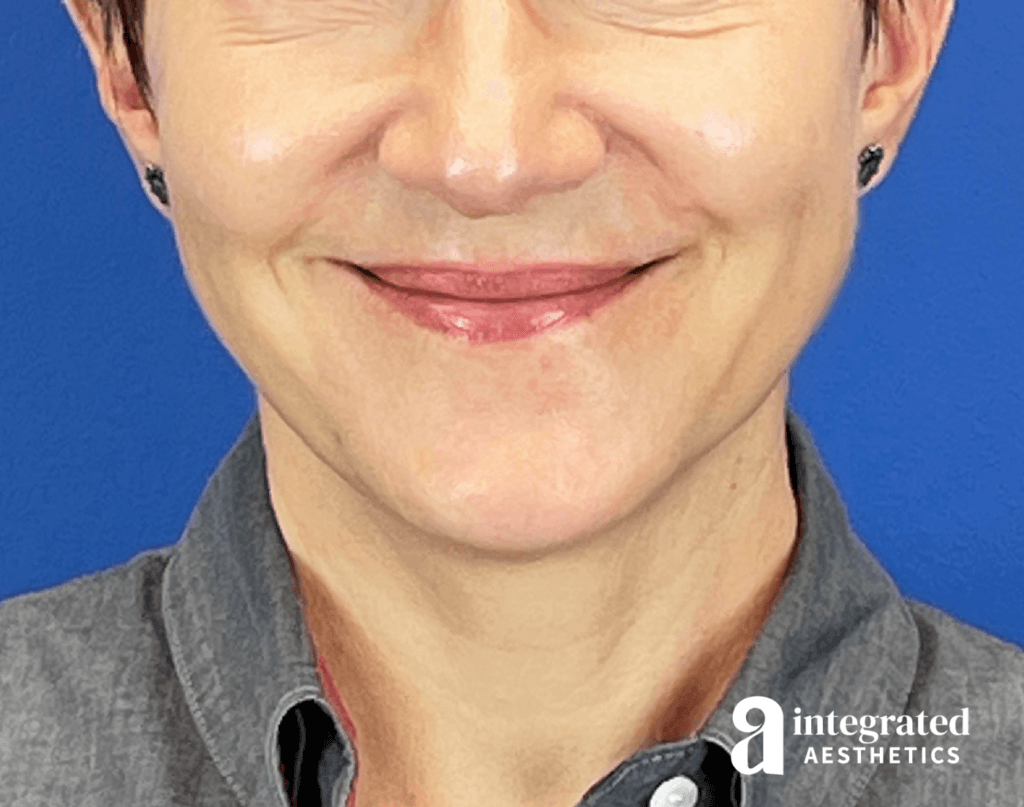
Visible asymmetry of the smile, characterized by uneven muscle pull and localized volume deficits that disrupted the natural balance of the lower face during movement and expression.
Dual-action using expertly-placed filler and Botox to weaken muscle contraction.
Downtime / Recovery
Minimal; minor localized swelling or pin-prick bruising resolving within 24 to 48 hours.
Result Timeline
Neuromodulator integration occurred over 7–14 days; final balanced, harmonious smile stabilization fully documented at 1 month post-treatment.
A beautifully balanced smile is one of the most defining features of facial harmony. However, many individuals naturally experience asymmetry in their lower face, often caused by a combination of uneven muscle pull when talking or smiling, and subtle structural volume deficits. When treating these concerns in my cosmetic dermatology practice, a generic approach simply won’t suffice. Achieving a natural, fluid result requires a deep understanding of facial anatomy and a customized treatment strategy.
At Integrated Aesthetics, we specialize in advanced facial balancing that honors your natural features while addressing structural irregularities. This clinical case study highlights our approach to correcting lower facial asymmetry for a 37-year-old female patient using a precision combination of Botox and dermal fillers to achieve a harmonious, beautifully aligned smile.
This 37-year-old female patient visited our practice in The Woodlands, TX, expressing concern over the noticeable asymmetry of her smile. She felt that one side of her mouth pulled higher and tighter than the other when she smiled, creating an unbalanced look that made her feel self-conscious in photos and daily interactions.
Upon a detailed clinical and dynamic movement evaluation, I identified two interconnected factors contributing to her concern:
Hyperactive Dynamic Muscular Pull: Levator muscles on the left pull harder than the right, creating a visibly crooked smile line during movement.
Static Volume Deficits: The asymmetry was further emphasized by subtle tissue deficiencies in the lower face and lip borders, which lacked the structural support needed to keep her features balanced at rest.
To fix this, we needed a multi-layered strategy that could simultaneously calm the overactive muscles and restore volume to the under-supported tissue layers.
The Corrective Strategy: Achieving Myomodulation
To deliver a comprehensive correction, I designed a tailored treatment plan using a combination of neuromodulators and dermal fillers. The goal with the filler was to achieve a long-lasting effect. I used a sophisticated technique where we placed filler on top of a strongly contracting muscle to weaken the contraction.
Anatomical Targeting and Clinical Execution
The non-surgical correction was performed in two precise phases during a single, comfortable in-office session:
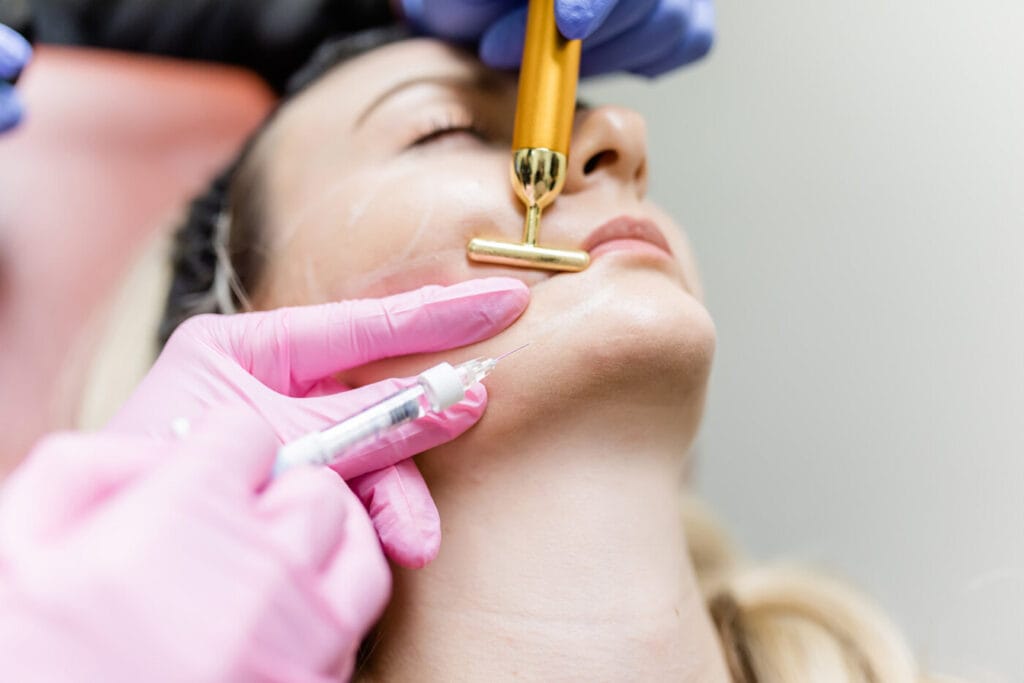
Phase 1: Precision Botox Injections: I administered micro-doses of Botox into the specific, overactive muscles responsible for the uneven pull. By gently relaxing these targeted muscle fibers, we softened the dominant tug on one side of her mouth, allowing both sides of her smile to lift evenly and symmetrically.
Phase 2: Strategic Dermal Filler Placement: Next, I utilized premium hyaluronic acid dermal fillers to address the underlying volume deficits. By carefully placing product into the areas lacking support, we built up the structural framework of the lower face and refined the contours around the lips. This provided the necessary support to keep her smile beautifully balanced, whether her face was at rest or in motion.
Clinical Documentation: Restoring Symmetrical Harmony at 1 Month
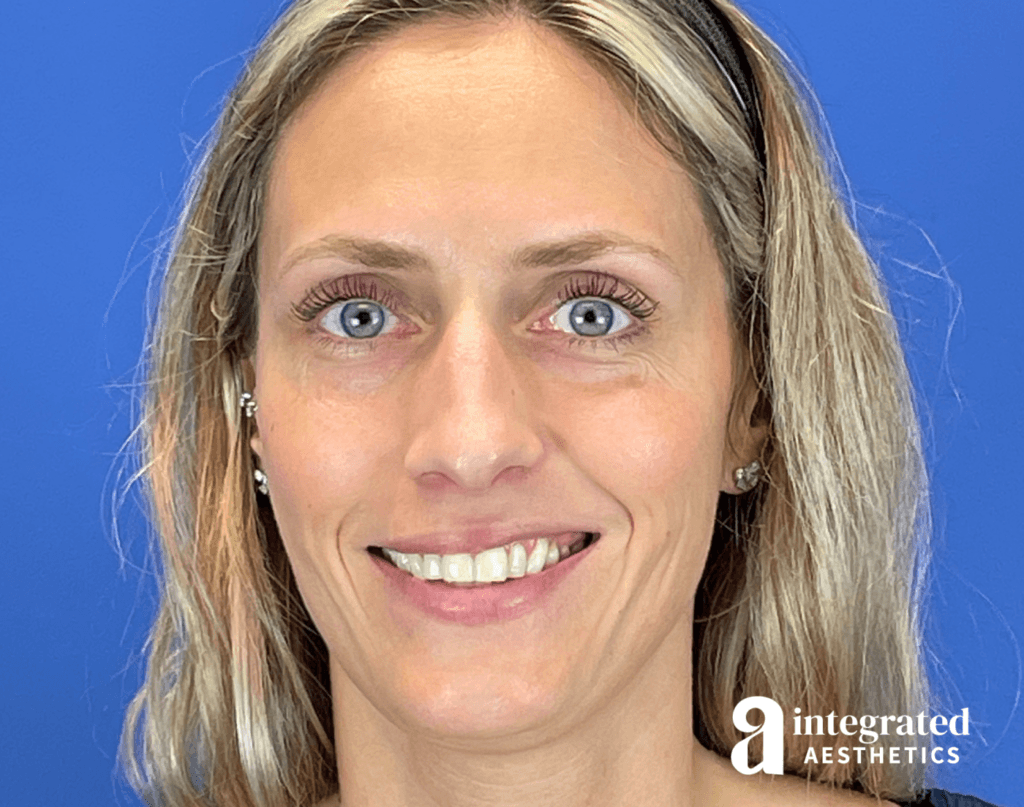
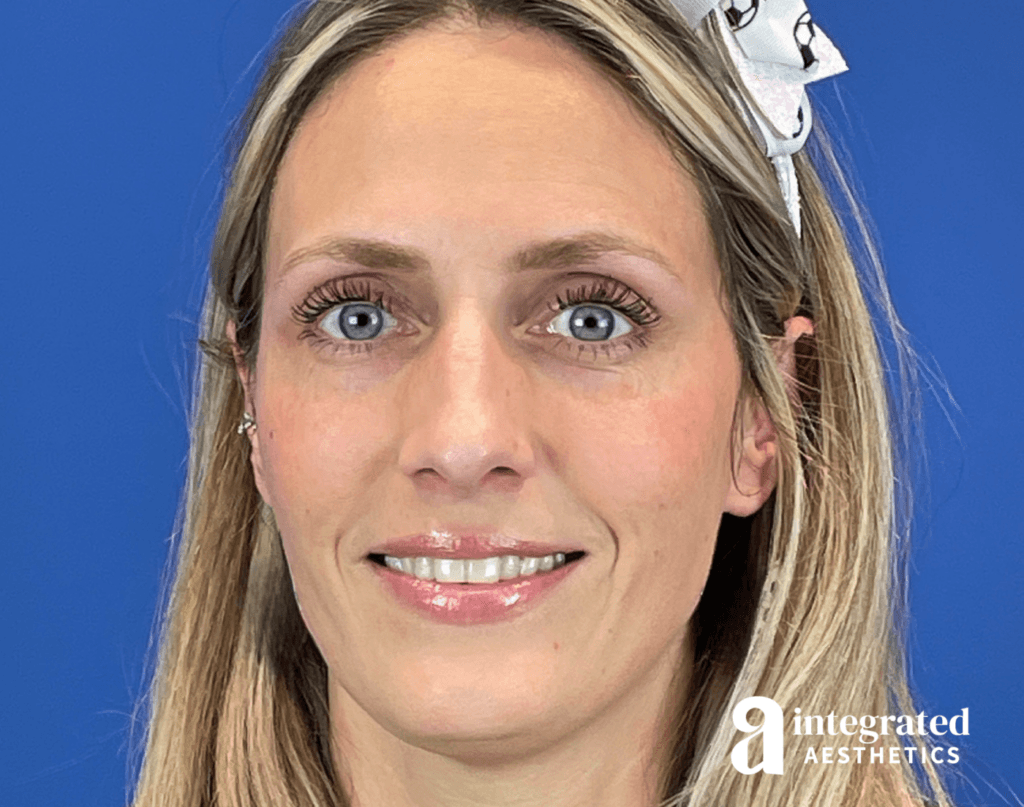
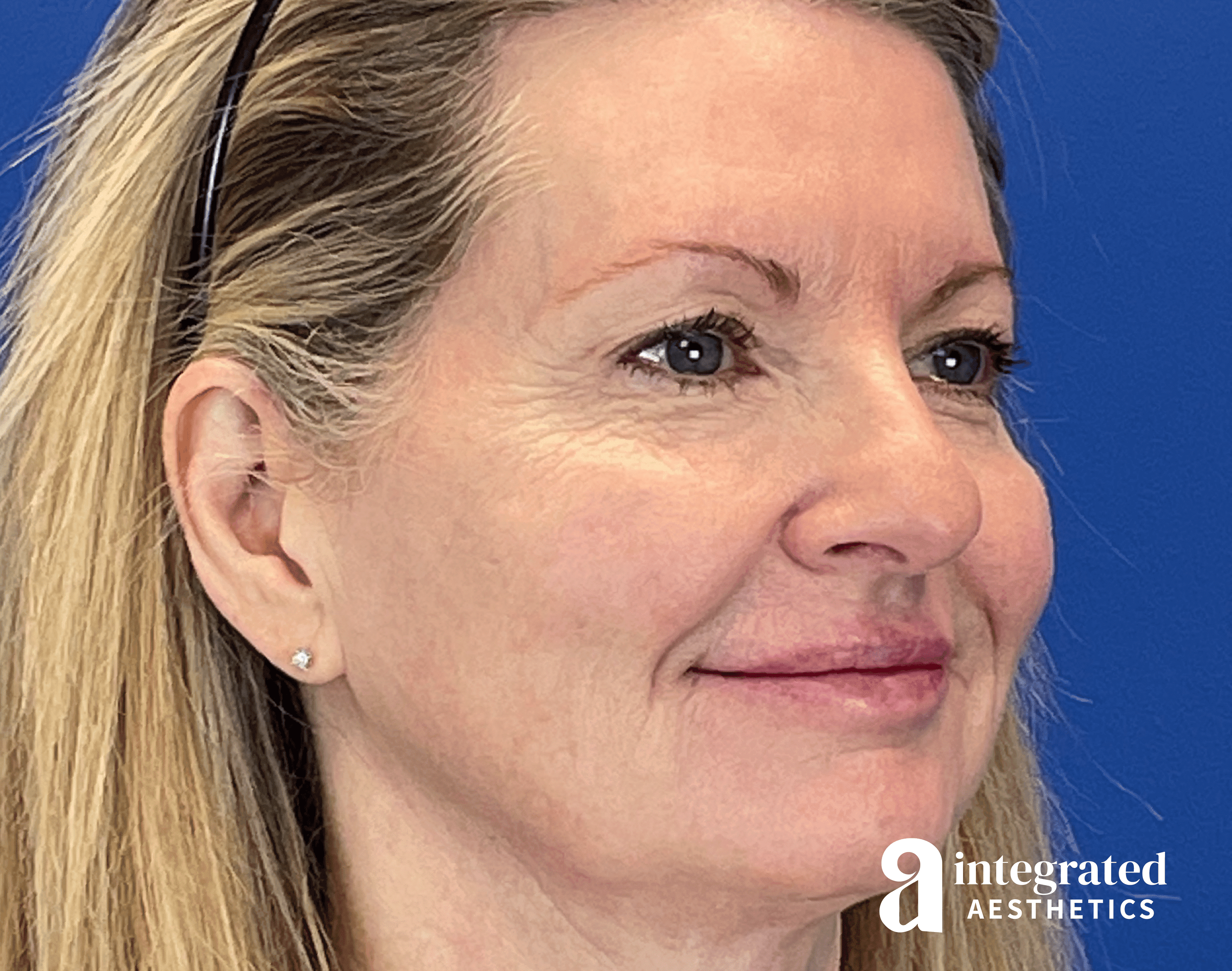
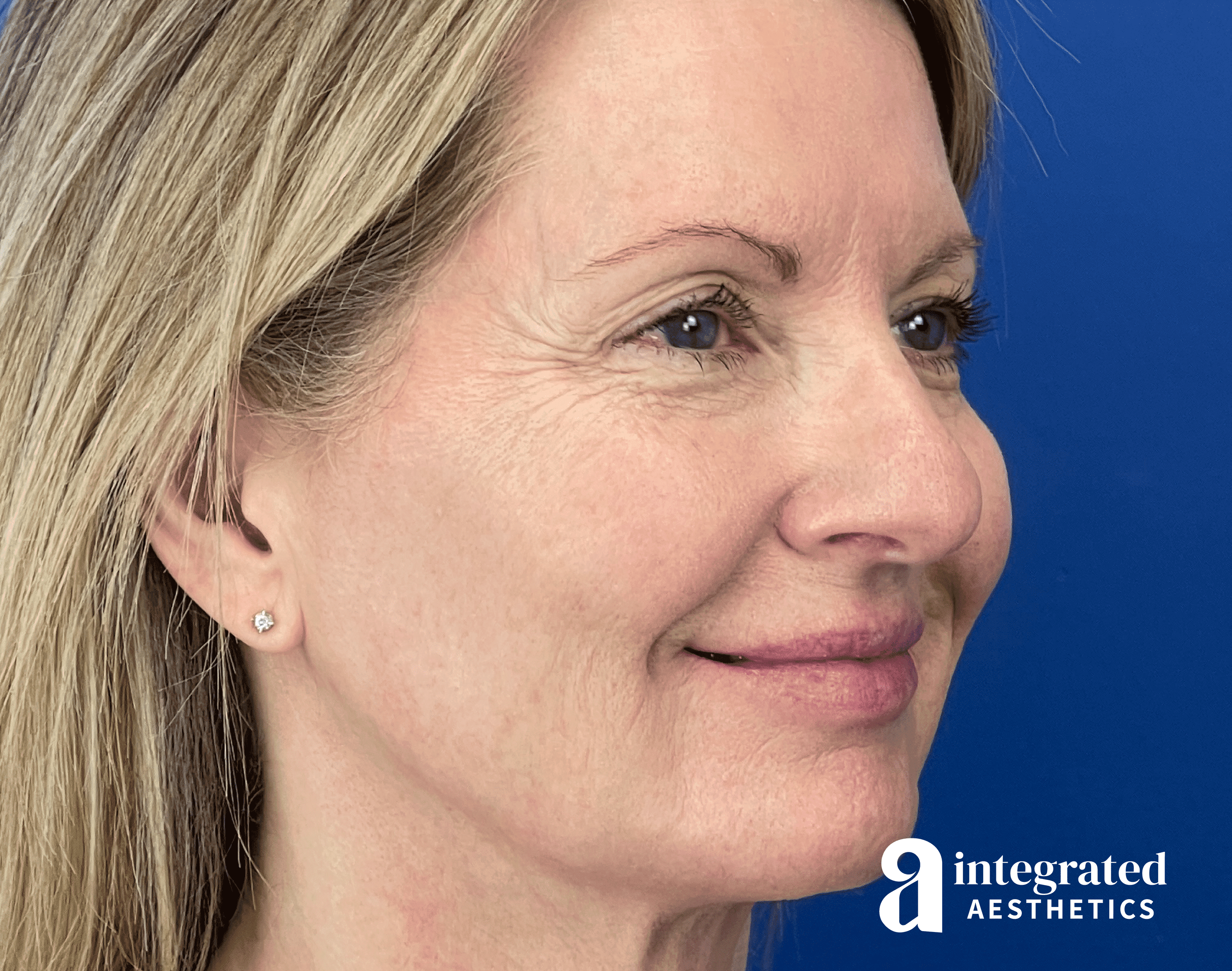
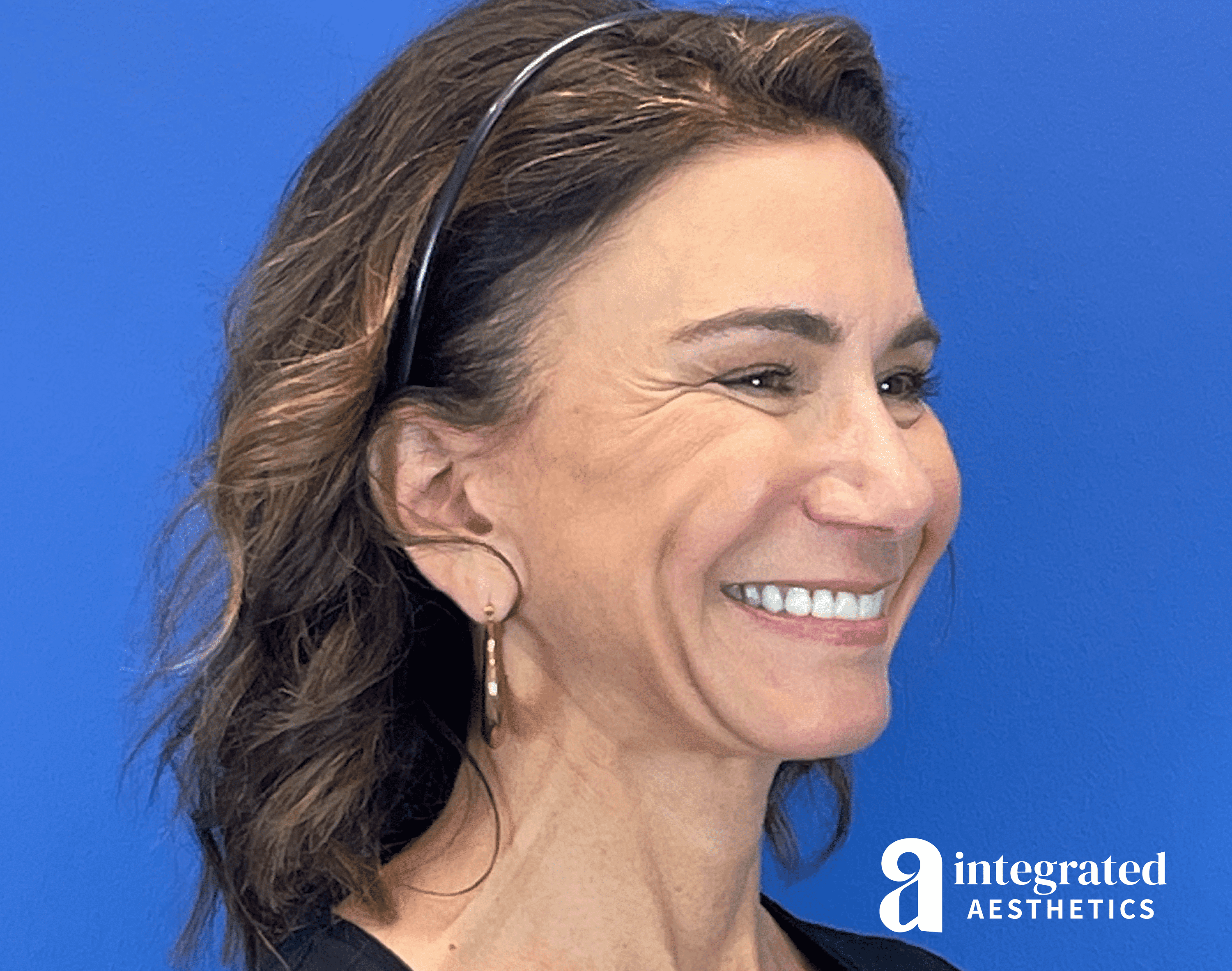
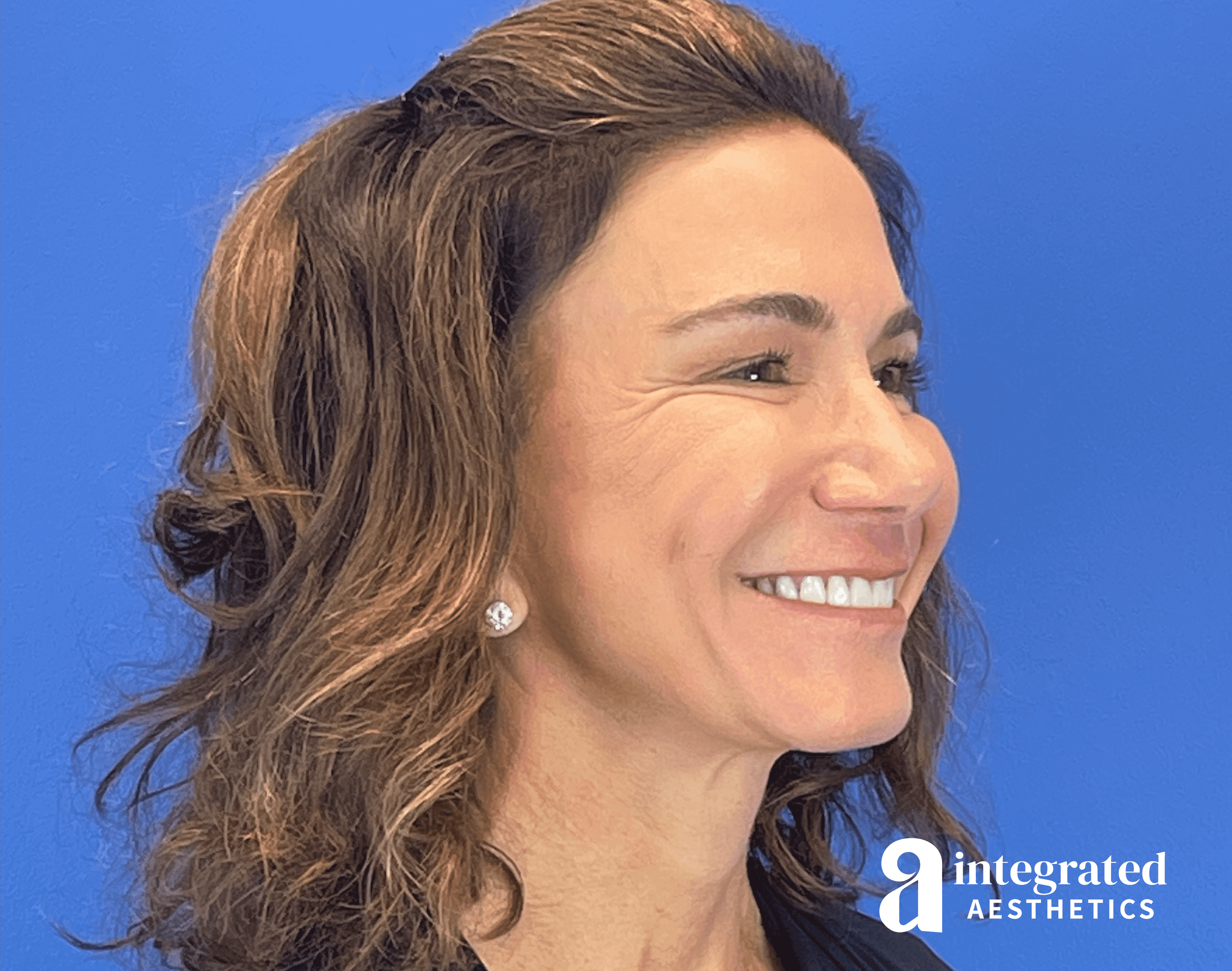
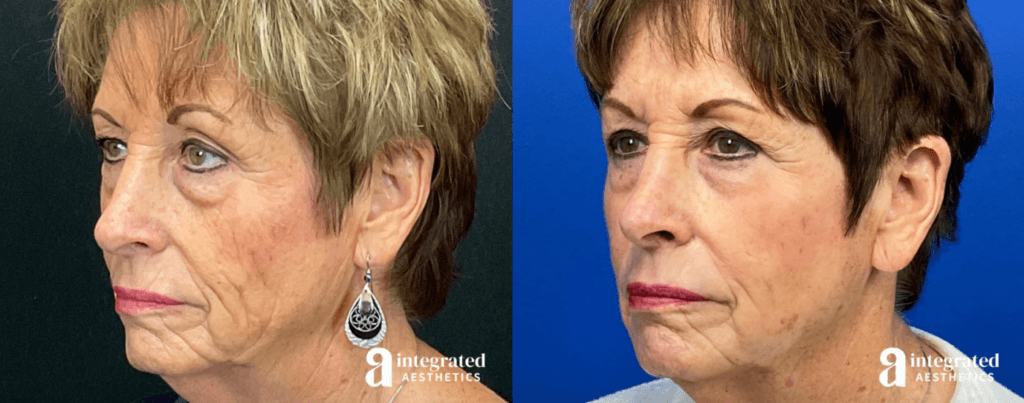
The true measure of a successful facial balancing treatment is a result that looks entirely natural, moves fluidly, and remains stable once the initial healing phase is complete. The clinical outcome below showcases the patient’s spectacular progress after the products had fully integrated into her tissues:
To view the official clinical progress photos showing this patient’s beautiful result at one month post-treatment, visit our live Integrated Aesthetics Case Gallery.
Ready to Balance Your Smile and Restore Facial Harmony?
If you are struggling with smile asymmetry or uneven facial contours, advanced non-surgical treatments can restore balance without the need for surgery or long recovery times. Trust your lower facial balancing to a Board-Certified Dermatologist who prioritizes precision and natural results. Learn more about our customizable injectables protocols:
What exactly is dermal disengagement in facial aesthetics?
Dermal disengagement is an advanced cosmetic injection technique used to treat deep lines, asymmetry, or tethered skin tissue. By using a specialized approach with dermal fillers and neuromodulators, we gently detach or cushion the skin layer from the strong, restrictive pull of the underlying facial muscles. This allows the skin surface to look smooth, relaxed, and perfectly balanced.
Will fixing my asymmetrical smile with Botox make my face feel numb or frozen?
Not at all. When treating smile asymmetry, we use highly targeted micro-doses of Botox to only soften the specific muscle fibers that are pulling too hard. Your surrounding facial muscles retain their normal movement, allowing you to speak, smile, and express yourself naturally—just with much better symmetry and balance.
How long will the results of this combination treatment last?
The results of a combination smile correction depend on how quickly your body naturally breaks down each product. Typically, the Botox components will need a touch-up every 3 to 4 months to maintain ideal muscle relaxation. The dermal fillers used to provide structural support are longer-lasting, often maintaining their beautiful volume and contour for 6 to 12 months or more.
Board-Certified Dermatologist & Fellowship-Trained Dermatopathologist at Integrated Aesthetics | Specializing in cosmetic dermatology, advanced injectables, and multi-modality anti-aging plans designed to restore natural volume and skin quality.
Procedure at a Glance
Clinical Metric
Patient Case Specifications
Patient Profile
53-Year-Old Female | Resident of Spring / The Woodlands, TX
Primary Concerns
Anti-aging optimization, primarily addressing midface and lower face volume loss alongside overall skin quality changes.
Long-term pan-facial volume restoration, deep tissue biostimulation, muscle relaxation, and non-invasive dermal collagen remodeling.
Clinical Strategy
Building a solid structural foundation, managing hyperactive lower face/neck movement, and continually enhancing skin elasticity over a 3-year timeline.
Downtime / Recovery
Minimal social downtime across all sessions. Mild temporary swelling, micro-bruising, and localized tenderness resolved quickly following individual injection intervals.
Result Profile
Natural, gradual facial rejuvenation that avoids an “over-filled” appearance while maintaining the patient’s unique facial identity.
When it comes to addressing facial volume loss and shifting skin quality, many women in their 50s share a common, vital goal: “I want to look refreshed, well-rested, and enhanced, but I still want to look exactly like myself.”
Achieving that seamless balance requires moving away from sudden, aggressive transformations and embracing a highly structured, long-term approach. At Integrated Aesthetics, serving The Woodlands and Spring areas, we approach aging not as a one-time procedure, but as an ongoing collaboration rooted deeply in facial anatomy and clinical expertise. By pacing treatments thoughtfully, we build natural support that ages gracefully alongside you.
To demonstrate what a dedicated, multi-year aesthetic plan looks like, let’s explore the real clinical timeline of a 53-year-old patient who achieved comprehensive rejuvenation under the care of board-certified dermatologist Dr. Melissa Chiang.
The Patient’s Clinical Journey: A 3-Year Rejuvenation Timeline
Rather than overfilling the face in a single session, Dr. Chiang developed a layered, conservative strategy using a sophisticated mix of neuromodulators, targeted dermal fillers, biostimulators, and energy-based skin-tightening.
Phase 1: Rebuilding the Foundation & Addressing Shadows (Year 1)
The initial phase focused on re-establishing structural support where structural fat pads naturally deplete over time.
Initial Session: Deep volume restoration began using Radiesse to lift the temples and cheeks, while softening the depth of the nasolabial folds. Hylenex was utilized to clear prior, displaced products under the eyes to ensure a clean, smooth baseline.
Follow-up Optimization: To safely correct tired-looking hollows, Dr. Chiang placed resilient, clean-moving RHA filler in the delicate under-eye tear troughs.
Mid-Year Refinements: The lips were gently enhanced using Restylane Silk, followed by a precise lip touch-up and refined tear trough balance with RHA 2 later in the year to preserve optimal facial symmetry.
After establishing a strong structural base, the clinical focus shifted toward skin quality, structural maintenance, and managing dynamic muscle movement.
Targeted Neuromodulation: Dr. Chiang administered Botox split strategically across the masseter muscles (to slim the lower face and relieve jaw tension), the chin (to prevent dimpling), and the platysmal bands (to smooth vertical neck lines).
Volume & Skin Quality Maintenance: Midface support was maintained with Restylane Lyft and Radiesse in the cheeks. Simultaneously, Restylane Refyne refreshed the lips, while Skinvive micro-droplet injections boosted deep intradermal moisture for a lasting, natural glow.
By the third year, the focus turned to advanced contouring, targeted neuromodulation, and non-surgical skin tightening to defend against gravity.
Collagen & Tissue Tightening: The patient underwent targeted non-invasive treatments using Sofwave across the face and neck. This next-generation ultrasound technology heats the mid-dermis to trigger a massive surge in new collagen and elastin production, tightening loose skin without downtime.
Depth Refinement: Ongoing Botox maintenance was performed alongside meticulous volume adjustments using Juvéderm Voluma in the temples, cheeks, and chin, and RHA 2 under the eyes.
The Contour Finish: To sharpen the lower profile, Juvéderm Volux was introduced to define the jawline. Finally, Sculptra (a poly-L-lactic acid biostimulator) was layered into the cheeks and chin alongside Voluma and RHA 2, allowing the patient’s own body to naturally rebuild its structural matrix over the coming months.
The Clinical Difference: Expertise in Practice
The success of a multi-year plan relies entirely on the injector’s grasp of micro-anatomy and product science. Dr. Melissa Chiang is a board-certified dermatologist and fellowship-trained dermatopathologist with over 20 years of medical experience. Her specialized focus on aesthetic dermatology allows her to select the specific weight, elasticity, and placement of each injectable product to ensure it moves naturally with your facial expressions, never looking stiff or artificial.
This case study highlights what can be achieved using a personalized, consistent combination of non-surgical treatments over time. To learn more about how our practice combines both advanced medical dermatology and plastic surgery to completely optimize your look, read our comprehensive guide to facial optimization at Integrated Aesthetics:
Why space treatments out over three years instead of doing it all at once?
Spacing treatments out allows us to work dynamically with your natural aging process. By building the structural foundation first, letting the tissues settle, and layering treatments like Sofwave and Sculptra to stimulate your own collagen, we achieve a soft, completely natural result that avoids the sudden, overfilled appearance often caused by aggressive single-session treatments.
What is the difference between fillers like Voluma and biostimulators like Sculptra?
Hyaluronic acid fillers like Juvéderm Voluma provide instant structural lifting and volume by holding moisture in specific targeted areas. Biostimulators like Sculptra work gradually by signaling your body to produce its own new collagen framework. Combining them provides both immediate refinement and long-term, natural structural support.
How do dermatology and plastic surgery collaborate at your practice?
At Integrated Aesthetics, Dr. Melissa Chiang (Cosmetic Dermatology) and Dr. Young Cho (Plastic Surgery) work hand-in-hand. This unique integration ensures that whether a patient is best suited for non-surgical tissue tightening, advanced injectable facial balancing, or a surgical facelift, they receive a comprehensive clinical assessment from the top regional experts in both fields.
Board-Certified Dermatologist & Injectable Specialist at Integrated Aesthetics | Expert in structural facial rejuvenation, advanced neuromodulators, and high-density dermal filler frameworks designed to restore native anatomy.
Published: July 15, 2026 | Updated: July 15, 2026
Procedure at a Glance
Clinical Metric
Patient Case Specifications
Patient Profile
60-Year-Old Female | Resident from The Woodlands / Spring, TX Area
Primary Concerns
Gradual softening and loss of definition along the lower face and jawline profile, accompanied by early structural jowling.
Treatment Modality
Juvéderm® Volux® XC
Corrective Approach
Deep structural supraperiosteal injections to mimic bone support, sculpting a sharp, defined mandibular angle.
Total Volume Injected
Targeted distribution along the mandibular border and pre-jowl sulcus to elongate and anchor the profile.
Downtime / Recovery
Minimal; typical 24 to 72 hours of mild localized tenderness or subtle swelling. Routine activities resumed immediately.
Result Timeline
Immediate structural improvement; final settled, balanced outcome documented at 2 weeks post-treatment.
As we navigate our 50s and 60s, one of the most common structural changes we notice in the mirror isn’t just surface-level fine lines, but a gradual softening of the lower face. The crisp, defined jawline that once anchored our profile begins to yield to natural volume loss, bone resorption, and shifting fat pads. For many women in The Woodlands and Spring, Texas, the immediate assumption is that a surgical facelift is the only viable remedy to restore this lost structure. However, advanced clinical frameworks are changing that narrative.
At Integrated Aesthetics, we focus on safe, precise outcomes. Utilizing high-density dermal fillers, I regularly achieve profound, structurally sound lower face rejuvenation right here in our North Houston practice—with zero downtime. This case review outlines our non-surgical approach to treating a 60-year-old female patient who wanted to address a softening, less-defined jawline.
Patient Presentation: Identifying Structural Volume Loss Along the Lower Face
This 60-year-old female patient came to our office in Spring, TX, seeking options to refine and sharpen the appearance of her jawline. Rather than pursuing invasive surgical alternatives, she favored a non-surgical solution that would yield natural, structurally anchored results. When assessing lower face sagging or a “soft” profile, a specialized dermatologist evaluates more than just the skin. We evaluate the skeletal support.
Upon physical and structural assessment, I identified key areas where aging had altered her lower facial contours:
Mandibular Angle Resorption: Natural bone loss at the back of the jaw had reduced the crisp angle beneath the ear, causing the soft tissue of the lower cheek to sag.
Pre-Jowl Sulcus Indentation: A clear deficiency or “dip” right before the jowl allowed tissue to pool, creating an uneven, heavy appearance along the chin line.
Loss of Profile Elongation: The lack of structural projection blurred the boundary between her neck and lower jaw.
To address these concerns, we needed to replace lost structural support deep within the tissue layers, rebuilding the mandibular framework from the bone up.
The Corrective Strategy: Structural Jawline Restoration with Volux® XC
To safely re-architect the jawline without modifying the patient’s unique natural features, I utilized Juvéderm® Volux® XC. This is the first FDA-approved hyaluronic acid filler explicitly formulated for the jawline. Unlike softer fillers used to plump the lips or smooth fine lines, Volux® XC possesses a remarkably high elastic modulus (G Prime), meaning it mimics the firm support of bone to hold its shape beautifully against gravity.
Anatomical Targeting and Clinical Execution
I placed the product precisely at key structural anchor points along the patient’s lower face framework:
The Mandibular Angle (Posterior Jawline): Injecting deep against the bone allowed me to re-create a sharp, defined corner that lifts the surrounding skin upward and backward.
The Pre-Jowl Sulcus: I meticulously filled the hollow areas along the straight jawline to smooth out the transition from the chin to the ear, effectively minimizing the appearance of early jowling.
The Clinical Perspective: “Restoring the jawline isn’t about simply adding volume; it’s an exercise in vectors and structural balance. As we age, we lose bone density in the jaw. If you place a soft filler here, or place it too superficially in the tissue, you risk widening the lower face rather than defining it. By using a high-density product like Volux® XC and placing it deep against the structural framework, we recreate the crisp angles of youth while maintaining complete natural balance.” — Dr. Melissa Chiang
Clinical Documentation: Natural Outlines at Two Weeks
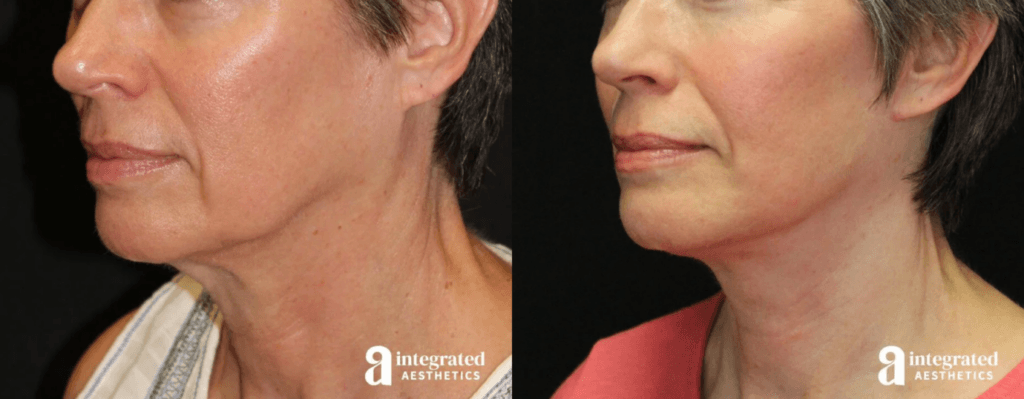
The success of a non-surgical lower face restoration depends on immediate structural integration and clean profiles during natural facial movement. The clinical evidence below showcases the patient’s appearance after initial healing:
To view the official clinical progress photos showing this patient’s results at two weeks post-treatment, visit our live Integrated Aesthetics Case Gallery.
This case study shows how targeted structural fillers can redefine your lower face without surgery. If you want to learn more about our advanced liquid lift protocols or explore tailored injectables with our board-certified specialists, read our comprehensive guide:
What makes jawline fillers different from cheek or lip fillers?
Jawline restoration requires a filler with a high elastic modulus (G Prime), such as Juvéderm® Volux® XC. This firm product texture is designed to mimic structural bone support and withstand muscle movement along the lower face, whereas softer fillers are intended to yield soft volume in flexible areas like the lips.
How long do structural jawline filler results last?
Because of its dense cross-linked formulation and placement deep along the bone, structural jawline fillers are highly durable. Patients in our practice typically enjoy their refined, contoured lower profiles for up to 12 to 18 months before a maintenance touch-up is recommended.
Will jawline fillers make my face look wider or heavier?
When performed by an expert injector who understands proper anatomical vectors, jawline filler will not make your face look heavy. By placing the product precisely at deep anchor points, the treatment elongates the profile and lifts saggy skin inward and backward, creating a slimmer, more defined silhouette.
Botox: 96 Units total (8 in forehead, 8 in glabella, 22 in crow’s feet, 15 per side across platysmal bands, 12 in chin, 16 in masseters).
Downtime / Recovery
Minimal social downtime. Patient experienced mild localized swelling and light point-tenderness which resolved entirely within 24 hours.
Result Profile
Complete full-face rejuvenation documented at 1-month post-injection.
When considering neuromodulator treatments like Botox® Cosmetic, many patients initially think of treating a single, isolated zone, like the frown lines between the brows or crow’s feet around the eyes. However, as facial anatomy matures, the wrinkles we see on the surface are rarely isolated. They are the result of a dynamic interplay between competing muscle groups across the entire face.
In this clinical case study, we review the full-face rejuvenation of a 50-year-old female patient at our practice serving The Woodlands and Spring, Texas. By taking a comprehensive, pan-facial approach rather than treating localized lines in isolation, we achieved a naturally refreshed, balanced, and elegant outcome.
Patient Presentation and Clinical Objectives
Our patient, a vibrant 50-year-old resident of The Woodlands, presented concerns regarding a tired, slightly heavy facial appearance and deepening static and dynamic lines. During her comprehensive clinical consultation, we shifted the focus away from “chasing individual wrinkles” to assessing her global facial dynamics.
As a board-certified dermatologist, my objective with full-face neuromodulation is always balanced. The upper facial muscles pull upward, while the lower facial muscles pull downward. If you only treat the upper face, the downward pull of the lower face can become more pronounced, leading to an unnatural or heavy look. To achieve true, youthful harmony, we mapped a precise, multi-zone treatment plan utilizing a total of 96 units of Botox.
The Anatomical Mapping: Why 96 Units?
A total of 96 units may sound substantial to a patient new to neuromodulators, but when distributed strategically across six distinct anatomical zones, it delivers a soft, natural modulation rather than a “frozen” appearance.
Here is how the dosage was meticulously allocated to address her specific structural anatomy:
The Upper Face (Forehead & Glabella): We targeted the frontalis muscle (which causes horizontal forehead lines) and the glabellar complex (the “11 lines” between the brows). Treating these in tandem ensures the brows remain properly positioned, open, and expressive.
The Lateral Eyes (Crow’s Feet): Precise micro-dosing around the orbicularis oculi muscles softened the fine lines that appear with smiling, without flattening her natural expressions.
The Lower Face (Masseters & Mentalis): Injecting the masseter (jaw) muscles helps relax involuntary clenching while subtly narrowing the lower facial third for a softer jawline silhouette. We also treated the mentalis (chin) to eliminate “peau d’orange” (dimpled chin puckering) and allow the chin to relax downward and forward.
The Platysmal Bands (The Neck): The platysma muscle bands in the neck constantly pull down on the lower face. By micro-injecting these bands, we relaxed the downward tension, providing a subtle, non-surgical lift along the jawline.
The success of a global neuromodulator treatment relies entirely on creating natural, balanced results that respect your underlying anatomy. This patient’s transformation showcases how a customized, pan-facial Botox strategy can beautifully relax downward muscle pull, restore a refreshed structure to the jawline and neck, and deliver an elegant outcome that delays the need for more invasive surgical interventions.
“As our skin matures and loses density, it can no longer resist muscle movement as effectively, causing everyday expressions to look overly amplified or strained on the surface. By strategically relaxing these overactive muscle groups with Botox, we restore a soft, youthful tissue balance. This takes the strain off the face, allowing your expressions to actually look much lighter, softer, and more genuine.” — Dr. Melissa Chiang, MD, JD, FAAD
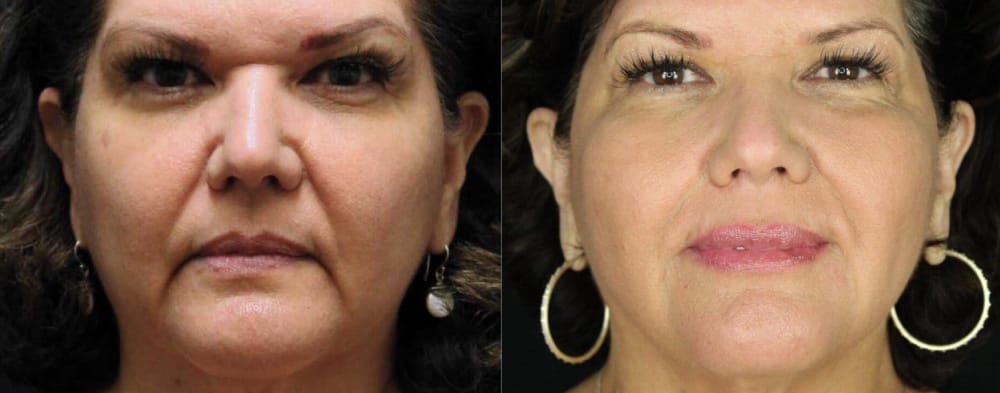
To view the un-retouched clinical photos showing this patient’s results at two weeks post-treatment, visit our live Integrated Aesthetics Case Gallery.
This case study highlights the remarkable structural balance that can be achieved using advanced non-surgical injectables alone. To learn more about how our practice combines both surgical mastery and sophisticated dermatological treatments to completely refresh your look, read our comprehensive guide to global facial optimization:
Patient Experience, Recovery, and One-Month Outcomes
The entire injection session was completed in under 20 minutes. Because we use ultra-fine medical-grade needles and precise anatomical targeting, discomfort was kept to an absolute minimum.
The patient experienced mild, pinpoint swelling at the injection sites and light tenderness, which is entirely normal. These localized reactions resolved completely within 24 hours, allowing her to return to her daily routine in The Woodlands immediately without any social downtime.
At her one-month follow-up appointment, the full structural benefits of the 96-unit treatment were beautifully apparent:
The forehead and brow areas appeared smooth, well-rested, and entirely natural.
The softening of the masseters and platysmal neck bands gave her jawline a cleaner, more defined, and lifted appearance.
The texture of the chin was smooth, creating a balanced profile.
Why a Board-Certified Dermatologist’s Expertise Matters
Full-face neuromodulation requires an advanced, intimate understanding of how facial muscles interact. An experienced injector knows that changing the tension in one muscle group directly impacts how adjacent muscles behave. Choosing a board-certified specialist ensures your treatment is customized strictly to your unique anatomy, prioritizing both your medical safety and a beautiful, natural aesthetic.
Frequently Asked Questions
How do I know if I need full-face Botox instead of just treating one area?
If you feel your lower face is pulling downward or that treating just your forehead makes your brows feel heavy, you are likely an ideal candidate for a full-face approach. Your facial muscles function as an interconnected ecosystem, with the upper face pulling up and the lower face pulling down. Treating them in tandem balances these competing forces to achieve a harmonious, natural lift that single-zone treatments cannot match.
Is 96 units of Botox a safe or typical dose for a single treatment?
Yes. When distributed across multiple distinct zones—including the upper face, jaw, chin, and neck—96 units is a safe and highly effective dosage for global rejuvenation. This higher unit count does not cause a “frozen” look because the product is precisely micro-dosed across several muscle groups to soften lines while beautifully preserving your natural expressions.
What is recovery like, and can I return to my routine immediately?
There is virtually no social downtime required. Any minor, localized swelling or point-tenderness at the injection sites typically resolves completely within 2 to 24 hours, allowing you to return to your daily routine in The Woodlands or Spring immediately. We simply advise avoiding strenuous exercise, direct heat (like saunas), and lying flat for 4 hours post-treatment so the product settles perfectly.
Board-Certified Dermatologist & Injectable Revision Specialist at Integrated Aesthetics | Nationally recognized expert in managing aesthetic filler complications, filler migration, and ultrasound-guided corrective treatments.
Published: June 2, 2026 | Updated: June 2, 2026
Procedure at a Glance
Clinical Metric
Patient Case Specifications
Patient Profile
38-Year-Old Male | Professional Resident
Primary Concerns
Asymmetry and distortion of the midface following prior dermal filler injections at an outside clinic. Notable puffiness under the eyes, bulkiness in the nasolabial folds, and product migration around the right side of the mouth.
Treatment Modality
Hylenex® (Recombinant Human Hyaluronidase)
Corrective Approach
Precision target-dissolving to break down cross-linked hyaluronic acid while protecting native tissue.
Total Volume Injected
4 Vials of Hylenex distributed precisely across the infraorbital, nasolabial, and right periorial zones.
Downtime / Recovery
24 to 72 hours of mild localized swelling; slight bruising quickly resolved.
Result Timeline
Product dissolution began immediately; final stable, natural facial structure documented at 1 year post-treatment.
The rising popularity of dermal fillers has led to a corresponding increase in aesthetic complications, product migration, and overfilled tissues. When filler is injected using improper techniques, incorrect product selections, or excessive volumes, it can result in a distorted, puffy appearance. In my cosmetic dermatology practice, I frequently treat patients who need previous filler treatments corrected to restore their natural appearance.
At Integrated Aesthetics, we focus on safe, precise outcomes. This case review outlines my corrective approach using Hylenex to treat a 36-year-old male patient who experienced filler migration and facial asymmetry from a prior treatment done elsewhere.
“Dissolving filler with Hylenex is inherently less precise than placing it. While we increasingly use ultrasound to guide us, filler often disperses into tiny areas that can’t all be targeted. Because of this, my approach is focused on your specific goals rather than a blanket removal. Sometimes, leaving some structural filler behind is the best choice to keep you looking balanced and refreshed.”
Patient Presentation: Identifying Migrated Filler and Facial Distortion
This 36-year-old male patient came to our office feeling self-conscious about the appearance of his midface after receiving hyaluronic acid injections at an outside medical spa. Rather than looking refreshed, his face appeared unnaturally full, puffy, and asymmetrical, particularly when he smiled.
Upon physical and structural assessment, I identified several clear areas of product migration and improper placement:
Infraorbital Puffiness: The filler placed under his eyes was too superficial and had migrated upward, causing persistent swelling and an unnatural look.
Nasolabial Over-Correction: Excessive filler in the nasolabial folds created a heavy look that flattened his natural expressions.
Right Perioral Asymmetry: Migrated filler around the right corner of his mouth caused a visible lump that disrupted his natural facial symmetry.
To fix these concerns, we needed to completely dissolve the misplaced filler and return his facial anatomy to its natural baseline.
The Corrective Strategy: Precision Injections of Hyaluronidase
To safely dissolve the misplaced material without compromising the patient’s native soft tissues, I used Hylenex (hyaluronidase), a specialized enzyme that breaks down hyaluronic acid bonds. Corrective dermatology requires a highly precise approach to target only the problematic areas while preserving proper facial symmetry.
I administered four vials of Hylenex across the affected areas of the patient’s midface:
Under-Eye Area (Infraorbital Hollows): I carefully injected micro-doses of the enzyme beneath the lower eyelids to dissolve the migrated filler, reducing fluid retention and restoring a smooth transition between his lower eyelid and cheek.
Nasolabial Folds & Right Side of Mouth: I targeted the heavy pockets of filler along his smile lines and around the right side of his mouth to remove excess bulk and restore clean, masculine contours during facial movement.
The success of a filler revision procedure depends on achieving long-term stability and natural symmetry. The clinical evidence below showcases the patient’s appearance after complete tissue healing:
To view the official clinical progress photos showing this patient’s results at one year post-treatment, visit our live Integrated Aesthetics Case Gallery.
This case study shows how we can safely reverse misplaced dermal fillers. If you are experiencing lumps, asymmetry, or swelling from a previous injection treatment, learn more about our advanced correction protocols:
Will dissolving filler remove my natural hyaluronic acid permanently?
Hylenex specifically targets the cross-linked hyaluronic acid found in synthetic dermal fillers. While it may temporarily break down a small amount of your native hyaluronic acid, your body naturally replenishes its own stores within 24 to 48 hours, leaving your natural tissue structure unharmed.
How soon can I receive new fillers after having them dissolved?
It is clinically recommended to wait at least 14 days after a hyaluronidase treatment before introducing new dermal filler. This allows all swelling to fully resolve and ensures the enzyme has completely cleared from the tissue so it does not dissolve the new product.
How do you ensure you don’t dissolve too much filler?
We use precise dosing and targeted injection techniques to focus the enzyme only on areas with migrated or uneven product. In complex cases, we also use high-resolution facial ultrasound to view the filler within the skin layers before injecting, ensuring a safe and controlled treatment.
Lip filler remains one of the most highly requested aesthetic treatments in our community, and for good reason. When expertly administered, hyaluronic acid fillers can restore lost volume, soften vertical lines, and create a beautifully hydrated appearance.
However, achieving a truly refined, natural result requires evaluating more than just the lips.
In my cosmetic dermatology practice, I often meet patients at our Spring and The Woodlands offices who feel their previous lip treatments look slightly “off” or disproportionate. The reason is rarely the volume or the product used; rather, it is because the lips were treated in complete isolation. The most elegant, long-lasting outcomes occur when lip augmentation is performed as part of a comprehensive full-face rejuvenation strategy, which is a total-face assessment designed to bring all of your features into perfect structural harmony.
Full-face rejuvenation is the clinical approach of evaluating the face as a unified ecosystem rather than focusing on a single, isolated feature. Instead of simply plumping a lip, we evaluate the structural relationships, ratios, and transitions between different anatomical zones to enhance your natural facial contours.
Every face is defined by distinct structural relationships:
The projection of the lips in proportion to the chin
The projection of the chin in relation to the jawline
The crispness of the jawline in balance with the midface and cheeks
The foundational support the midface provides to the lower third of the face
When one area lacks structural projection or has lost deep volume due to the natural aging process, an adjacent feature can appear disproportionate. This is why adding volume to the lips alone may not always create the balanced look you desire.
Why Isolated Lip Filler Can Look Unnatural
Many patients visit our practice in The Woodlands and the Spring area requesting a specific lip shape or volume based on an idealized inspiration photo. While adding volume is straightforward, the final appearance of your lips is heavily influenced by your surrounding facial skeletal structure and deep fat pads.
Consider how nearby anatomical features affect the mouth:
A Recessed Chin: If the lower jaw or chin sits further back than ideal, adding volume to the lips can cause them to look overly projected or “ducky,” even with minimal filler. Clinical studies in injectable facial harmony demonstrate that balancing chin projection alongside lip volume is essential to maintaining a natural profile line (Bertossi et al., 2018).
Loss of Midface Volume: As the cheeks lose structural fat over time, the lower face loses its structural lift. This can cause the corners of the mouth to turn down, making a filled lip appear heavy or sad.
An Under-Defined Jawline: Without a crisp jawline to frame the lower face, a highly defined lip can draw too much attention to the mouth. Recent 3D imaging studies show that building proper structural support in the jaw and chin area significantly improves how the soft tissue sits across the entire lower face (Alcantara, 2025).
In these instances, continuing to add dermal filler to the lips will not correct the underlying visual imbalance. Instead, it can accentuate it and potentially lead to product migration.
See our full-face rejuvenation process in action. Watch Dr. Melissa Chiang perform a comprehensive assessment and treatment at our Spring, TX office.
Lip Injections as a Supporting Feature in Contour Enhancement
When designing a personalized treatment plan for our patients in The Woodlands and Spring, our goal is to enhance the lips within the context of your unique facial framework. To achieve this safely and predictably, we utilize advanced structural injection methodologies like the MD Codes™ system.
Developed by leading plastic surgeons and dermatologists, the MD Codes™ utilize precise anatomical subunits to address the face holistically, focusing on deep structural support to lift the tissues rather than just filling a single fold (de Maio, 2020). A harmonized treatment plan focused on full-face rejuvenation often utilizes a multi-layered approach using advanceddermal fillers to restore proper facial contours:
Restoring Midface Support: Utilizing structural dermal fillers deep on the cheekbones to lift the lower face and soften the nasolabial folds.
Defining the Lower Third: Softly projecting the chin with dermal fillers to support the lower lip and balance the profile.
Creating Structural Boundaries: Refreshing the jawline to provide a clear definition between the face and neck.
Refining the Lips: Introducing a soft, cohesive lip filler to add hydration, symmetry, and subtle volume that fits the newly balanced frame.
When the surrounding structural framework is supported first, the lips naturally require less product to look full, soft, and balanced.
My Approach to Non-Surgical Total-Face Rejuvenation
Achieving a perfectly proportioned profile requires a deep understanding of facial anatomy and tissue dynamics. As a board-certified dermatologist specializing in non-surgical cosmetic dermatology treatments and advanced injectable techniques, I utilize precise dermal filler placement to recreate youthful contours, restore deep volume loss, and achieve comprehensive full-face rejuvenation without surgery or downtime.
By mapping your facial proportions from multiple angles, I ensure your results are fluid, natural, and beautiful both at rest and during animation.
For patients requiring more significant structural support—where bone structure or severe tissue laxity cannot be adequately addressed by injectables alone—our practice provides a seamless, multi-disciplinary approach. My partner, board-certified plastic surgeon Dr. Young Cho, offers advanced surgical solutions such as precisemini facelifts orfacial fat transfer, which provide a permanent structural foundation that beautifully harmonizes the face when non-surgical options reach their anatomical limits.
Long-Term Benefits of an Anatomical Approach
Approaching facial aesthetics through the lens of comprehensive rejuvenation rather than trend-following offers significant long-term clinical benefits:
Prevents Product Migration: Overfilling a single anatomical boundary can cause the gel to migrate into the surrounding skin over time. Distributing volume across multiple structural anchor points maintains natural anatomy. (For complex corrections of past treatments, see our clinical case onSurgical Lip Reduction and Filler Complication Correction.)
Ages Gracefully: Full-face rejuvenation works alongside the natural aging process by replacing volume exactly where it is lost, maintaining your natural appearance over time.
Requires Less Maintenance: Patients who choose comprehensive contour enhancement often find they require fewer touch-ups over time, as the overall facial structure remains well-supported.
Meet Dr. Melissa Chiang, MD, FAAD
Dr. Melissa Chiang is a dual board-certified dermatologist and fellowship-trained dermatopathologist who brings an elite level of diagnostic expertise to aesthetic medicine. Serving Spring and The Woodlands, she specializes in advanced, non-surgical facial rejuvenation. Dr. Chiang combines a profound understanding of skin health and facial anatomy to design customized injectable treatments that restore volume, create balance, and enhance natural beauty. Her patient-centered approach ensures that every facial rejuvenation plan is tailored to the individual, delivering healthy, reliable, and beautifully refreshed results.
Schedule a Comprehensive Facial Consultation in The Woodlands or Spring
True aesthetic refinement is never about creating a single prominent feature; it is about bringing your natural anatomy into a beautifully balanced state.
If you are considering lip filler and want to ensure your results look intentional, proportioned, and entirely true to you, a comprehensive facial assessment is the most effective first step. Our offices are conveniently located to serve patients throughout Spring and The Woodlands, TX.
Alcantara A, Vassoler Guerrero Puccia É, Perrella de Rezende C, et al. (December 17, 2025) Optimizing Dermal Filler for Chin and Jawline Definition as an Advanced Approach for Natural Results: A Prospective Case Series With Ultrasonographic and 3D Facial Imaging Evaluation. Cureus 17(12): e99477. doi:10.7759/cureus.99477
Bertossi, D., Lanaro, L., Dell’Acqua, I., Albanese, M., Malchiodi, L., & Nocini, P. F. (2018). Injectable profiloplasty: Forehead, nose, lips, and chin filler treatment. Journal of Cosmetic Dermatology, 18(4), 976-984.https://doi.org/10.1111/jocd.12792
de Maio, M. (2020). MD Codes™: A Methodological Approach to Facial Aesthetic Treatment with Injectable Hyaluronic Acid Fillers. Aesthetic Plastic Surgery, 45(2), 690-709.https://doi.org/10.1007/s00266-020-01762-7
Hair is constantly renewing itself through a natural cycle of growth and rest. At any given moment, thousands of tiny hair follicles on your scalp are moving through this rhythm; some are actively growing, some are transitioning, and others are resting before they naturally shed.
In a healthy scalp, the vast majority of your hair stays in the active growth phase. However, when patients visit our clinics in Spring and The Woodlands experiencing hair thinning, that balance has thrown itself out of whack. Fewer hairs stay in the growth phase, more enter the resting phase too early, and over time, the entire cycle shortens. The result? Hair that looks and feels progressively thinner, shorter, and less dense.
At Integrated Aesthetics, when local patients visit me dealing with hair thinning or sudden shedding, they want to know if those expensive home gadgets actually live up to the online marketing. As a board-certified dermatologist, my goal is to break down the real science so you can separate proven treatments from internet hype.
Explore Your Options: If you are noticing a widening part line or more “scalp show” during your morning routine, take a closer look at our personalized approaches to Female Hair Loss and custom plans forMale Hair Loss.
1. How Does Red Light Therapy Stimulate Hair Regrowth?
Red light therapy, which doctors call photobiomodulation (using light to stimulate cells), isn’t a new gimmick. Its origins date back to the 1960s when scientists accidentally discovered that low-level red light caused hair to grow back rapidly by stimulating tissue at a cellular level.
Rather than creating brand-new hair follicles where they don’t exist, red light supports the ones you already have. Think of it like charging a battery: specific wavelengths of light stimulate the “powerhouses” of your cells (the mitochondria). This boost in cellular energy jumpstarts sluggish or resting hair roots, waking them up and pushing them back into the active growth phase while increasing healthy blood flow to your scalp.
As a dermatologist, I look closely at how these treatments interact with your skin. This gentle, non-invasive stimulation is incredibly valuable for soothing a sensitive scalp and creating the ideal environment for your hair to thrive.
A Note from Dr. Melissa Chiang:“Many patients come to our Spring office feeling completely overwhelmed by the sheer volume of hair loss products online. What I tell them is simple: red light therapy is grounded in real science, but it isn’t a standalone miracle. It works best as an accelerator when paired with medical treatments that fix the root causes of thinning.”
2. The Catch: Why Cheap Amazon Devices Often Fail
If the science is proven, why do so many people buy a red light cap online and see absolutely zero results?
It all comes down to proper dosing. In the medical world, we know that light therapy follows a very specific rule called a biphasic dose response. In plain English, that means the amount of energy you get matters immensely:
Energy Level
Result
Too Low Energy
No Effect (Under-stimulation)
Optimal Window
Maximum Repair and Growth (The Sweet Spot)
Too High Energy
Benefits Blocked or Stunted Growth (Overstimulation)
The Goldilocks Rule of Light: Too little light energy produces no changes at all, but too much energy can actually overload the cells and stunt your hair growth. There is a very specific therapeutic “sweet spot,” and getting results depends entirely on staying inside it.
The market is completely flooded with caps, helmets, and combs. They differ wildly in their light wavelength and power, yet they are marketed the same way. The question shouldn’t be “Does red light work?” It should be “Is this specific device actually delivering the exact energy my scalp needs?”
3. What to Expect: Timelines and the “Shedding” Anxiety
Two of the most frequent questions I hear in our offices along the I-45 corridor are: When will I see results? And will it make my hair fall out first?
First, patience is mandatory. Because human hair only grows at an average rate of about half an inch per month, seeing structural changes takes time.
Months 1–2: You will typically see your daily shedding slow down and stabilize.
Months 3–4: Existing hairs begin to grow in thicker and stronger, which we can easily track under clinical magnification.
Months 6+: Visible improvements in overall scalp coverage and hair thickness become noticeable to the naked eye.
Does Red Light Therapy Cause Initial Shedding?
Yes, and while it feels scary, it is actually a great sign! When red light wakes up a dormant, resting hair root, it forces that follicle to quickly drop its old, thin, weak hair shaft to make room for a brand-new, much thicker strand. This temporary shift usually happens in the first few weeks and clears up quickly.
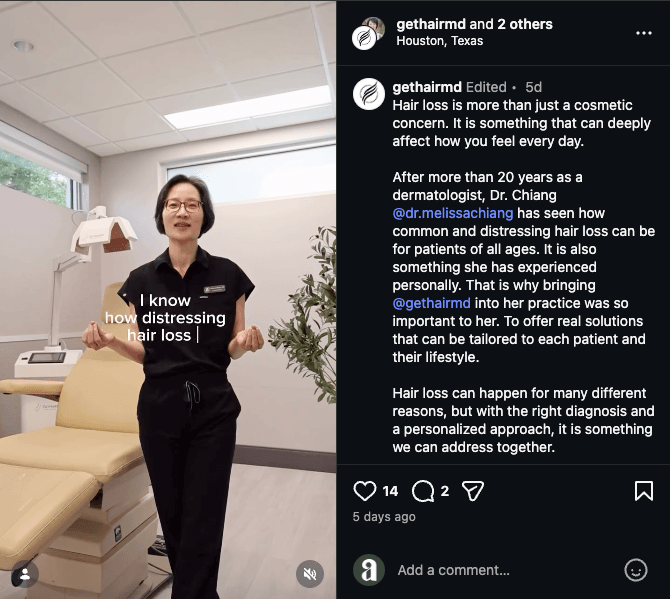
Watch: Dr Melissa Chiang on Hair Restoration
4. Maximizing Your Results with a Complete Strategy
In my practice, I don’t treat red light therapy as a casual, standalone fix. Instead, I integrate highly calibrated, medical-grade protocols into a comprehensive, multi-modality strategy. Clinical data show that light therapy acts as a powerful multiplier when paired with traditional treatments.
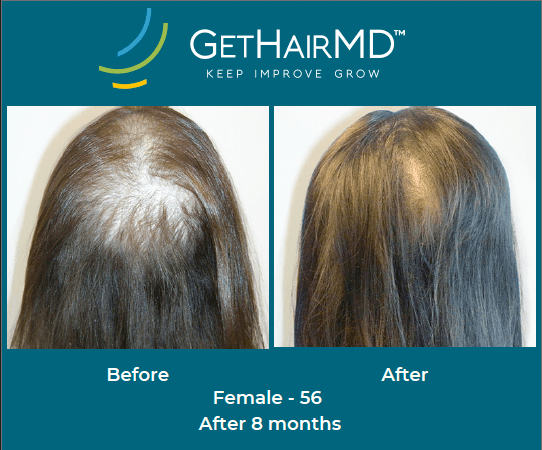
Through our physician-ledGetHairMD Hair Restoration Program, we pair advanced, non-surgical clinical light systems with prescription topical formulas, specialized hair products, and precise digital scalp tracking so we can watch your progress in real-time.
Depending on your specific goals and the root cause of your hair thinning, we often combine red-light stimulation with:
Customized Medical Topicals: Compounded prescription formulas tailored directly to your lifestyle and hair type.
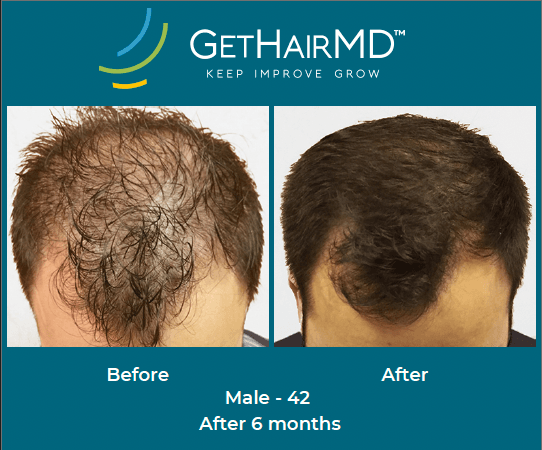
*Images represent clinical outcomes achieved using the GetHairMD™ protocol across corporate provider networks. Individual results vary based on the customized, comprehensive restoration plans managed under the board-certified supervision of Dr. Melissa Chiang at our Spring, TX location.
When used thoughtfully with medical-grade guidance, red light is a comfortable, proven tool that visibly improves hair density. The magic isn’t just in the light, but also in the complete plan.
Let’s Find Out What Your Hair Needs
Every scalp is unique, and treating hair loss successfully means finding the exact roadmap that works for your biology. If you’re tired of guessing with over-the-counter products and want a professional evaluation, let’s look at your scalp together.
Dr. Melissa Chiang is a dual board-certified dermatologist and fellowship-trained dermatopathologist who brings a rare level of microscopic diagnostic expertise to hair and scalp health. Serving patients across Spring and The Woodlands, she blends advanced medical dermatology with a compassionate, patient-centered approach. Dr. Chiang specializes in uncovering the root biological causes of hair thinning, designing custom, non-surgical restoration protocols that deliver healthy, sustainable, and reliable results.
The term medical‑grade skincare is widely used, frequently debated, and often misunderstood. Patients are commonly told that medical‑grade products work better than over‑the‑counter options—yet many sense that the phrase may be more marketing than medicine.
There is truth in the skepticism. There is also a reason this distinction persists in clinical settings. Understanding where the difference genuinely lies helps set realistic expectations and supports better skin‑care decisions.
What “Medical‑Grade” Skincare Is—and Is Not
There is no legal or regulatory classification called “medical grade” in the United States. Skincare products sold in medical offices are regulated as cosmetics in the same way retail products are.
Medical‑grade does not automatically mean:
FDA‑approved
Prescription‑strength
Stronger, safer, or universally superior
Any claim suggesting inherent regulatory or scientific superiority should be viewed critically.
Why Medical‑Grade Skincare Is Sometimes Perceived as More Effective
When clinicians say certain professional products “work better,” they are usually referring to a constellation of practical differences, not a single defining feature.
1. More Consistent Use of Evidence‑Based Actives
Professional skincare lines are more likely—though not guaranteed—to formulate products with active ingredients at concentrations shown to have biological effects. This is particularly relevant for retinoids, exfoliating acids, and antioxidants.
Over‑the‑counter products must be broadly tolerated and are often diluted or heavily buffered to minimize irritation. Professional products tend to assume a user who is willing to introduce actives gradually and follow guidance.
This difference is not absolute, but it helps explain why outcomes may diverge.
2. Formulation Quality Often Matters More Than Ingredient Lists
When professional products outperform others, it is rarely because they contain rare ingredients. More often, it is due to formulation quality, including stability, pH control, and predictable delivery.
That said, excellent formulation exists at all price points. Quality is brand‑specific, not category‑specific.
3. Fewer Trends, More Consistency
Physician‑dispensed skincare lines often prioritize well‑studied ingredients over novelty. Their products tend to change less frequently, emphasizing reproducibility rather than trend alignment.
Retail skincare, by contrast, is more likely to emphasize sensory appeal, frequent reformulation, and novelty. These are different priorities, not necessarily value judgments.
Why Professional Guidance Can Be the Most Meaningful Difference
One of the most under‑recognized reasons medical‑grade skincare appears to work better has little to do with chemistry.
It has to do with professional judgment.
When skincare is recommended by a trained professional, several things change:
1. The Product Is Chosen for a Problem—Not a Claim
Patients struggling with skin concerns often try multiple products based on:
Marketing language
Online reviews
Ingredient popularity
This can lead to over‑irritation, contradictory regimens, or inappropriate actives for the skin’s condition.
A professional recommendation reframes the process:
What is the dominant issue—barrier dysfunction, inflammation, pigmentation, or texture?
What should not be used right now?
What can the skin actually tolerate?
This diagnostic step alone can dramatically improve outcomes.
2. Sequencing and Dosing Are Clarified
Many skincare failures occur not because products are ineffective, but because they are:
Used too frequently
Layered incorrectly
Introduced too aggressively
Professional guidance provides context:
How often to use a product
What to pair it with—or avoid
How to adjust if the skin reacts
This guidance turns skincare into a structured plan, rather than an experiment.
3. Expectations Are Reset
A clinician is also more likely to clarify what skincare can and cannot do.
For concerns driven by deeper structural changes—such as crepey skin—topicals can support skin health, barrier function, and surface texture, but they cannot replace collagen or elastin loss on their own.
When patients understand this, frustration decreases and trust increases. Skincare becomes part of a broader strategy rather than a source of disappointment.
Where Marketing Goes Too Far
Claims that medical‑grade skincare:
Penetrates deeper simply because it is professional
Is regulated more strictly
Is categorically superior to drugstore products
do not hold up scientifically.
There are excellent and ineffective products in every category. Price and point of sale are not guarantees of results.
A Measured Takeaway
Medical‑grade skincare is not inherently better by definition. When it is more effective, it is usually because it combines:
Thoughtful formulation
Evidence‑based actives
Appropriate selection for a specific skin problem
Clear guidance on use
For patients who are struggling—particularly those who feel overwhelmed, irritated, or stuck—professional guidance can be the most valuable component of all. Not because it limits choice, but because it brings clarity.
In the end, good skincare works when it is well‑formulated, appropriately chosen, and correctly used—not simply because of where it is sold. For those who would benefit from clearer direction, schedule a consultation today with board-certified dermatologist Dr. Melissa Chiang to create a personalized, evidence‑based skincare plan tailored to your skin’s needs.
Noticing your hair thinning or shedding more than usual in your 30s, 40s, or 50s can feel unsettling, but it’s also incredibly common. During these years, hormonal changes, genetics, stress, and lifestyle habits all begin to play a bigger role in hair health. Many adults also start to see the cumulative effects of years of styling, coloring, or environmental exposure.
The good news? Hair loss at this stage is often manageable, and with the right treatments, many people can slow, stop, or even reverse thinning. Below, we break down the most common causes of hair loss in your 30s–50s, what symptoms to look for, and how Integrated Aesthetics can help you restore fuller, healthier hair.
Understanding Hair Loss in Your 30s–50s
Hair loss in this age range can be influenced by a combination of biological and lifestyle factors. While genetics remains the leading cause, other contributors become more prominent as we age.
Common Types of Hair Loss in Adults 30–50
Androgenetic Alopecia (Pattern Hair Loss)
The most common cause of hair thinning in both men and women. By age 50, up to half of adults experience some degree of pattern hair loss. Men often see recession and crown thinning, while women notice diffuse thinning and a widening part.
Hormonal Hair Loss
Hormonal shifts such as pregnancy, postpartum changes, thyroid disorders, and perimenopause or menopause can significantly impact hair density.
Alopecia Areata
An autoimmune condition that can appear or worsen in adulthood, causing patchy hair loss.
Telogen Effluvium
Triggered by stress, illness, surgery, or nutritional deficiencies, this condition causes sudden shedding that may last several months.
Traction Alopecia
Years of tight hairstyles, extensions, or heavy styling can lead to permanent follicle damage if not addressed early.
Lifestyle Factors That Influence Hair Loss in Your 30s–50s
As responsibilities grow, such as careers, families, and aging parents, so does stress. Combined with lifestyle habits, these factors can accelerate hair thinning.
Stress & Cortisol
Chronic stress increases cortisol levels, which can disrupt the hair growth cycle and trigger shedding.
Diet & Nutrient Deficiencies
Low iron, vitamin D, protein, and essential fatty acids can weaken hair and slow regrowth.
Medications
Certain medications, including those for blood pressure, depression, and hormonal regulation, may contribute to hair thinning.
Hair Care Practices
Years of coloring, heat styling, chemical treatments, and tight hairstyles can weaken follicles and lead to breakage or thinning.
Texture changes (hair becoming finer or more brittle)
These changes often follow the Ludwig scale for female pattern hair loss.
What You Can Do About Hair Loss in Your 30s–50s
The earlier you take action, the better your long-term results. At Integrated Aesthetics, we offer advanced, medically guided solutions designed to treat hair loss at every stage.
NeoGraft® Hair Restoration
A minimally invasive FUE transplant procedure that restores natural density without linear scarring. Ideal for men and women with moderate to advanced thinning.
PRF (Platelet-Rich Fibrin) Injections
PRF is a regenerative treatment that uses your body’s own growth factors to stimulate follicles, improve thickness, and support healthier regrowth.
This multi‑layered approach addresses both the symptoms and root causes of hair loss.
Addressing Your Hair Loss at Integrated Aesthetics
Hair loss can feel overwhelming, but you don’t have to navigate it alone. At Integrated Aesthetics, we combine advanced diagnostics with personalized treatment plans to help you understand why you’re losing hair and how to restore it.
Start With a HairMetrix™ Diagnostic Scan
This non-invasive imaging tool evaluates:
Follicle density
Hair diameter
Growth patterns
Scalp health
It gives you a clear baseline and helps us tailor the most effective treatment plan for your needs.
Take the First Step Toward Healthier, Fuller Hair
Schedule a consultation at Integrated Aesthetics to begin your customized hair restoration journey and receive your HairMetrix™ diagnostic scan.
Sagging cheeks are not just about getting older. Genetics, significant weight fluctuations, sun exposure, and even sleeping position can accelerate the process. From hollowness in the temples to jowls around the jawline, skin laxity in the cheek area can take many forms, and may be treatable with a range of solutions—including some with very little to no downtime.
At Integrated Aesthetics, our team brings together plastic surgery, dermatology, and advanced medspa services under one roof. This approach means we evaluate your concerns from every angle and recommend the treatment—or combination of treatments—that works with your lifestyle and desired outcome.
From lasers to facelifts and beyond, here are seven ways we treat sagging in the cheeks.
Non-Ablative Fractional Laser Skin Resurfacing
Non-ablative fractional laser resurfacing improves skin texture without downtime. The laser energy, applied in a checkboard or “fractional pattern,” passes through the surface to stimulate collagen remodeling in the deeper layers. Because the device bypasses the outer skin layer, recovery is minimal (typically mild redness that resolves within a day or two). This process gradually improves skin texture and mild laxity.
Fractional, non-ablative laser treatments work well for patients with early signs of cheek descent who want to address fine lines and surface irregularities simultaneously. Multiple sessions spaced several weeks apart produce cumulative improvements. Non-ablative lasers won’t dramatically lift significantly sagging tissue, but they provide noticeable tightening for those with early concerns and can enhance results from other procedures.
Ablative Fractional Laser Skin Resurfacing
When sagging cheeks present alongside deeper wrinkles and significant sun damage (dark spots and discoloration), ablative fractional CO2 laser resurfacing delivers more dramatic results. This technology removes targeted columns of damaged skin while leaving surrounding tissue intact, triggering an intensive healing response that rebuilds collagen from the inside out.
Ablative laser resurfacing is best for treating:
Deep wrinkles and creases around the cheeks
Uneven skin texture and tone
Moderate skin laxity
Sun-damaged skin with pigmentation irregularities
Recovery takes longer than non-ablative treatments, so expect about a week of visible healing with redness that fades over several weeks. The trade-off is significant, however: one ablative treatment often achieves results beyond what is possible even with multiple non-ablative laser treatment sessions.
Microneedling
Microneedling, sometimes called the “vampire facial” when combined with platelet-rich plasma (PRP), creates controlled micro-injuries that stimulate your body’s natural repair mechanisms, flooding the treated area with increased collagen and elastin production. It works similarly to laser treatment, but instead of laser beams, it uses many very fine needles applied to the skin’s surface.
For sagging cheeks, microneedling addresses the surface-level component of skin laxity. It tightens pore appearance, smooths texture, and creates a subtle firming effect that accumulates with each session. Most patients who come to us hoping to see improvements for saggy cheeks complete a series of three to six treatments, which can be scheduled about four to six weeks apart.
The procedure takes 30 to 45 minutes, and most patients experience a day or two of mild redness and sensitivity after treatment.
Microneedling + Radiofrequency
Adding radiofrequency (RF) energy to microneedling takes collagen stimulation to a deeper level. RF microneedling devices like Morpheus8 deliver RF energy through microneedles directly into the deeper skin layers, tightening tissue from within, rather than just on the surface.
RF microneedling allows us to:
Tighten skin at multiple depths simultaneously
Treat both skin laxity and textural concerns in one session
Produce results that continue improving for several months
The treatment is particularly effective for the lower face, including sagging cheeks, but also in the jowls and jawline area. Patients typically see noticeable improvement after one to three sessions, with three to five days of mild swelling and redness after each session.
Non-Surgical “Liquid” Facelifts
When patients hear “facelift,” many assume we are referencing surgery. Non-surgical facelift approaches combine highly strategic, thoughtful use of dermal fillers and collagen stimulator injections to restore volume and create lift completely without incisions or significant downtime.
A liquid facelift uses hyaluronic acid fillers and biostimulators placed at key points along the cheeks, temples, and jawline. By restoring lost volume, the skin can appear naturally lifted. The cheek area responds particularly well to this approach because much of what we perceive as “sagging” is actually loss of fat pads and skin volume in this area.
Products like Sculptra® and Radiesse® go beyond simple filling—they stimulate your body’s own collagen production for results that improve over time and can last two years or more. Together with hyaluronic acid fillers, the tools allow our expert injectors to create an artful plan based on your unique anatomy.
“Dr. Cho is nothing short of an artist with fillers. My face looked so much younger after he injected my tear troughs, cheeks, and nasolabial folds. He was also very patient in answering my questions in a way that was easy to understand, and I never felt rushed. The patient coordinator was great too. It was a 5-star experience!”
—5-Star Review
Non-Surgical Skin Tightening
Energy-based skin-tightening devices have advanced dramatically in recent years. Several technologies now offer significant lifting and firming with minimal downtime and without traditional surgery.
Sofwave (Non-Invasive)
Sofwave uses synchronized ultrasound parallel beam (SUPERB™) technology to heat the mid-dermal tissue layer at a precise depth of 1.5mm—the optimal zone for stimulating new collagen production. It’s built-in cooling mechanism protects the skin surface while delivering effective energy to deeper tissues. The result is a treatment that tightens and lifts with virtually no downtime. Most patients return to normal activities immediately after their session.
For sagging cheeks specifically, Sofwave addresses mild to moderate laxity and can also improve the appearance of jowling along the jawline. Results begin appearing within one week and continue improving for up to 12 weeks as collagen regenerates. Many patients achieve their desired outcome with a single treatment.
Ultherapy (Non-Invasive)
Ultherapy uses focused ultrasound energy to target the deep foundational layers of facial tissue with a device applied to the skin’s surface. By heating tissue at precise depths, Ultherapy triggers a natural lifting and tightening response.
The treatment is FDA-cleared for lifting the cheeks, brow, and neck. Results develop gradually over two to three months as new collagen forms. While one treatment is often sufficient, some patients benefit from a second session.
FaceTite (Minimally Invasive)
FaceTite uses radiofrequency-assisted lipolysis (RFAL) to tighten skin from the inside. A tiny probe inserted beneath the skin delivers controlled RF energy while an external electrode monitors temperature for optimal safety and effectiveness.
FaceTite produces results comparable to a surgical facelift for appropriate candidates—those with moderate skin laxity who aren’t ready for surgery. The treatment requires only local anesthesia, and recovery takes about one to two weeks.
Thread Lifts
PDO thread lifts and Silhouette InstaLift use dissolvable threads placed beneath the skin to provide an immediate, direct lift of the cheek skin while stimulating collagen production throughout the treated area.
Thread lifts work by:
Physically repositioning descended tissue
Creating a scaffolding that supports the cheeks
Stimulating elastin and collagen where the threads are placed
Producing results that last 12 to 18 months or longer
The procedure takes about 30 to 60 minutes under local anesthesia. While there is some initial swelling and potential bruising, most patients return to normal activities within a few days. Thread lifts are particularly appealing to patients who want more of a vertical lift than fillers provide, but are not ready for surgical intervention.
Surgical Facelift
When sagging has progressed beyond what non-surgical options can effectively address, a surgical facelift provides the most comprehensive, customized, and long-lasting correction.
Dr. Young Cho, our board-certified plastic surgeon with more than 20 years in aesthetics, customizes each facelift to your specific anatomy and goals. Modern techniques address not just skin but the deeper muscular layer (SMAS), repositioning tissues for natural-looking results that age gracefully.
Who Benefits Most from Surgical Facelifts
Individuals with jowling and neck sagging in addition to cheek sagging
Those seeking long-lasting results (typically 10+ years)
Patients with significant skin laxity that does not respond adequately to non-surgical treatments
Patients who have maximized results from non-surgical options and want more dramatic improvement
Recovery from a facelift takes approximately two weeks before returning to most activities, with continued healing over several months. When performed by an experienced surgeon, results look refreshed and natural rather than “done.”
“Great experience as a first timer. I barely waited to be helped when I checked in. The staff and Dr. Young Cho were all very friendly and helpful. I especially loved how Dr. Young Cho really took his time to explain my procedures with me as well as my treatment options. I had a great visit and the doctor’s demeanor has really put me at ease so I highly recommend this medical spa, whenever you need to discover the new you!”
—5-Star Review
Every face tells a different story, and every treatment plan should be equally individual. Our practice combines aesthetic dermatology expertise from Dr. Melissa Chiang alongside Dr. Cho’s surgical precision. As our patient, you are not limited by one provider’s specialty perspective—you get recommendations based on what will actually deliver the results you want.Contact us via our online form or call (281) 845-6083 to schedule your consultation. We see patients at our Spring and The Woodlands locations.
Join us for an exciting in-person event, Shrink, Tighten, and Tone - Powered by InMode,
where we introduce the latest advancements in aesthetic treatments and cutting-edge technology coming to our
practice that are designed to help you look and feel your best!
Thursday, October 17, 2024 ‘Lunch and Learn’ (12PM -1PM) and Happy Hour
(4-7PM)
Accessibility: If you are vision-impaired or have some other impairment covered by the
Americans with Disabilities Act or a similar law, and you wish to discuss potential accommodations
related to using this website, please contact our Accessibility Manager at (281) 247-5142.
Promotions
At Integrated Aesthetics, we offer our clients many ways to accomplish their goals with us through
custom treatment plans and special offers.
View our Specials