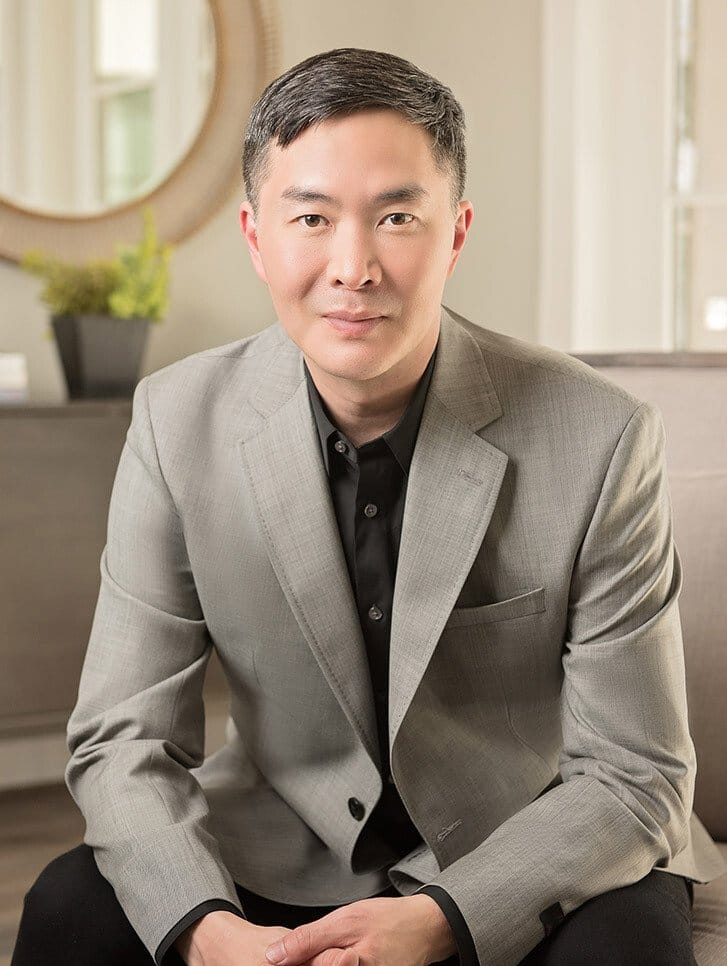
Expertly Written By
Board-Certified Plastic Surgeon & Facial Reconstructive Expert at Integrated Aesthetics | Yale-educated surgeon specializing in deep-tissue SMAS anatomy manipulation and complex facial aging reconstruction.
Published: August 19, 2026 | Updated: August 19, 2026
Procedure at a Glance
| Clinical Metric | Patient Case Specifications |
|---|---|
| Patient Profile | 43-Year-Old Female | Light Skin Tone | The Woodlands, TX Area |
| Anatomical Concerns | Early jawline softening and mild jowling, laxity along the neck and beneath the jaw obscuring the bone structure, and early midface descent with volume loss in the cheeks, temples, and lips. |
| Surgical Execution | Mid and Lower Facelift with Neck Lift & Facial Fat Grafting |
| Treatment Modalities | Mid and Lower Facelift, Neck Lift, and Facial Fat Grafting to the nasolabial folds, cheeks, temples, marionette areas, and lips. |
| Result Timeline | Natural-looking, long-lasting results documented at 1 year post-procedure. |
Facelifts are sometimes considered to be reserved for later decades, and focused mainly on erasing deep wrinkles. But in your 40s, a facelift is often still a viable option—the goal is usually different. At this stage, the earliest structural changes tend to show up along the jawline and neck rather than the forehead or eyes, and the most refined, natural-looking results stem from restoring that lower-face definition rather than chasing surface lines and wrinkles.
At Integrated Aesthetics, we focus on treating the anatomical cause of these early changes rather than masking them. In this clinical review, I detail how a mid and lower facelift with a neck lift (platysmaplasty) and precisely placed fat grafting restored a defined jawline and refreshed, youthful balance for this 43-year-old female patient from The Woodlands area, with results that were still presenting beautifully one year later.
Patient Presentation: Early Jawline and Neck Changes in the 40s
This 43-year-old female patient came to our practice with concerns about the aging appearance of her face. Her forehead and upper face remained smooth and youthful; the changes she noticed were concentrated in the lower third of her face and neck.
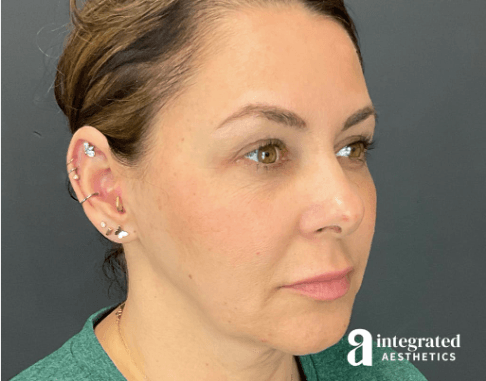
Upon evaluation, her facial structure showed early but distinct concerns:
- Neck and Under-Jaw Laxity: Loose skin along the neck and beneath the jawline softened her profile and obscured her natural bone structure, adding years to her overall appearance.
- Mild Jowling and Lower-Face Descent: Early sagging along the jawline created mild jowls and blurred the smooth transition from chin to ear.
- Midface Volume Loss: Subtle deflation in the cheeks, temples, and around the mouth, along with thinning of the lips.
Because her concerns stemmed from early structural descent rather than surface wrinkling, non-surgical options alone would not deliver a lasting, natural correction. Her forehead and eyes did not require intervention, so we designed a plan focused precisely where she needed it: the jawline, neck, and midface volume.
The Surgical Plan: Targeted Lower-Face Repositioning with Volume Restoration
To lift and redefine her jawline and neck without creating a pulled or overdone look, I performed a mid and lower facelift with a neck lift. This technique repositions the deeper tissue layers to restore the underlying structure, so the result looks like a natural, rested version of the patient {rather than a tightened one}.
Fat grafting was then used to add subtle volume, working in tandem with the lift to support a longer-lasting outcome.
Anatomical Details of the Combined Procedure
- Mid and Lower Facelift: The deeper tissues of the midface and lower face were repositioned to lift mild jowling and re-establish a smooth, defined jawline from chin to ear.
- Neck Lift: Lax neck tissue beneath the jaw was tightened to reveal the natural bone structure and restore a clean, youthful profile.
- Facial Fat Grafting: Autologous fat was carefully grafted into the nasolabial folds, cheeks, temples, marionette areas, and lips. This restored soft, youthful volume where it had deflated and balanced the overall proportions of the face, complementing the structural lift and adding longevity to the result.
For a patient in their 40s, this targeted, volume-forward approach is often the difference between a result that simply looks tight and one that looks naturally younger. Rather than combining the procedure with a brow lift or eyelid surgery she did not need, the plan concentrated on the areas showing true early change.
Clinical Results: A Naturally Defined Jawline at 1 Year
By addressing the lower-face structure and volume together, the patient healed with a refreshed, natural result that held up remarkably well over time.
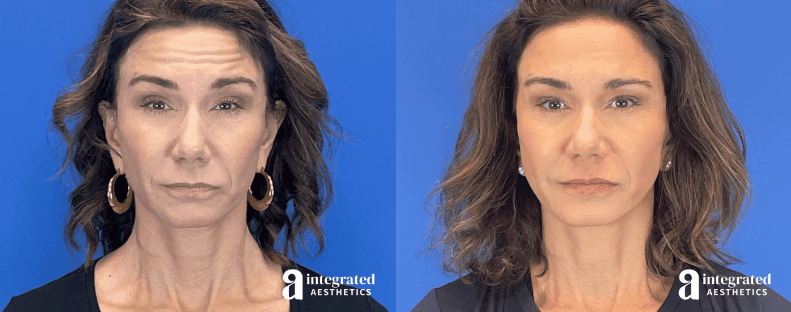
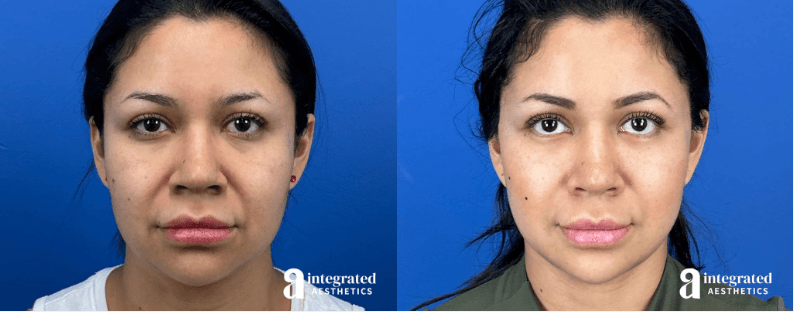
In her before photos, laxity in the neck and beneath the jaw obscured her bone structure and created mild jowling and facial descent. In her after photos, her jawline appears naturally contoured from chin to ear, her neck is clean and defined, and the fat grafting to her lips, cheeks, and key areas restores a balanced, youthful fullness.
Her outcomes at one year post-procedure are documented below.
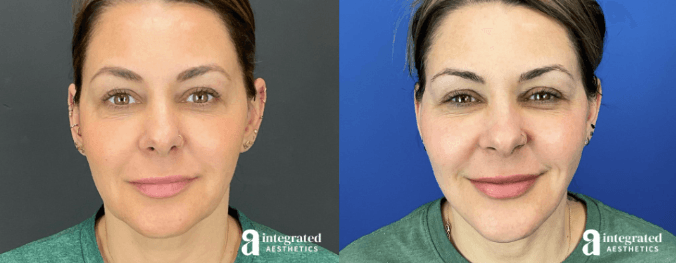
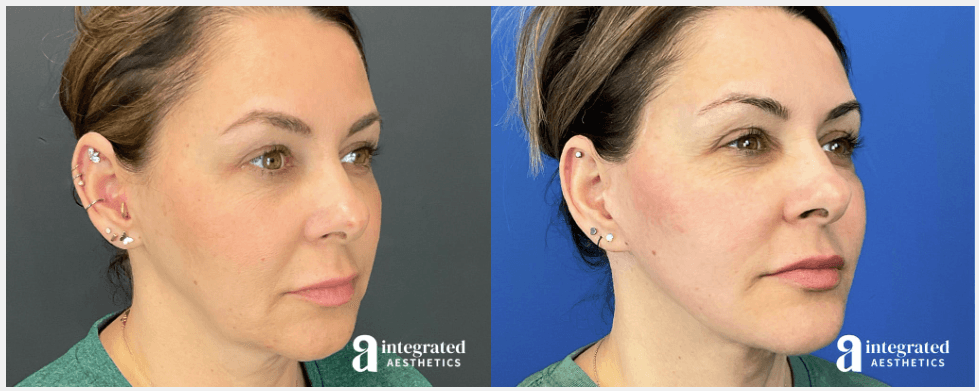
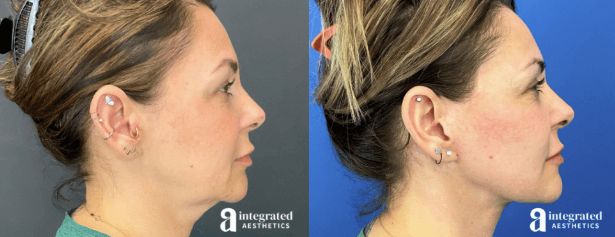
*Individual results may vary.
Want to Explore Our Complete Surgical Framework?
This case shows how a facelift in your 40s can be tailored to restore structure and balance without overcorrecting. To learn more about our surgical options, deep-tissue techniques, and patient safety protocols at Integrated Aesthetics, explore our approach:
Frequently Asked Questions
Is 40 too young for a facelift?
Not at all. Candidacy is based on your anatomy, not your age. When early structural changes appear along the jawline and neck, a facelift can correct them at the source and often produces a more natural, longer-lasting result than repeatedly treating the area non-surgically. Many patients in their 40s are ideal candidates precisely because their changes are still early.
Why does a facelift in your 40s focus on the neck and jawline rather than wrinkles?
In your 40s, the earliest signs of aging are usually structural, showing up as softening along the jawline and laxity in the neck, while the forehead and eyes often remain youthful (and early wrinkles in the forehead area may be treated with wrinkle relaxers). Repositioning the deeper tissue in the lower face restores definition where it is actually needed. This is why an earlier facelift is frequently more about jawline and neck restoration than about smoothing deep wrinkles, as it might be for an older patient.
Why combine fat grafting with a facelift?
A facelift repositions and tightens sagging tissue, but it does not replace lost volume. By adding facial fat grafting to areas like the cheeks, temples, and lips, we restore the soft fullness that naturally deflates over time and balance the overall proportions of the face. Used together, the lift and the volume support one another, contributing to a more complete and longer-lasting result. This is a common pairing for facial rejuvenation in patients of all ages.
When you are ready to learn what a customized facial rejuvenation plan could do for you, we invite you to schedule a consultation with Dr. Young Cho at our Spring or The Woodlands location.
The “Permanent” Lip Problem: When “Dissolving” Isn’t an Option
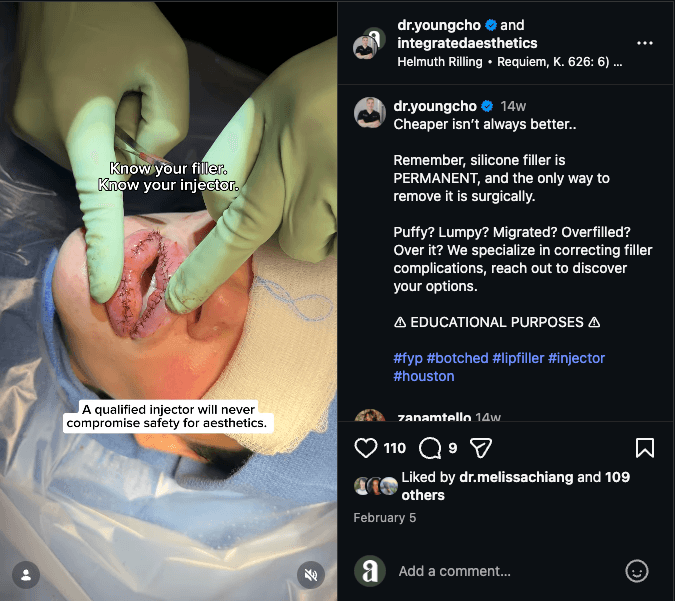
It’s a specific kind of frustration. You’ve visited multiple injectors in the Houston area to “fix” your lips, and they’ve all tried the same thing: Hyaluronidase. But the lumps didn’t move. The “shelf” above your lip stayed put. The “ducky” silhouette didn’t soften.
If this sounds familiar, you aren’t dealing with modern, dissolvable filler. You are likely dealing with Permanent Silicone. In my practice, I see patients who had silicone injections ten, fifteen, or even twenty years ago. At the time, “permanent” sounded like a benefit. Today, it feels like a trap. Silicone doesn’t just sit there; it integrates into your muscle and tissue, often leading to chronic inflammation, migration, and a “stiff” appearance that no injectable enzyme can touch.
“Fixing overfilled lips isn’t always about adding more product to ‘balance’ things. Often, it’s about a surgical audit—clearing the path so your natural anatomy can breathe again.”
— Dr. Young Cho
The Surgical Audit: Diagnostic Ultrasound is the New Standard
Most people find me when they’ve reached a dead end. They are unhappy with the size of their lips, but they’ve been told, “nothing can be done.”
My first step isn’t a needle; it’s High-Resolution Diagnostic Ultrasound. This is the definitive “audit” of your lips. We don’t guess what’s inside your tissue. We see it.
- We Identify: We distinguish between old scar tissue, migrated HA filler, and permanent silicone beads.
- We Map: I can see exactly how the silicone is “braided” into your lip muscle.
- We Plan: This ultrasound allows me to create a surgical roadmap, ensuring that when I go in to remove the material, I am preserving your healthy tissue and sensation.
Restoration, Not Just Removal
Removing permanent filler is a delicate surgical art. It requires an intimate understanding of the oral mucosa and the way the lips move when you speak and smile.
As a plastic surgeon, my goal for Silicone Lip Removal is restoration. We are removing the source of the distortion and meticulously reshaping the lip architecture. We want to return your lips to a state where they feel soft, look proportional, and function naturally.
The Road Ahead: Building Your Ideal Lip (Safely)
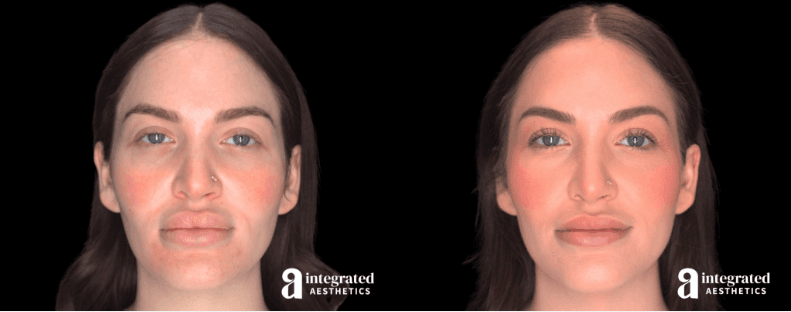
One of the biggest fears patients have is: “If I remove the silicone, will I have no lips left?”
The removal is just Phase One. Once the tissue has healed and the inflammation has settled (usually a few months post-op), we have a clean canvas. At that point, I, or my partner Dr. Melissa Chiang, can work with you to build the lips you originally wanted using modern, safe, and dissolvable fillers like the RHA® collection or Juvéderm®.
We move from “fixing a mistake” to “curating a result.”
Why Expertise in Spring, TX Matters
The Houston area is a major hub for aesthetic medicine, but very few clinics are equipped to handle Silicone Excision. This requires a Board-Certified Plastic Surgeon who understands the nuances of the “white roll” and the “wet-dry” border of the lip.
If you are tired of being told your lips “can’t be fixed,” it’s time for a surgical audit. Let’s use the technology we have at Integrated Aesthetics to find out exactly what is happening beneath the surface.
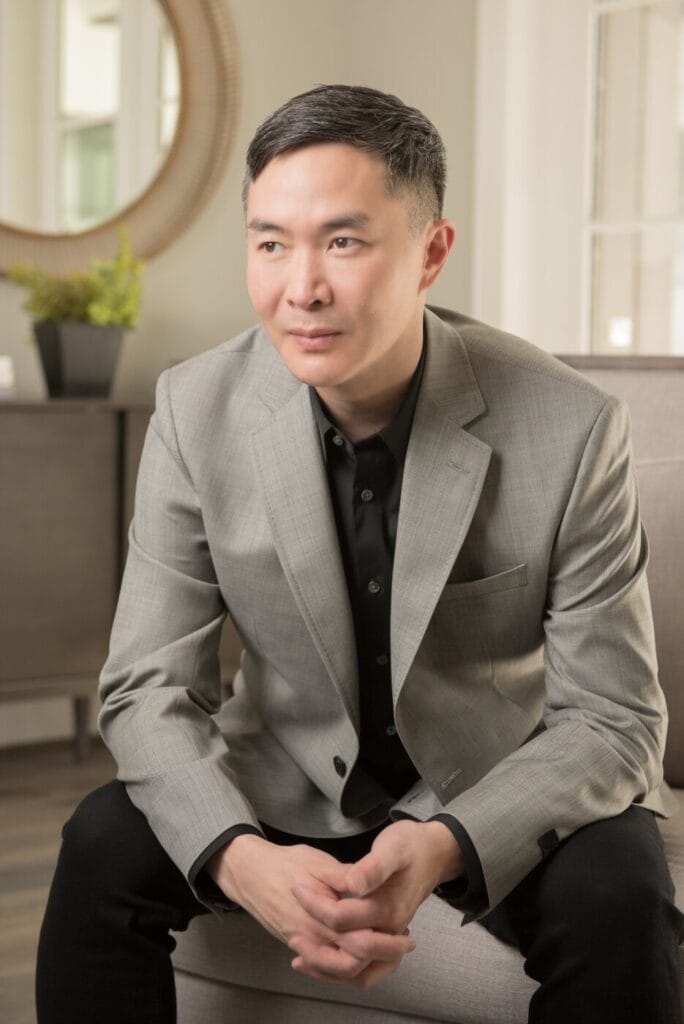
Young Cho, MD, PhD
Board-Certified Plastic Surgeon | Founder, Integrated Aesthetics
Dr. Young Cho is a board-certified plastic surgeon and a recognized expert in complex facial and body restoration. Known as Houston’s “Surgical Auditor,” Dr. Cho specializes in the intersection of advanced technology and aesthetic surgery. He is a pioneer in the use of high-resolution diagnostic ultrasound to map and treat filler complications, providing a level of precision and safety that is unique in the Texas market. His “Anatomy-First” philosophy ensures that every procedure—from deep-plane facelifts to permanent filler removal—is rooted in biological integrity and natural, long-term results.
Credentials & Memberships:
- Board Certification: American Board of Plastic Surgery (ABPS)
- Memberships: American Society of Plastic Surgeons (ASPS), The Aesthetic Society
- Specialization: Ultrasound-Guided Revision & Surgical Facial Contouring
- Leadership: Founder and Lead Surgeon at Integrated Aesthetics, Spring, TX
One of the most common questions we hear from patients visiting our Spring, TX practice from nearby neighborhoods like Carlton Woods, Grogan’s Mill, and North Houston is: “Why doesn’t my Botox® last as long as it used to?” or “Why does my friend’s Botox® last four months, but mine fades in eight weeks?”
If you feel like your neurotoxin results are disappearing faster than expected, you aren’t imagining it. The short answer is that botulinum toxin doesn’t behave identically in every individual. More importantly, achieving a long-lasting, natural result requires an advanced understanding of facial muscle dynamics—something that is often overlooked.
“When a patient comes into our Spring office feeling frustrated that their previous treatment didn’t last, my first step is always to reassure them. Your body is a living, adapting system. Movement variation isn’t a failure—it’s data. It tells us exactly how your unique anatomy interacts with the product so we can refine your mapping next time.”
-Dr. Melissa Chiang
The Timeline of a Neurotoxin: It Doesn’t “Wear Off” Overnight
Many patients seeking Botox® in The Woodlands expect their treatment to completely freeze a muscle for a solid three months and then suddenly vanish. In reality, the biological lifecycle of a neurotoxin treatment follows a distinct curve:
- Days 1–5 (The Onset): The product begins binding to cellular receptors; muscle movement subtly softens.
- Weeks 2–3 (The Peak Plateau): The treatment reaches its maximum efficacy. This peak plateau typically lasts for weeks to months, depending on the individual.
- Weeks 8–12 (The Gradual Fade): The body naturally begins regenerating new nerve endings, and subtle, controlled movement slowly returns.
- Month 4+ (Full Return): Muscle function fully returns to baseline.
Different patients define “longevity” differently. As Dr. Chiang notes:
“Some of our Spring and Woodlands patients define a treatment’s lifespan by the very first hint of a faint expression line reappearing, while others consider it lasts until they have full movement back. Both definitions are entirely valid, but understanding your personal baseline is where we start the optimization process.”
6 Reasons Your BOTOX® Results May Be Fading Faster Than Others
If you are experiencing unusually rapid fading, it generally boils down to a combination of anatomy, lifestyle, and injector technique.
1. Muscle Mass and Dynamic Expression
Stronger, more developed facial muscles require a higher dose to stay relaxed. If you are highly expressive or have naturally strong frown muscles, your body will inherently attempt to override the treatment sooner.
2. Under-Dosing vs. Over-Dosing (“Baby Botox” Pitfalls)
There is a direct correlation between the number of units injected and how long the results last.
“The trend of ‘Baby Botox’ or micro-dosing is beautiful for a highly fluid, subtle look,” says Dr. Chiang. “However, it’s a simple biological rule: using fewer units means the muscle will regain its strength much faster. True customization is finding the exact intersection where you get natural movement without sacrificing therapeutic longevity.”
3. Precision Placement and Structural Anatomy
Every face is structurally unique. A millimeter-wide variance in placement can mean the difference between targeting the sweet spot of a muscle or missing it entirely. Dr. Chiang’s expert dermatological focus ensures that injections are placed with exact anatomical precision to maximize the lifespan of every unit.
4. High Metabolic Rates and Local Activity Levels
Are you a fitness enthusiast spending your mornings running the pathways in The Woodlands, training in master’s swimming programs, or playing tennis in local North Houston leagues? Data suggests that patients with exceptionally high metabolic rates, high cardiovascular activity, or high stress levels tend to process neurotoxins more rapidly. Your body simply repairs nerve pathways faster.
5. Treatment Frequency and Consistency
If you only get treated once a year before a major event in North Houston, your muscles retain their full strength. However, when you maintain regularly scheduled treatments every 3 to 4 months at our Spring location, the targeted muscles adapt and become less dominant over time. This consistent relaxation often extends the time needed between your visits.
6. Rare Adaptive Immunity
In very rare instances, a patient’s immune system can develop neutralizing antibodies to the specific proteins in a brand of neurotoxin, causing it to lose efficacy. If this occurs, switching to a highly purified formula like XEOMIN®—which lacks unnecessary accessory proteins—can completely bypass this resistance.
Why Your Longevity Might Change From Visit to Visit
It is completely normal to experience slight variations from one appointment to the next. A stressful month, a shift in your workout routine, or minor seasonal metabolic fluctuations here in the Texas heat can alter how your body responds to a treatment cycle. A slight variance does not mean your treatment failed; it simply reflects your living, changing biology.
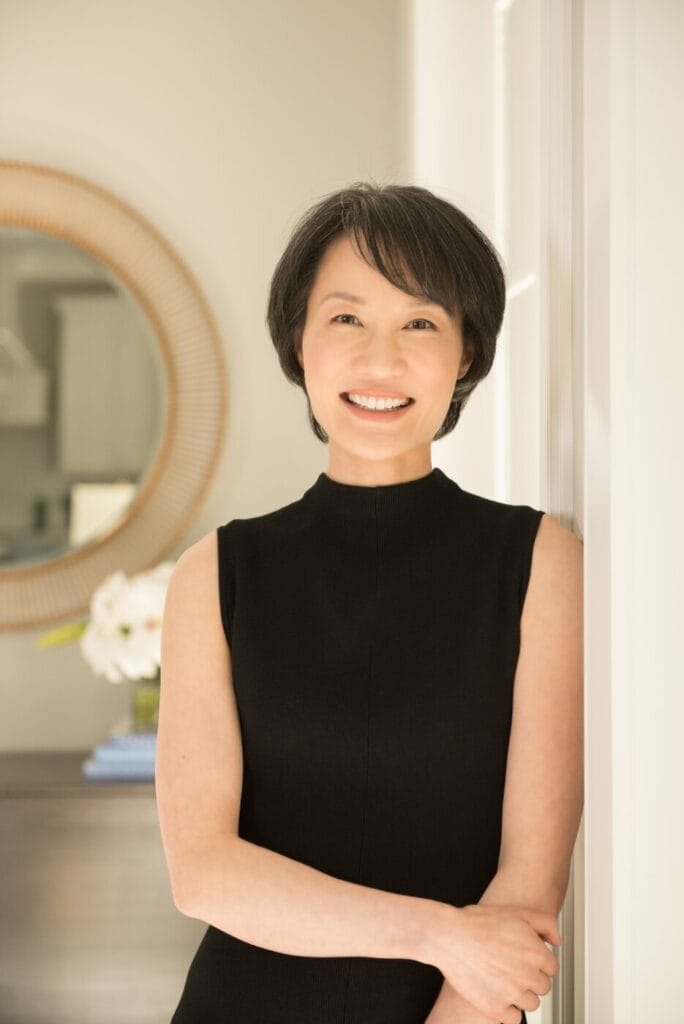
Meet Dr. Melissa Chiang
As a Board-Certified Dermatologist serving communities across Spring and The Woodlands, TX, Dr. Melissa Chiang views cosmetic injectables through a dual lens of medical science and refined aesthetics. With years of rigorous clinical training and deep expertise in skin health, she specializes in customized, non-surgical facial rejuvenation. Rather than using standardized injection templates common in most medspas, Dr. Chiang focuses on understanding each patient’s unique muscle behavior and lifestyle, delivering results that are as enduring as they are natural.
Choosing Your Next Steps
The secret to escaping the cycle of short-lived results isn’t just buying more units—it’s partnering with an expert who tracks your unique biological patterns right here in your local community.
At our practice, conveniently located to serve patients from The Woodlands, Spring, and the greater North Houston area, we prioritize education and collaboration over transactional treatments. Your facial anatomy deserves a thoughtful, highly tailored approach rather than a cookie-cutter menu option.
When you feel ready to move away from predictable, standardized intervals and want to explore a customized protocol tailored to your lifestyle, we invite you to sit down with Dr. Chiang. Together, you can analyze your unique patterns, refine your treatment plan, and choose an approach that genuinely works with your body.
Authored By: Dr. Melissa Chiang, MD, FAAD Board-Certified Dermatologist & Founding Partner at Integrated Aesthetics
The Dermatologist’s Lens: Why North Houston Summers Require a Strategy Shift
In the North Houston aesthetic scene, there is a common misconception that you have to “pause” your skin goals once the temperature hits 90 degrees. As a dermatologist, my goal is to prove the opposite.
While my partner, Dr. Young Cho, focuses on the surgical architecture of the face, my focus during the Gulf Coast summer is on Biostimulation and Barrier Defense. We aren’t just “filling” lines; we are preparing your skin to thrive in high UV and 100% humidity.
“I tell my patients: Summer isn’t the time for ‘wounding’ the skin with aggressive lasers. It’s the time for ‘nourishing’ the skin with regenerative treatments that build collagen without the pigment-rebound risk.”
— Dr. Melissa Chiang
1. The “Humidity-Proof” Refresh: Neurotoxins for More Than Just Wrinkles
In The Woodlands and Spring, we don’t just squint; we sweat. Both lead to “expression fatigue” and makeup settling into fine lines.
- The Strategic Play: I utilize a “Micro-Toxin” approach for summer. By placing smaller amounts of Botox, Dysport, or the long-wear Daxxify more precisely, we can soften the face while allowing for natural movement.
- The “Glare” Shield: We specifically target the “11 lines” between the brows to counteract the constant squinting that happens during North Houston commutes and outdoor social events.
Best For: Preventing “Heat-Induced” deepening of lines and maintaining a rested look through the humid months.
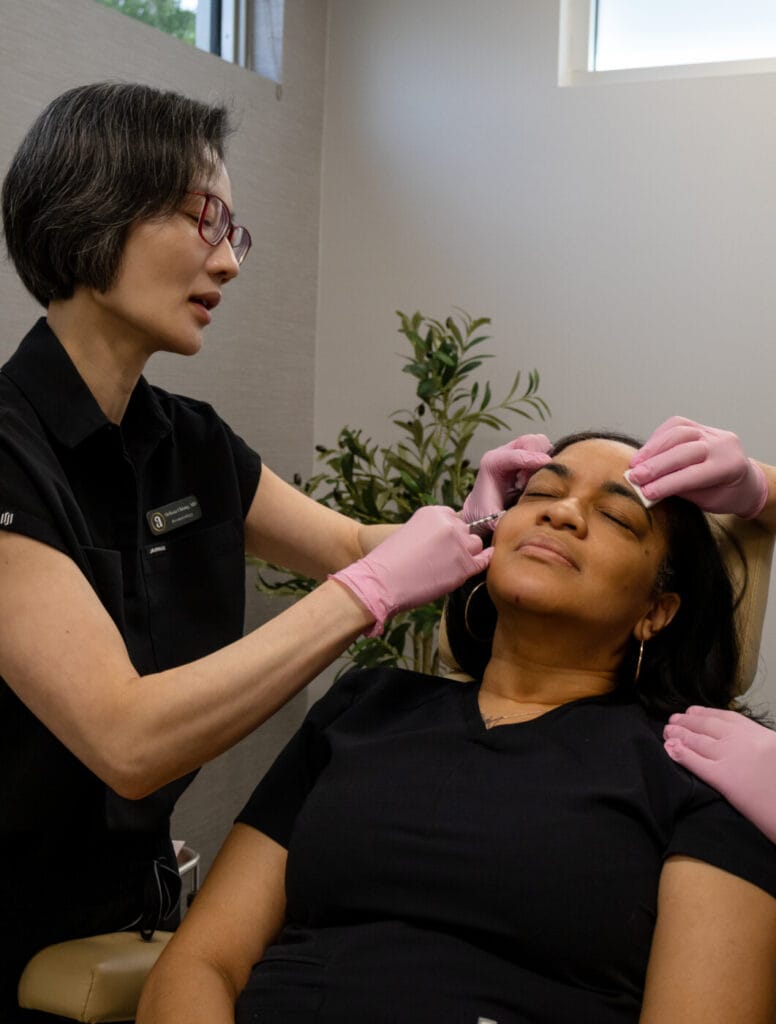
Dr. Chiang focuses on a tailored neurotoxin application, ensuring each treatment is as comfortable as it is effective. Our goal is a refreshed, natural result in a serene clinical environment.
2. Internal Hydration: The Skinvive™ Glow
Most people try to fix summer dryness with heavy creams that feel “suffocating” in the humidity. My dermatological solution is Skinvive by Juvéderm.
- The Science: This isn’t a traditional filler meant for volume. It’s an injectable “micro-droplet” hyaluronic acid that lives inside your dermis.
- The Result: It improves skin smoothness and hydration from within. It gives you that “glass skin” look that won’t melt off in the Texas heat.
3. Sculptra®: The Collagen Scaffold for the “Active” Patient
For my patients who spend their summers at the lake, the beach, or on the tennis court, Sculptra is my primary recommendation.
- The Derm Advantage: As a dermatologist, I value Sculptra because it is biostimulatory. It doesn’t disrupt the skin’s surface, meaning zero sun-sensitivity.
- The “Stealth” Reveal: It works gradually over 4–6 weeks to rebuild the skin’s natural collagen. By the time you’re at your July 4th celebrations, your skin looks firmer and more resilient, but nobody can tell “what” you had done.
4. PRF: Under-Eye Restoration Without the “Puff”
The heat can cause us to hold water, making traditional under-eye fillers look “puffy” or unnatural in the summer. I pivot my patients toward PRF (Platelet-Rich Fibrin).
- Why PRF? It’s your own biology. By using your growth factors, we can thicken the delicate skin under the eyes and improve dark circles—perfect for the “no-makeup” look that summer demands.
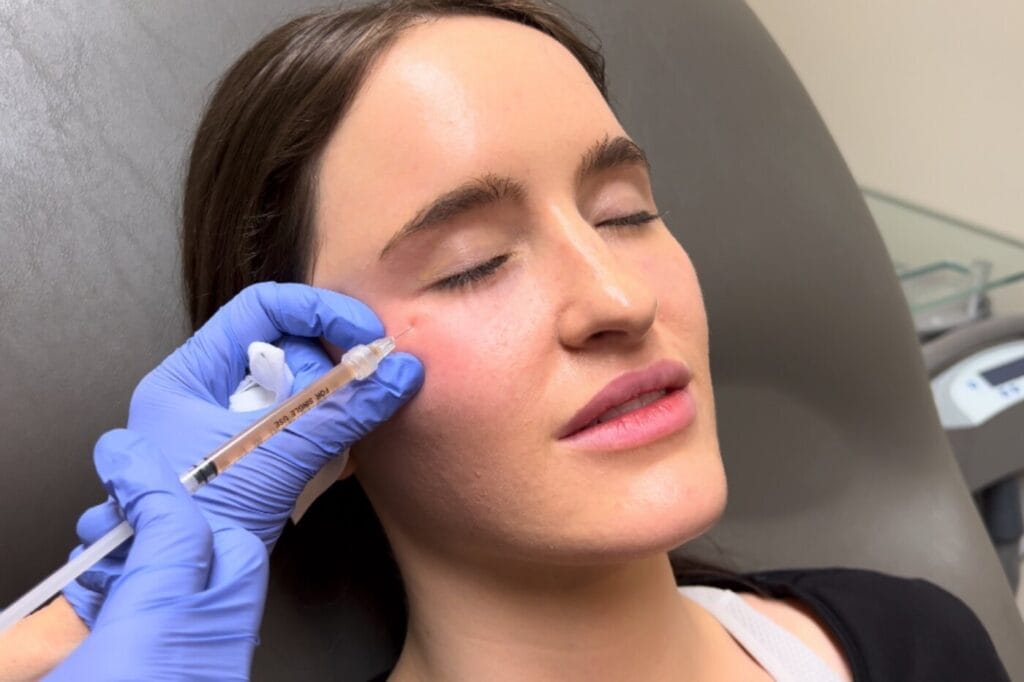
Dr. Chiang utilizes Platelet-Rich Fibrin (PRF) to stimulate the body’s own healing properties. Our approach combines clinical precision with a tranquil experience to achieve subtle, rejuvenating results.
5. Dr. Chiang’s “Texas-Proof” Skincare Wardrobe
My Board Certification in Dermatology means I am obsessed with the Skin Barrier. In The Woodlands and Spring, TX, your barrier is under attack from UV, chlorine, and indoor A/C.
1. The Antioxidant Shield (Morning) In high-UV environments, SPF alone isn’t enough. You need a potent Vitamin C or antioxidant serum to neutralize free radicals before they cause DNA damage.
- Dr. Chiang’s Pick: Plated™ Intensive Repair Serum
- The “Why”: This serves as your “internal umbrella,” preventing the formation of dark spots and melasma.
2. The Mineral-Only Defense (Protection) Chemical sunscreens can trap heat in the skin, which can actually exacerbate redness and rosacea in the Texas heat. I exclusively recommend mineral-only (Zinc or Titanium) formulas for my summer patients.
- Dr. Chiang’s Pick: ISDIN Eryfotona Actinica® Daily Mineral Sunscreen and Repair
- The “Why”: A mineral shield reflects heat away from the face rather than absorbing it, keeping the “thermal temperature” of your skin low.
3. The Lightweight Barrier Repair (Evening) Summer humidity often leads to “over-cleansing,” which strips the skin’s natural oils. You need a moisturizer that repairs the lipid barrier without feeling heavy or “suffocating” in the humidity.
- Dr. Chiang’s Pick: Integrated Aesthetics AHA Marine Moisture Crème
- The “Why”: This supports the skin’s recovery from daily sun exposure, ensuring you wake up with a resilient, hydrated “glow” rather than a greasy film.
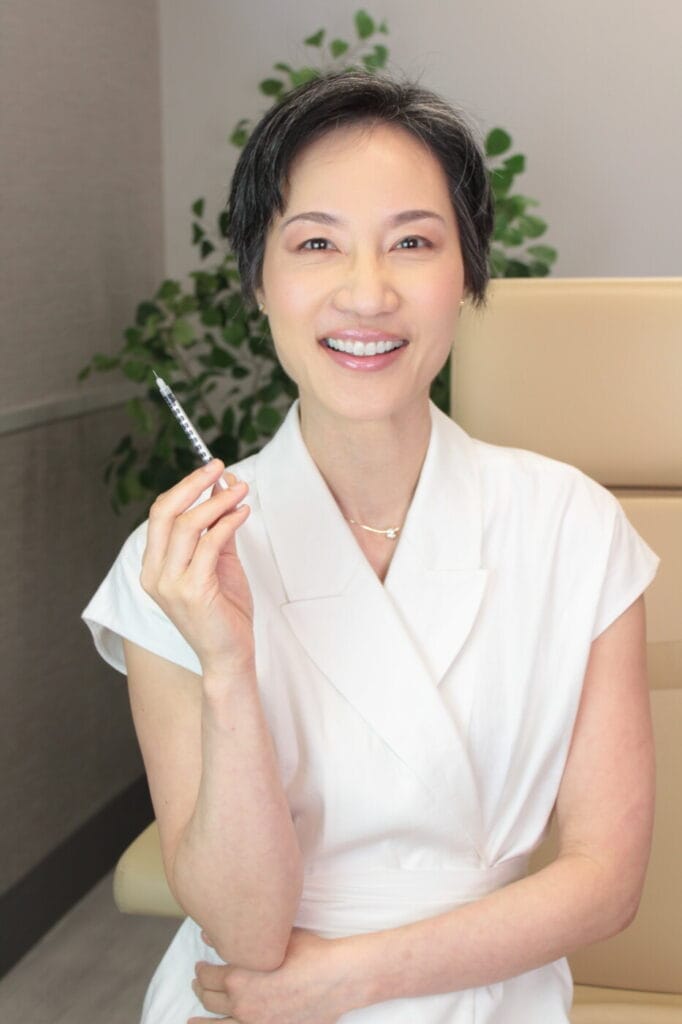
Meet the Expert: Dr. Melissa Chiang, MD, FAAD
Dr. Chiang is a Board-Certified Dermatologist with a rare dual-perspective on both medical and aesthetic skin health. Her background allows her to bridge the gap between “beauty” and “biology,” ensuring every treatment at Integrated Aesthetics is as safe as it is transformative. When she isn’t in the clinic, she is a leading voice in The Woodlands and Spring medical community, specializing in the latest regenerative treatments that define the modern aesthetic.
Curating Your Summer Strategy
In a climate as demanding as a North Houston summer, your aesthetic treatments shouldn’t be a matter of guesswork. My goal is to move beyond simply scheduled visits and instead help you build a durable, long-term strategy that respects your biology and your lifestyle here in the Spring and Woodlands area.
Whether you are looking to maintain your glow through the summer heat or want to explore regenerative treatments like Sculptra and PRF that work quietly behind the scenes, we invite you to choose a more tailored experience. If you are ready to move away from standardized care and want an anatomical consultation focused on your unique seasonal needs, I am here to help you navigate those choices right here in our community.
A Clinical Guide to the Facial “Pivot Point” for Patients in The Woodlands & Spring, TX
Authored By: Dr. Young Cho, MD Board-Certified Plastic Surgeon & Founder of Integrated Aesthetics
In the North Houston community, from the corporate headquarters in Spring to the social gatherings at Market Street, maintaining a refreshed and professional appearance is often a top priority. For many of our patients at Integrated Aesthetics, that journey begins with the elite dermatological care of Dr. Melissa Chiang.
For years, expertly placed injectables like Botox and dermal fillers have served as the gold standard for restoring lost volume and smoothing the signs of a busy lifestyle. However, there is a definitive biological threshold where injectables cease to be an effective solution and begin to detract from a natural appearance. At Integrated Aesthetics, we help our patients identify this “Pivot Point”: the transition from skin-surface maintenance to structural restoration.
Recognizing the Signs of “Filler Fatigue”
As we age, the face undergoes three distinct changes: skin quality decline, volume loss, and most importantly, structural descent. While fillers address volume, they cannot overcome gravity.
“I see it often in patients who have been dedicated to their injectable routine for several years,” says Dr. Melissa Chiang. “Eventually, we reach a point of filler fatigue. This happens when the skin’s underlying structures have shifted significantly. Adding more filler at this stage doesn’t lift the face; it adds weight, which can lead to a puffy or over-filled appearance.”
4 Clinical Indicators You Have Outgrown Your Filler
If you are searching for a more permanent solution to facial aging, evaluate your current results against these four markers:
- The “Heavy” Lower Face: Your jawline appears wider or more “square” due to filler migrating or being used to “mask” sagging skin.
- Diminishing Returns: You find yourself requiring more syringes, more frequently, to achieve a result that used to take half the amount.
- The Video Call Distortion: In the shadows of a Zoom call or overhead lighting, the face looks “pillowy” rather than defined.
- Structural Laxity: You can physically pinch and pull the skin away from the underlying tissue, indicating that the skin is no longer supported by the internal framework.
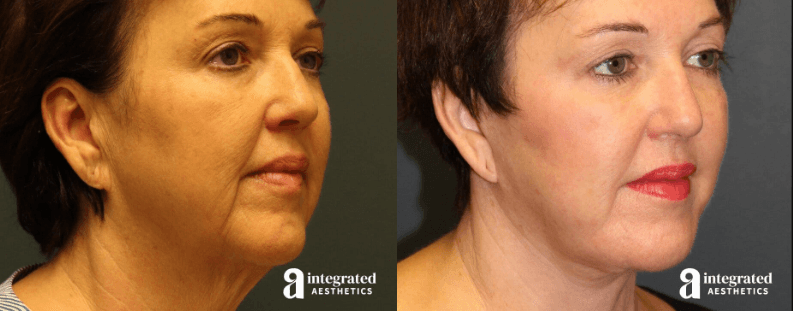
The Deep Plane Facelift: Where Skin Science Meets Structural Mastery
The unique advantage of our practice is the seamless collaboration between Dr. Melissa Chiang, a board-certified dermatologist, and Dr. Young Cho, a board-certified plastic surgeon. When Dr. Chiang identifies that the foundation of the face has moved beyond the reach of injectables, she consults directly with Dr. Cho.
“The goal isn’t to stop your dermatological maintenance,” explains Dr. Young Cho. “It is about resetting the canvas. I address the deep structural layers that have drifted over time while Dr. Chiang continues to optimize the quality of the skin’s surface. It’s the difference between a superficial fix and a true architectural restoration.”
The Deep Plane Difference: Designed for the North Houston Lifestyle
For the active professional, the greatest fear is often looking “operated on.” Dr. Cho’s specialized Deep Plane Facelift is specifically designed to bypass the tell-tale pulled look associated with traditional surgery.
Instead of putting tension on the skin with a horizontal pull, Dr. Cho enters a deeper anatomical plane to release and vertically reposition the SMAS layer and facial fat pads.
- The Result: You get a jawline that looks like it did a decade ago—crisp, defined, and elegant.
- The Recovery: Because there is no tension on the skin incisions, healing is remarkably efficient. Most of our patients return to their social calendars within ten to fourteen days, whether they are heading to the club or a local gala.
Life After Surgery: Maintenance with Dr. Melissa Chiang
A common question at our Spring office is: “Can I still get filler after a facelift?” The answer is a resounding yes. While Dr. Cho resets the structure, Dr. Chiang uses fillers and skin resurfacing treatments to polish the surface.
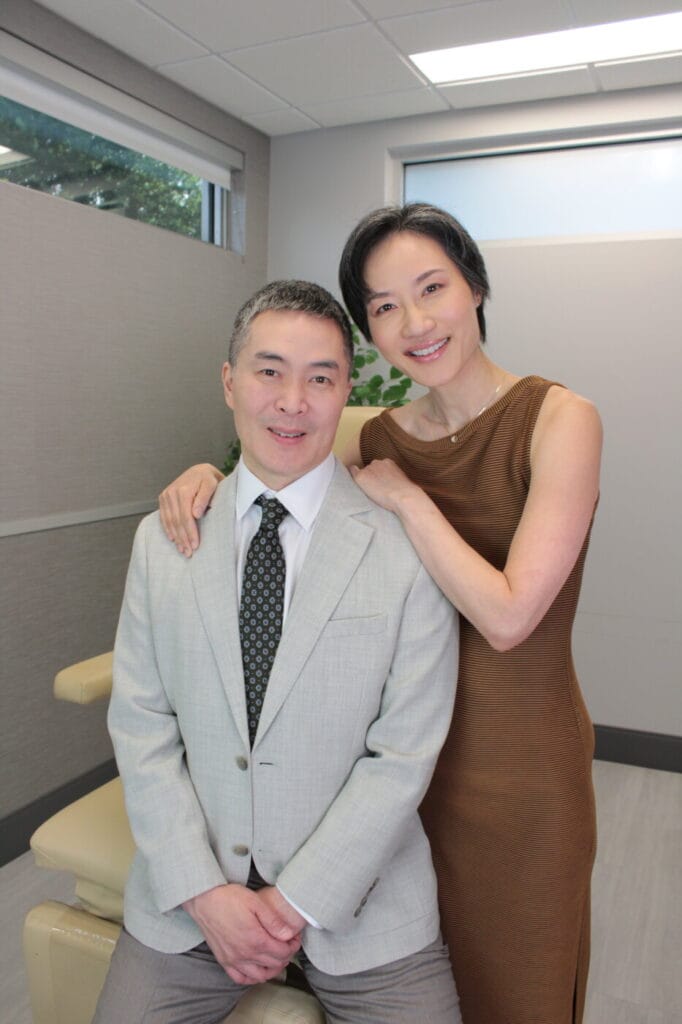
Why the Integrated Approach Wins in 2026
In a region like The Woodlands, you have many options for aesthetic care. However, the synergy between a Board-Certified Dermatologist and a Board-Certified Plastic Surgeon offers a level of expertise that is rare in North Houston.
- Safety and Precision: You benefit from two specialist perspectives on your unique facial anatomy.
- The “Un-Operated” Aesthetic: A harmonious result that combines structural lifting with advanced skin-quality protocols.
- Total Discretion: We understand that “well-rested” is the ultimate compliment. Our techniques ensure you look like yourself, only more vibrant.
Is It Time for the Pivot?
If you’re wondering if your filler is still doing the heavy lifting, it’s time to move beyond the syringe. Experience the combined expertise of Dr. Melissa Chiang and Dr. Young Cho.
Schedule your dual-specialty facial analysis at our Spring, TX office today and rediscover your most confident reflection.
You’ve invested in medical-grade serums and stayed consistent with your routine, yet your skin’s progress has stalled. If you feel like your “glow” has leveled off, you haven’t failed; you’ve simply reached the “Dermal Ceiling.”
“A plateau is actually a success story. It means your at-home routine has optimized your skin’s surface. Now, it’s time to look deeper at the dermal health below.”
— Dr. Melissa Chiang, Board-Certified Dermatologist
Why Isn’t My Skincare Working Anymore?
Many patients in The Woodlands and Spring reach a point where even the most expensive topicals stop delivering visible changes. This happens because most skincare primarily targets the epidermis (the outermost layer). Once your surface barrier is healthy, topicals reach a biological limit.
1. Topical Adaptation vs. Structural Aging
Your skin doesn’t become “immune” to ingredients like Retinol, but it does stabilize. If you are still seeing fine lines, laxity, or “crepey” texture, the issue is likely deeper than the surface.
Surface vs. Structural: Identifying Your Skincare Plateau
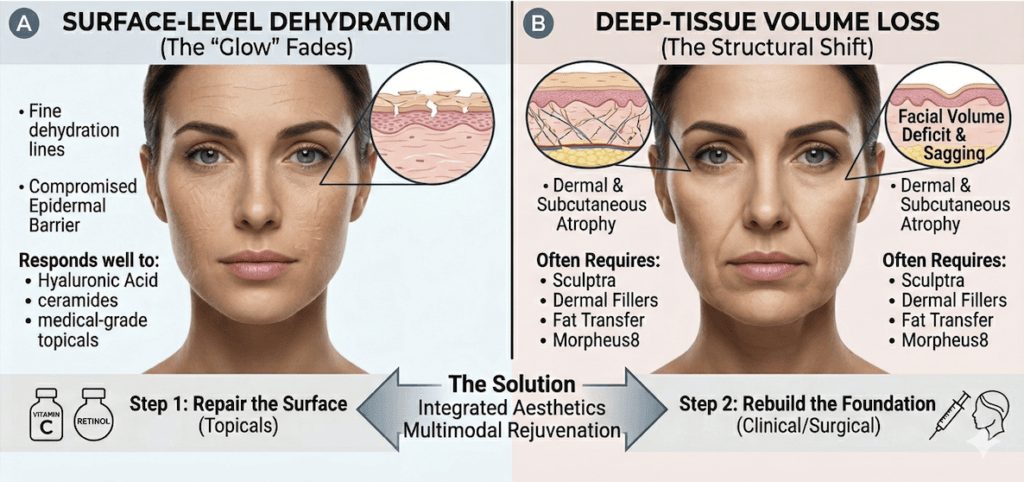
2. The Specialist’s Lens: Dr. Melissa Chiang on Dermal Health
While aestheticians provide essential maintenance, a Board-Certified Dermatologist like Dr. Melissa Chiang analyzes skin at the cellular level. When topicals reach their limit, Dr. Chiang utilizes medical-grade technology to bypass the epidermis and repair the skin’s scaffold.
- Biostimulators (Sculptra & Radiesse): To rebuild the skin’s internal scaffold from within.
- RF Microneedling: To trigger deep collagen remodeling.
- Customized Injectables: Precise applications to restore harmony and hydration.
The Structural Foundation: Dr. Young Cho’s Perspective
A skincare plateau is often the moment when biology meets gravity. When the concern is no longer just the “quality” of the skin, but the displacement of volume and tissue, we look to the structural expertise of Dr. Young Cho.
“Skincare is the finish work, but surgery is the foundation. When we address the underlying architecture of the face, we provide a permanent solution that topicals can only hope to mimic.”
— Dr. Young Cho, Board-Certified Plastic Surgeon
When topicals and light injectables can no longer bridge the gap, Dr. Cho utilizes advanced surgical techniques to restore the facial frame:
- Facial Fat Grafting: A permanent alternative to fillers that uses your own tissue to restore youthful volume.
- Mini Facelift: To correct jawline laxity and mid-face sagging that no serum can “lift.”
- Eyelid Surgery (Blepharoplasty): Addressing the most common area where skincare hits a ceiling—the delicate periorbital region.
Determining Your Next Steps
Living in the North Houston and Spring area means managing unique environmental stressors that can accelerate a skincare plateau. If you feel your current routine has reached its peak, it may be time to shift your focus from the jar to the specialist.
A skincare plateau isn’t a dead end; it’s an invitation to stop “guessing” with new products and start investing in treatments with proven medical results. We invite you to explore whether your concerns are best addressed through advanced dermal health or structural rejuvenation. Our team is here to help you navigate that distinction and find the path that aligns with your skin’s actual biological needs.
Explore Your Options with an Expert-Led Consultation
Are GLP‑1 weight loss medications causing hair loss—especially in perimenopausal and postmenopausal women?
If you’ve started a GLP‑1 medication such as semaglutide or tirzepatide and noticed increased hair shedding, you’re asking an important question. Many women are experiencing similar changes, yet the scientific literature has not fully caught up to real‑world clinical observations.
This article explains what we currently know, what remains unclear, and why hair loss on GLP‑1 medications is a real—and valid—concern deserving thoughtful evaluation, particularly during midlife.
Is Hair Loss a Known Side Effect of GLP‑1 Medications?
In clinical trials of GLP‑1 receptor agonists, alopecia or hair loss was reported in approximately 3–6% of participants, depending on the medication and study design.
However, it’s important to understand the limitations of this data:
- Clinical trials are not designed to study hair biology
- Hair loss is often under‑reported unless it is a predefined outcome
- Trials rarely differentiate types of hair loss
- Study populations often differ significantly from real‑world perimenopausal women
Real‑World Experience Suggests Higher Rates
In clinical practice, many physicians are observing hair shedding far more frequently than trial data suggests. While this may partly reflect availability bias, emerging case‑control and cross‑sectional studies also point toward a higher real‑world incidence.
The takeaway?
The true frequency of hair loss with GLP‑1 medications is still unknown—but likely under‑recognized.
Why Might GLP‑1 Medications Cause Hair Loss?
Hair loss is rarely caused by a single factor. In midlife women, it is almost always multifactorial. GLP‑1 medications may intersect with several known pathways involved in hair cycling.
1. Telogen Effluvium After Weight Loss
Rapid or significant weight loss is a well‑established trigger for telogen effluvium, a condition where hair follicles prematurely enter the shedding phase of the growth cycle.
Common features include:
- Diffuse scalp shedding
- Onset 2–4 months after weight loss begins
- Large amounts of hair in the shower or brush
- Typically reversible, though emotionally distressing
This phenomenon has been extensively documented in bariatric and metabolic medicine literature.
2. Nutritional Deficiencies and Hair Shedding
GLP‑1 medications reduce appetite and caloric intake—by design. However, this can unintentionally lead to nutrient deficiencies that affect hair growth, particularly in women.
Nutrients most commonly linked to hair loss include:
- Protein
- Iron
- Zinc
- Vitamin D
Perimenopausal and postmenopausal women may already have borderline deficiencies, making the hair follicle especially vulnerable during metabolic change.
3. Insulin Sensitivity and Hormonal Pathways
GLP‑1 medications improve insulin resistance—a major metabolic benefit. However, insulin signaling interacts with androgen pathways that influence hair follicle miniaturization.
There is a theoretical concern that rapid shifts in insulin sensitivity may unmask or accelerate female pattern hair loss (androgenetic alopecia) in genetically predisposed women.
Importantly:
- This does not mean GLP‑1s directly cause androgenetic alopecia
- They may affect the timing or visibility of hair loss that was already developing
4. Blood Pressure Changes and Scalp Circulation
Lower blood pressure is a known and beneficial effect of GLP‑1 medications. Some researchers have hypothesized that reduced systemic blood pressure may transiently affect scalp microcirculation, contributing to increased shedding in susceptible individuals.
This mechanism remains speculative, but it reinforces a key principle: Hair follicles are extremely sensitive to physiologic change.
Can GLP‑1 Medications Ever Improve Hair Growth?
Interestingly, yes—at least in theory.
By improving insulin resistance and reducing systemic inflammation, GLP‑1 medications may:
- Decrease chronic inflammatory shedding
- Improve metabolic signaling to hair follicles
- Support regrowth after an initial shedding phase
Some women experience temporary hair loss followed by stabilization or improvement, which is consistent with known hair cycling biology.
What If You’re Experiencing Hair Loss on a GLP‑1 Medication?
If you’re noticing hair thinning or shedding after starting a GLP‑1 medication:
- Your experience is real
- You are not overreacting
- The science is still evolving
- This phenomenon is worth investigating—not dismissing
Hair loss during perimenopause and menopause already carries emotional weight. When it overlaps with a powerful metabolic medication, women often feel forced into an unnecessary trade‑off.
You deserve a more nuanced approach.
A Smarter Question Than “Should I Stop the Medication?”
Instead of asking:
“Is my GLP‑1 causing hair loss?”
A more productive question is:
“How can we support my hair while my metabolism is changing?”
This typically involves:
- Distinguishing telogen effluvium vs female pattern hair loss
- Evaluating iron, vitamin D, zinc, and protein status
- Supporting the scalp and hair follicle during metabolic transition
- Setting realistic expectations about regrowth timelines
The Bottom Line: Where the Science Stands
The relationship between GLP‑1 weight loss medications and hair loss in women is still in an early stage of scientific understanding. But early does not mean insignificant.
Many important medical insights begin with careful clinical observation, followed by research. Hair loss associated with GLP‑1 medications appears to be one of those emerging patterns.
Women deserve clinicians willing to acknowledge uncertainty, stay curious, and take their concerns seriously.
If you’re navigating hair changes while using GLP‑1 medications, you don’t have to sort through the uncertainty alone. Schedule a consultation with board‑certified dermatologist Dr. Melissa Chiang at Integrated Aesthetics for expert, compassionate guidance grounded in both clinical experience and emerging research.
Your eyes are usually the first thing people notice, and your brows play a powerful role in shaping the way you express yourself to the world. Over time, gravity, genetics, and lifestyle factors can cause the brows to drop, creating a tired, heavy, or even stressed appearance.
A brow lift can provide a refreshed, natural look by lifting sagging brows, softening forehead lines, and opening the eye area. But not all brow lifts are the same. Two of the most advanced techniques used today are the endoscopic brow lift and the gliding brow lift, each offering different benefits depending on your anatomy and aesthetic goals.
At Integrated Aesthetics, Dr. Young Cho customizes every brow lift procedure to the patient’s facial structure, desired results, and recovery preferences.
Understanding the Role of the Brow in Facial Aging
As the forehead and brow naturally descend with age, several changes can occur:
- Heavy or drooping brows
- Hooding over the upper eyelids
- Deep horizontal forehead lines
- A tired or angry appearance, even when you feel well-rested
Lifting the brow can restore balance to the upper face and help create a brighter, more youthful expression.
Endoscopic Brow Lift: Precision with Minimal Incisions
The endoscopic brow lift is a minimally invasive surgical technique that uses several small incisions hidden within the hairline. A tiny camera (endoscope) allows for precise elevation and reposition of the brow tissues.
This approach is ideal for patients who want noticeable improvement while minimizing visible scarring and recovery time.
Benefits of an Endoscopic Brow Lift
- Small, hidden incisions within the hairline
- Precise repositioning of brow tissues
- Natural-looking lift to the forehead and brows
- Improved forehead wrinkles and brow heaviness
- Less scarring compared to traditional brow lift techniques
Recovery
Most patients experience:
- Swelling and bruising for 1 to 2 weeks
- Return to work within about 7 to 10 days
- Continued improvement as swelling resolves
Endoscopic brow lifts are often combined with upper eyelid surgery, midface lifts, or facial fat grafting for comprehensive facial rejuvenation.
Gliding Brow Lift Defined
The gliding brow lift is a refined surgical technique designed to reposition brow tissue using minimal incisions and careful soft tissue movement. Rather than aggressively lifting tissue, the gliding technique allows the brow to be repositioned in a more natural, controlled way.
This approach is often chosen by patients who want a subtle, natural enhancement without dramatic changes.
Advantages of a Gliding Brow Lift
- Gentle elevation of the brow
- Minimal and often nearly invisible incisions
- Highly customizable to individual anatomy
- Natural-looking, balanced results
- Less tissue disruption
Recovery
Patients typically experience:
- Mild swelling or tenderness for 1 to 2 weeks
- Gradual improvement as tissues settle
- A refreshed, natural appearance as healing progresses
Gliding brow lifts are frequently combined with eyelid surgery or facial fat transfer to enhance overall facial harmony.
Endoscopic Brow Lift vs Gliding Brow Lift
While both procedures aim to rejuvenate the upper face, they differ slightly in technique and ideal candidates.
Endoscopic Brow Lift
Best for:
Best for:
- Moderate brow descent
- Patients who want a more noticeable elevation
- Improving forehead wrinkles and brow heaviness
Features:
- Small incisions hidden in the hairline
- Camera-assisted precision
- Structured lifting and repositioning
Gliding Brow Lift
Best for:
- Mild to moderate brow sagging
- Patients seeking subtle, natural results
- Individuals wanting minimal tissue disruption
Features:
- Gentle repositioning of brow tissues
- Minimal incisions
- Highly tailored to facial anatomy
During your consultation, Dr. Cho evaluates your anatomy, brow position, eyelid skin, and facial balance to determine which technique will produce the most natural outcome.
Procedures Often Combined With Brow Lifts
Because the brow and eyelids age together, brow lifts are often combined with other facial rejuvenation procedures to achieve balanced results.
Common complementary treatments include:
- Upper eyelid surgery (blepharoplasty) to remove excess eyelid skin
- Fat grafting to restore lost facial volume
- Midface lift to rejuvenate the cheeks
- Morpheus8 or laser resurfacing for skin tightening and texture improvement
Treating multiple areas at once often produces the most harmonious and natural-looking outcome.
Signs You May Be a Good Candidate for a Brow Lift
You may benefit from a brow lift if you notice:
- Brows that sit lower than they used to
- Upper eyelid hooding caused by brow descent
- Deep forehead lines or wrinkles
- A tired or heavy expression
- Difficulty applying eye makeup due to brow heaviness
A consultation is the best way to determine which approach will achieve your goals.
Why Surgical Expertise Matters
Successful brow lift results depend on careful planning and a deep understanding of facial anatomy. The goal is not simply lifting the brows but to restore balance and preserve natural facial expression.
At Integrated Aesthetics, Dr. Young Cho focuses on creating results that look refreshed. Every procedure begins with a detailed consultation to evaluate facial structure, discuss goals, and determine the most effective surgical approach.
Restore a Refreshed, Natural-Looking Brow
Your brows frame your eyes and shape your entire expression. When they begin to descend, it can dramatically change how your face looks and how others perceive your mood.
Whether you may benefit more from an endoscopic brow lift or a gliding brow lift, the right technique can restore a brighter, more youthful appearance while maintaining your natural features.
At Integrated Aesthetics in Spring, TX, Dr. Young Cho takes a personalized approach to every brow lift procedure, ensuring results that are balanced, refined, and tailored to you.
Schedule your consultation today to learn which brow lift option is right for you and your aesthetic goals.
For decades, the approach to facial aging was relatively straightforward: See a wrinkle, fill a wrinkle. Notice volume loss, add volume back.
While this “replace what’s missing” philosophy delivered results, it often meant chasing individual concerns rather than addressing why your face was changing in the first place.
Biostimulators Sculptra® and Radiesse® represent a fundamental shift in how we think about the aging face. Rather than simply masking the signs of aging, these treatments work with your body’s natural regenerative processes to rebuild what time has taken away.
Biostimulators Focus on Rebuilding, Rather Than Filling
Traditional dermal fillers work by physically occupying space. Inject hyaluronic acid into a nasolabial fold, and the gel pushes the skin outward, smoothing the crease. It’s effective, but it’s also somewhat passive—the filler sits there until your body eventually breaks it down.
Collagen biostimulators take an entirely different approach. When Sculptra’s poly-L-lactic acid or Radiesse’s calcium hydroxylapatite microspheres are injected, they trigger your body’s natural wound-healing response. Your skin responds by producing new collagen—the structural protein that keeps skin firm and lifted.
Over weeks and months, this fresh collagen integrates into your tissue, essentially rebuilding the scaffolding that age has weakened. The collagen your skin produces is yours, which is why biostimulator results can look and feel more natural when used by an expert injector.
Before and After
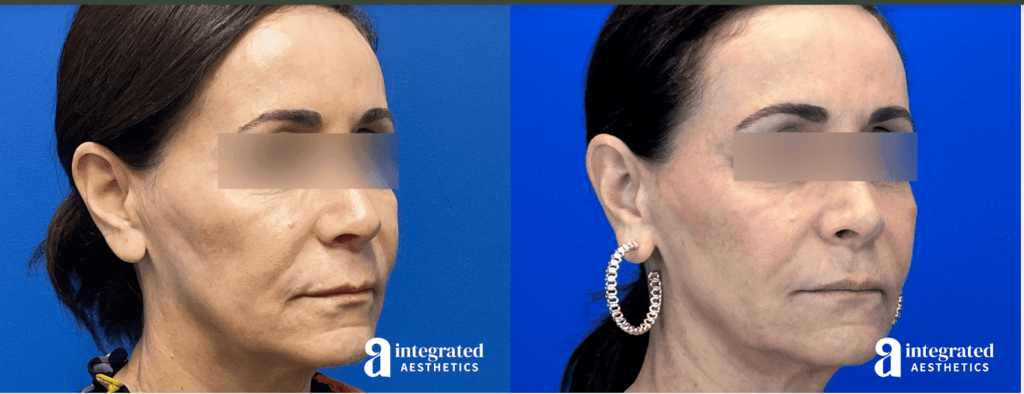
We Use This Tool for Global Rejuvenation—Not Spot Treatments
One of the most significant shifts biostimulators have introduced is moving away from treating isolated concerns toward addressing the face as a whole.
Think about how aging happens: it’s not just that your nasolabial folds deepen or your cheeks deflate. The entire foundation of your face is changing. Bone recedes, fat pads shift and shrink, and collagen breaks down across every layer. When you treat just one wrinkle or one hollow area, you’re addressing a symptom while ignoring the larger picture.
Biostimulators are the ideal tool for subtle, full-face restoration. At Integrated Aesthetics, Dr. Melissa Chiang, Dr. Young Cho, and our team often use Sculptra to address the temples, cheekbones, chin, and jawline in a single treatment plan—essentially rebuilding the structural frame of the face rather than spot-treating individual complaints. This comprehensive approach creates more harmonious, balanced results because the entire face is being restored together.
Before and After
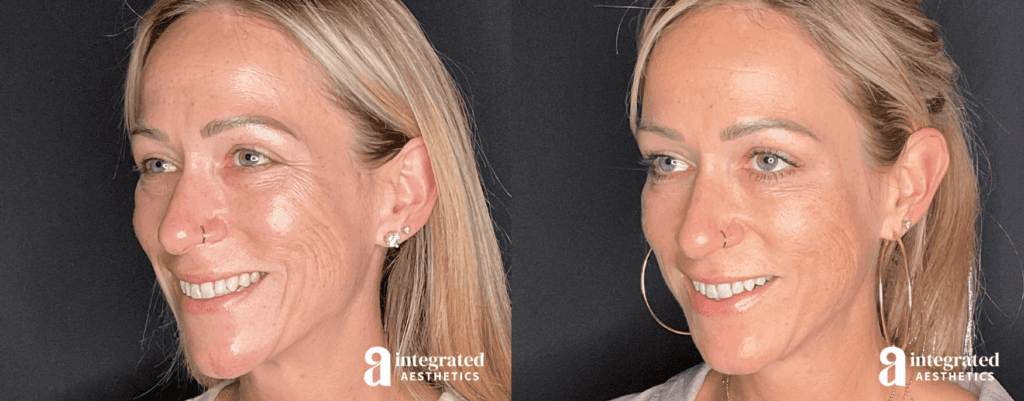
Gradual Transformations Help You Avoid Looking “Done”
Biostimulators work gradually, with results developing over weeks as your body produces new collagen. This slower timeline means changes unfold naturally, giving your appearance time to evolve rather than transforming it overnight. Friends and family may notice you look refreshed, rested, maybe even happier—but they can’t quite pinpoint what’s different.
And because results build over multiple treatment sessions, your injector can assess your progress and adjust the plan accordingly.
Biostimulators as Part of Multi-Modal Protocols
Because biostimulators work on the collagen layer specifically, they can complement other treatments that address different aspects of aging:
- Wrinkle relaxers like Botox address dynamic wrinkles caused by muscle movement.
- Traditional fillers can still be valuable for precise volume placement in areas like the lips.
- Skin-tightening devices like Ultherapy® or Morpheus8 target laxity through different mechanisms.
- Microneedling and laser treatments improve surface texture and discoloration.
This integrated approach—addressing aging at the muscle level, the volume level, the collagen level, and the skin surface level—delivers outcomes that no single treatment could achieve alone.
To explore whether Sculptra, Radiesse, or a combination approach aligns with your goals, we invite you to schedule a consultation with our team at Integrated Aesthetics. Call (281) 404-5454 or request an appointment online at our Spring or The Woodlands locations.
For many of us, there’s a moment when we start to notice subtle but persistent changes in our skin. A less defined jawline. Looser skin along the neck. A brow that doesn’t sit quite as high as it used to. Maybe even texture concerns that weren’t there a decade ago.
As the world of non-surgical aesthetics has evolved, two technologies have set themselves apart as leaders in age-defying rejuvenation: Sofwave and Morpheus8. You may hear them mentioned together, but they address aging in distinctly different ways.
If you’re exploring options for lifting, tightening, or restoring a smoother texture, understanding these differences will help you choose the treatment that’s truly aligned with your skin needs and long-term goals.
Think of this as your informed, insider’s guide to what sets these two powerhouse treatments apart.
The Technology Breakdown
Sofwave: Ultrasound Tightening With Surgical-Level Precision
Sofwave uses a next-generation form of ultrasound energy known as SUPERB (Synchronous Ultrasound Parallel Beam). This technology targets a precise layer of the skin, the mid-dermis, around 1.5 mm deep, where collagen production naturally declines.
What makes Sofwave unique:
- Completely non-invasive
- No skin penetration or surface disruption
- FDA-cleared for lifting the brows, neck, and submental area
- Delivers a firmer, tighter look with no recovery time required
- Typically performed in a single treatment
It’s a sophisticated approach to lifting that feels seamless and effortless, both during and after the procedure.
Morpheus8: Microneedling + Radiofrequency for Multi-Layer Remodeling
Morpheus8 takes a moe structural approach. By combining microneedling with radiofrequency (RF) energy, it delivers controlled heat through micro-pins to multiple layers of the skin, reaching depths up to 4mm.
Why this matters:
Different skin concerns live at different depths, and Morpheus8 is designed to address them collectively.
What Morpheus8 offers:
- Smooth uneven texture
- Improve fine lines and crepiness
- Refine acne scarring
- Tighten skin laxity
- Remodel small pockets of fat for subtle contouring
Expect a few days of downtime, depending on the treatment depth and intensity. The results build progressively through a series of sessions.
What to Expect From Each Treatment
Sofwave
A streamlined, single-session treatment that’s ideal for tightening and lifting without interrupting your routine. Results develop gradually as new collagen forms over the following months.
Morpheus8
Designed as a multi-session series, typically spaced four weeks apart. Each session builds on the last, creating visible improvements in texture, firmness, and overall tone.
Safety, Skin Types & Considerations
Sofwave
Due to Sofwave not breaking the skin and using ultrasound energy, it is considered safe across all skin tones. There is no risk of post-inflammatory hyperpigmentation (PIH) or surface trauma.
Morpheus8
While suitable for most skin types, Morpheus8 requires expert treatment customization for individuals with deeper skin tones. The microneedling component increases the potential risk of PIH if the device is not used conservatively.
Where Sofwave and Morpheus8 Overlap
Despite their differences, both treatments share powerful benefits, including:
- They stimulate collagen and elastin, the structural proteins responsible for firmness and resilience.
- Improvements continue to develop for months after treatment.
- Both can be used to treat the face, neck, and body.
- They can complement each other beautifully when used strategically.
Sofwave focuses on elevating and lifting the mid-dermis, while Morpheus8 restructures deeper layers and refines the surface. Together, they can create a more complete rejuvenation experience.
Choosing the Right Treatment for Your Skin Goals
You might lean toward Sofwave if you want:
- A non-invasive treatment
- A lifted, tighter appearance
- Zero downtime
- A single-session approach
You might lean toward Morpheus8 if you want:
- Smoother texture and refined tone
- Correction of scarring or crepiness
- Deeper skin tightening
- More transformative collagen remodeling
Both are effective, but the best choice depends on what you want to achieve and how intensively you want to treat the skin.
Two Technologies, One Purpose—Better, More Confident Skin
Sofwave and Morpheus8 represent two of the most advanced, scientifically backed approaches to non-surgical skin tightening. While their mechanisms differ, they share a common goal: restoring firmness, structure, and confidence through targeted stimulation of collagen.
At Integrated Aesthetics, your treatment plan is tailored to your individual needs. Whether you need subtle lifting, deeper remodeling, or a combination of both, our expert team guides you toward the option that best matches your vision for your skin.
Ready to explore your options?
Schedule your consultation with us at Integrated Aesthetics in Spring and The Woodlands, TX, and discover a treatment plan tailored to your needs.