A mommy makeover is one of the most transformative ways for women to reclaim their body confidence after pregnancy, childbirth, and weight changes. This combination procedure often includes a tummy tuck, breast lift or augmentation, and liposuction. There are additional procedures that women may combine with a mommy makeover, including arm lift, thigh lift, labiaplasty, and more. It can dramatically enhance your shape and restore a natural balance to your silhouette.
However, just as every transformation takes time, so does the recovery process. Understanding what to expect each day after surgery can help you feel prepared, confident, and in control of the process. Here’s a realistic, day-by-day breakdown of what recovery after a mommy makeover looks like.
Day 1: Surgery Day
After surgery, you’ll wake up feeling groggy and sore, with compression garments already in place and small drains to help minimize swelling and promote healing. This first day is all about rest and recovery. You will need a trusted caregiver to drive you home, assist with medications, and help you move around safely. It’s normal to experience tightness or pressure, especially in your abdomen, and you’ll be instructed to walk slightly bent at the waist (about a 45-degree angle), often with the help of a walker, to protect your incisions and avoid tension on your tummy tuck. Pain and tightness are completely normal during this stage, but are manageable with your prescribed medications. The goal for today is simple: rest, hydrate, and allow your body to begin the healing process.
Day 2-3: Powering Through the Toughest Days
The first 48-72 hours after surgery are often the most challenging, as swelling, bruising, stiffness, and soreness typically peak during this period, and fatigue is common. On day two, you’ll likely have a next-day post-op visit with your surgeon to ensure your healing is on track. During this time, it’s important to stay hydrated, take short, supported walks to promote circulation, and rest in an inclined or slightly elevated position when possible. Focus on small victories, like walking slowly around the house, eating light protein-packed meals, and following your surgeon’s instructions for medications, antibiotics, and drain care. Most patients begin to notice a meaningful improvement after day three, marking the end of this intense early stage of recovery. If you are up for it, a light shower is recommended.
Day 4-6: Noticing Small Improvements
By this stage, the worst of the discomfort usually begins to ease. Pain and stiffness are improving, and you may begin to wean off stronger prescription medications, possibly switching to over-the-counter options. Swelling and bruising are still present but are gradually fading, and you should notice less pressure in your abdomen and more freedom of movement. You will likely still need assistance with household tasks and childcare, but you may start feeling like yourself, having a bit more energy and a little less soreness. It’s important to continue wearing your compression garments 24/7 to support healing and maintain your shape and new contours. Gentle movement, deep breaths, and short walks remain essential at this stage to promote circulation.
Day 7-10: Gaining Confidence in Your Recovery Journey
Around the one-week mark, most patients begin to feel and see noticeable improvements in both comfort and mobility. You’ll have a follow-up appointment with your surgeon, during which drains and sutures may be removed depending on your healing progress and your surgeon’s technique. Standing upright becomes easier, moving around feels less strenuous, and overall confidence in daily activities begins to return. Some tightness and swelling may still be present, particularly when stretching or reaching overhead, but your mobility will continue to improve each day. This is often a turning point in recovery, when patients realize just how far they’ve come in the first week.
Tip: This is an ideal time to begin lymphatic massages with the Ballancer Pro at Integrated Aesthetics. These treatments help reduce lingering swelling, improve circulation, and support optimal healing, helping your results settle more quickly and comfortably.
Week 2: Easing Back Into Routine
By the second week, your recovery is gaining momentum, and many patients feel ready to return to light, non-strenuous work, such as tasks that involve sitting rather than prolonged standing or lifting. Tenderness, tightness, and some swelling are still normal, but overall discomfort is usually much improved, and you may feel more independent and capable. Your incision sites continue to heal, and while compression garments may still be required full-time, your energy levels are steadily increasing. Continue prioritizing rest, hydration, and protein-rich meals to support tissue repair. This stage is all about finding balance: gradually easing back into normal activities while protecting your body and allowing it to continue healing safely. It is important, however, to avoid heavy lifting, strenuous activity, and sexual activity until your body has healed sufficiently.
Week 3-4: Seeing Your Shape Take Form
As your strength returns during weeks three to four, swelling gradually subsides and your new contours begin to take shape. Walking becomes comfortable, and many patients are cleared for light exercise such as gentle walking or stretching. Your body is settling into its renewed shape, and you may notice that you can stand taller and move more confidently. Compression garments may only be needed part-time at this stage, depending on your surgeon’s guidance and what’s best for your healing journey. While your scars are still fresh, your overall silhouette looks smoother and more defined.
Week 5-6: Returning to Normal
Around weeks five to six, many patients begin to feel fully “back to themselves.” Swelling continues to diminish, and your surgeon will likely clear you to resume moderate exercise and most of your daily routines, though intense core or upper-body workouts should still be avoided. Your body feels stronger, movement is easier, and you’ll start to see your results taking shape beautifully as your contours settle and scars begin to mature. Some residual tightness or numbness around the abdomen or breasts is normal during this stage and continues to improve over time. Many patients describe this period as a turning point, when they can finally enjoy and appreciate the full benefits of their mommy makeover surgery.
Month 2-3: Seeing Your Results
By the two-to-three-month mark, most internal healing is complete, and swelling has significantly diminished. Your scars begin softening in color from red to pink, and your new shape becomes more defined. Sensations like numbness or tightness may persist but typically improve gradually over time. At this stage, you’ll start to feel more at home in your new shape, noticing the refined contours that motivated your surgery in the first place. Many patients experience renewed confidence, comfort in fitted clothing, and the emotional reward of truly seeing their transformation come to life.
Enhance and Maintain Your Results: Once cleared by your surgeon, patients often choose Emsculpt or Emsculpt Neo treatments to further sculpt and strengthen their core, lift the buttocks, or tone other areas. These non-invasive treatments complement your surgical results, helping maintain muscle definition and optimize body contours over time.
6 Months and Beyond: Reaching Full Recovery
By six months, most swelling has resolved, and you can resume all normal activities, including core workouts and heavier lifting, as cleared by your surgeon. Your scars continue to fade and flatten over the next 12 to 18 months, gradually softening from pink to a smooth, subtle tone. At this stage, your mommy makeover results feel natural, balanced, and fully integrated with your body. Finally, by the one-year mark, you can truly appreciate the full transformation and the lasting benefits of your journey.
Patience Pays Off
Recovering from a mommy makeover is a transformation that involves both physical and emotional aspects. By following your surgeon’s instructions, listening to your body, and allowing time to heal, you’ll set yourself up for the best long-term results. Every week brings progress, increased confidence, and a step closer to your final outcome. Remember, every recovery is unique, so honor your body’s pace along the way.
Ready to Begin Your Transformation Journey?
If you’re ready to restore your confidence and feel like yourself again, it all starts with a personalized consultation. Dr. Young Cho at Integrated Aesthetics combines surgical expertise with an artistic approach to create beautifully natural results and a customized journey for each patient.
Considering non-surgical body contouring with Tone by InMode? This proven muscle-toning treatment is generating buzz for good reason: it delivers real, visible results without surgery, needles, or downtime.
Below, we answer some of the most common—and most specific—questions we hear from patients.
What Exactly Is Tone by InMode?
Tone uses electrical muscle stimulation (EMS) to strengthen, tone, and define your muscles. Unlike traditional workouts that rely on voluntary muscle contractions, Tone uses hands-free applicators to deliver controlled electrical impulses that trigger involuntary contractions deep within targeted muscles—far more intense and frequent than what you can achieve on your own.
Over a series of treatments, these contractions can help build real muscle mass and enhance overall body contour.
Can Tone Help With Postpartum Diastasis Recti (Abdominal Separation)?
Yes! Tone can be moderately effective for postpartum women dealing with the separation of the abdominal muscles (diastasis recti) that often occurs during pregnancy.
Research shows that neuromuscular electrical stimulation (the technology behind Tone by Inmode), combined with targeted abdominal exercises, reduces the inter-recti distance (the gap between the separated muscles) and restores abdominal strength.
One such study reported that women who used neuromuscular electrical stimulation with exercises showed a 14.3mm reduction in inter-recti distance compared to 7.3mm with exercise alone.
We ask that you wait at least 8-12 weeks after delivery before starting Tone to allow natural recovery and get clearance from your OB/GYN, especially if you’ve had a cesarean section.
How Should I Prepare for My Tone by Inmode Session?
Proper preparation can significantly enhance your results and ensure a comfortable treatment experience. Here’s what we recommend:
Before Your Session:
Drink plenty of water in the 24 hours before treatment to ensure your muscles are well-hydrated and responsive
Skip alcohol for at least 24 hours prior (alcohol dehydrates tissues and can interfere with muscle response)
Arrive with clean, product-free skin on treatment areas
Avoid heavy meals that might cause discomfort during abdominal contractions
Empty your bladder before treatment
After Your Session:
Continue drinking water to help flush metabolic waste from the lymphatic system
Avoid high-sodium foods for 24-48 hours (salt can cause water retention that may interfere with results)
Limit alcohol for 24 hours post-treatment to support healing and reduce inflammation
Should I Massage the Treated Area After Tone? Will It Help?
Yes! We recommend gentle self-massage or professional lymphatic drainage massage 24-48 hours after your Tone session to help ease muscle soreness and enhance your body’s ability to clear metabolic waste. However, always discuss massage timing and technique with your provider, as recommendations may vary based on your individual treatment plan.
Our Ballancer Pro lymphatic drainage therapy is an excellent complement to Tone and can be scheduled as a follow-up treatment to optimize your body contouring results.
Can Tone by Inmode Replace My Regular Workouts?
Think of Tone by Inmode as a way to enhance and accelerate the results you’re working toward in the gym, not as a substitute for staying active. Here’s how they compare.
What Tone Does Better:
Reaches deep muscle fibers that are difficult to activate through voluntary exercise alone
Produces more intense, frequent contractions than you can achieve on your own
Targets specific muscle groups with greater precision
Provides consistent muscle engagement without physical fatigue
What Traditional Exercise Does Better:
Builds cardiovascular endurance and overall fitness
Improves coordination, balance, and functional movement patterns
Burns more calories during the activity
Engages multiple muscle groups simultaneously for compound movements
Research shows that EMS combined with voluntary exercise produces superior strength gains compared to either method alone.
I’m an Athlete or Bodybuilder. Can Tone Help Me Break Through Plateaus?
Absolutely! Because Tone activates a higher proportion of Type II (fast-twitch) muscle fibers—the fibers responsible for power, strength, and muscle growth—it can help you achieve more pronounced muscle development and target lagging muscle groups that haven’t responded as well to traditional training.
Many athletes use Tone as part of their periodization strategy or during deload weeks to maintain muscle stimulation without the mechanical stress of heavy lifting.
“I recently had an appointment and couldn’t be happier with the entire experience. The appointment itself went smoothly, and I’m thrilled with the results. The provider was skilled and professional, and I appreciated the time they took to explain everything and tailor the treatment to my needs. Overall, it was a great experience. I’ll definitely be coming back and recommending this place to friends!”
—5-Star Google Review
What Should I Do to Maximize My Results Between Sessions?
Your lifestyle choices between sessions play a crucial role in the quality and longevity of your results. Here’s how to optimize your outcomes:
Nutrition:
Eat adequate protein (0.8-1g per pound of body weight) to support muscle recovery and growth
Stay hydrated with at least 8-10 glasses of water daily
Minimize processed foods and excess sodium to reduce inflammation
Include anti-inflammatory foods like leafy greens, berries, and omega-3 fatty acids
Physical Activity:
Continue your regular exercise routine to complement the muscle-building effects of Tone
Focus on compound movements that engage your core
Avoid overtraining the treated muscle groups immediately after sessions
Recovery:
Get 7-9 hours of quality sleep each night for optimal muscle repair
Manage stress through meditation, yoga, or mental wellness treatments like EXOMIND (high cortisol levels can interfere with muscle development)
Consider supplementing with collagen, vitamin D, and magnesium to support muscle and connective tissue health
Can I Use Tone During My Menstrual Cycle?
Yes, you can safely use Tone during your menstrual cycle. There are no contraindications related to menstruation, and the treatment will not negatively affect your hormones or cycle regularity.
Some women prefer to avoid abdominal treatments during the heaviest days of their period due to increased sensitivity in the abdominal area and cramping (which might be exacerbated by muscle contractions).
Can I Use Tone by InMode If I Have Metal Implants or Surgical Hardware?
The answer depends on the type and location of your implant. Patients with active electrical implants—such as pacemakers, defibrillators, or neurostimulators—are not candidates for Tone.
Passive metal implants—such as hip or knee replacements, surgical screws, plates from fracture repair, or spinal hardware—are generally safe for EMS treatments like Tone. However, you should always:
Disclose all implants (including the type and location) during your consultation
Provide documentation from your surgeon if possible
Wait at least 6 months after implant surgery before starting Tone to ensure full healing and integration
If Tone is not the best option for you, we will recommend an alternative body contouring treatment at our office to help achieve your goals.
I Have Varicose Veins or Lymphedema. Is Tone Safe for Me?
Tone may still be appropriate, but requires careful evaluation to ensure it’s the safest and most effective body-contouring treatment.
Mild to moderate varicose veins are generally not a contraindication for treatment. We avoid placing electrodes directly over prominent varicose veins. EMS may actually improve circulation and venous return in some cases.
Mild lymphedema may benefit from the circulatory effects of EMS, though severe or uncontrolled lymphedema requires medical clearance.
If you have additional questions about Tone that weren’t covered here, we invite you to schedule a consultation with our expert team at Integrated Aesthetics. Call us at (281) 404-5454 to speak with a member of our team at our Spring or The Woodlands, TX locations.
Erectile dysfunction affects millions of men, and while treatments like Viagra and Cialis have helped many regain their confidence, they’re not the right fit for everyone. Some men experience side effects, others find the timing inconvenient, and many simply want a more permanent solution that doesn’t require planning ahead or taking pills.
If you’re tired of depending on medication for intimacy, ApexRF for erectile dysfunction offers a different approach. This innovative radiofrequency treatment works by rebuilding the tissue responsible for natural erections, potentially reducing or eliminating your need for ED medications altogether.
Before diving in, it’s helpful to understand where you fall on the ED spectrum. The Sexual Health Inventory for Men (SHIM) score is a quick, five-question self-assessment that helps determine whether your symptoms are mild, moderate, or severe. ApexRF is most effective for men with mild-to-moderate ED, particularly those still able to achieve some level of erection but who experience inconsistent firmness or difficulty maintaining it.
But like any advanced treatment, ApexRF raises practical questions that go beyond the basics. Here are answers to a few more intimate questions to help you decide if this drug-free ED solution is right for you.
Can I have sex before/after ApexRF treatments?
Yes, you can maintain sexual activity throughout your ApexRF treatment series. Unlike some ED treatments that require timing or preparation, with ApexRF, there are no restrictions on intimacy before or after your sessions. In fact, many men find that staying sexually active during treatment helps them better track their improvements in function and performance.
ApexRF doesn’t interfere with spontaneous intimacy. You can resume normal (and sexual) activity immediately after each 15-minute session.
Can I exercise or work out after ApexRF sessions?
Yes, whether you’re lifting weights, running, or playing sports, you can return to your regular workout routine immediately after your ApexRF treatment. There is no downtime or aftercare, and side effects are minimal. You may notice slight redness in the treated area, but this subsides quickly.
Should I stop taking my ED medications during ApexRF?
No, you should continue taking your current ED medications as prescribed throughout your ApexRF series. The treatment is designed to work alongside your existing medications, not replace them immediately.
Many men find they can reduce their medication dosage or frequency as ApexRF results develop, but this should only be done under your doctor’s guidance. During your follow-up appointments, we’ll assess your progress and coordinate with your primary care physician about any medication adjustments.
How far apart should ApexRF sessions be scheduled?
We typically schedule ApexRF sessions twice per week for three consecutive weeks, with sessions spaced 2-3 days apart. This schedule, totaling six to eight sessions, allows for optimal collagen remodeling and tissue regeneration.
For example, many patients choose Monday/Thursday or Tuesday/Friday schedules. The key is maintaining consistency rather than perfect timing.
What happens if I miss an ApexRF appointment?
Life happens, and if you need to reschedule a session, simply contact our office as soon as possible. We can usually accommodate missed appointments within the same week to keep your treatment series on track.
While consistency is important for optimal results, missing one session won’t derail your entire treatment plan. We’ll work with you to adjust your schedule as needed.
Can I combine ApexRF with testosterone therapy?
Yes, ApexRF and testosterone replacement therapy (TRT) work well together. This combination can be particularly effective since they address different aspects of male sexual wellness: ApexRF targets tissue structure and blood flow, while TRT addresses hormonal factors. Many of our patients are already on TRT when they begin ApexRF treatments. The two therapies complement each other without interference.
Will ApexRF work if I’m also getting P-Shot treatments?
ApexRF and P-Shot treatments can be combined effectively for enhanced results. The P-Shot uses PRF (platelet-rich fibrin) derived from your own blood to promote tissue regeneration and improve blood flow, while ApexRF rebuilds collagen structure and improves tissue quality.
When used together, these treatments can work synergistically to provide even stronger results for improving circulation and collagen production. During your consultation, our providers will discuss the optimal treatment approach based on your specific goals.
Can I do ApexRF and shockwave therapy together?
Yes, ApexRF can be combined with shockwave therapy, though we usually recommend a strategic approach. While both are non-invasive ED treatments, they work through different mechanisms—shockwave therapy primarily improves blood flow, while ApexRF rebuilds tissue structure.
Our take: During your consultation, Dr. Young Cho will help determine the best combination approach based on your specific condition and goals.
Will I need maintenance ApexRF treatments after my initial series?
Most men don’t require regular maintenance treatments after completing their initial six- to eight-session series. ApexRF creates lasting structural improvements in tissue quality and blood flow that can persist for months to years.
However, some patients choose to have occasional “touch-up” sessions (perhaps every 6-12 months) to maintain optimal results, especially if they have underlying conditions that affect erectile function.
What happens to my results after 1-2 years?
ApexRF creates structural improvements in erectile tissue by stimulating collagen production and improving blood flow. The tissue improvements are designed to be lasting rather than temporary, similar to other collagen-stimulating treatments.
That said, individual results vary based on factors like overall health, lifestyle, and underlying causes of ED. During your follow-up appointments, we’ll monitor your progress and discuss any maintenance options if needed.
“Thank you Integrated Aesthetics for the outstanding customer service you provided me! Talking to Dr. Cho confirmed what I read about him online. He was very knowledgeable and an expert in his profession. I found him to be kind and caring and took the time explaining the details, the pros and cons of each of the options available for my situation. I didn’t feel being rushed despite the numerous questions I had with him. He was very patient.”
—5-star Google review
Does ApexRF work for men with diabetes-related ED?
Yes, ApexRF can be effective for men with diabetes-related erectile dysfunction. Diabetes often causes ED through blood vessel damage and reduced circulation—areas that ApexRF specifically targets through its tissue-rebuilding and circulation-improving effects.
While results may vary based on the extent of diabetic complications, many of our diabetic patients see meaningful improvements in erectile function after completing their ApexRF series.
Can I get ApexRF if I have a penile implant?
No, ApexRF is not suitable for men with penile implants. The radiofrequency energy could potentially interfere with implant materials or positioning. If you have a penile implant, we’ll discuss alternative treatment options during your consultation.
Does ApexRF work for men over 65?
Many of our patients over 65 achieve excellent results, particularly those with age-related changes in tissue quality and circulation. Age alone doesn’t disqualify you from ApexRF ED treatment. While older men may require realistic expectations about results, ApexRF’s tissue-rebuilding approach can be particularly beneficial for age-related erectile changes.
Will my partner notice a difference after ApexRF?
Many partners do notice improvements, though the changes develop gradually over several weeks. Patients often report stronger, more reliable erections, improved duration, and increased confidence, which all can, of course, enhance intimacy for both partners.
The improvements tend to feel natural rather than artificial, which many couples appreciate compared to the more obvious effects of medications or devices.
Can/should my wife come to my consultation with me?
We fully welcome partners at consultations and find that having open discussions about treatment options often leads to better outcomes and stronger support during the process.
Many couples appreciate understanding the treatment together, especially since improved sexual wellness benefits both partners. We maintain complete discretion, patient protection, and professionalism during all consultations.
Ready to Learn More About ApexRF?
These questions represent just the beginning of what many men want to know about ApexRF. Every situation is unique, and the best way to get personalized answers is through a confidential consultation with our expert providers.
At Integrated Aesthetics, we’ve helped hundreds of men in The Woodlands, Spring, and the greater Houston area reclaim their sexual confidence through advanced wellness treatments like ApexRF. Discussing ED can feel uncomfortable, but our compassionate, experienced team creates a supportive, judgment-free environment where you can ask any question.
Call us at (281) 845-6083 to schedule your confidential ApexRF consultation, or contact us online to learn how this innovative treatment can help restore your natural performance and confidence.
If you have ever dealt with embarrassing underarm sweat, stained clothes, or constant reapplication of deodorant, you know how much it can affect your daily life. The good news? There is a permanent solution that doesn’t require surgery or extensive downtime: miraDry.
This innovative treatment represents a monumental shift in the way that we address sweating and odor concerns. Here’s everything you need to know about how it can be life-changing for you.
What is miraDry?
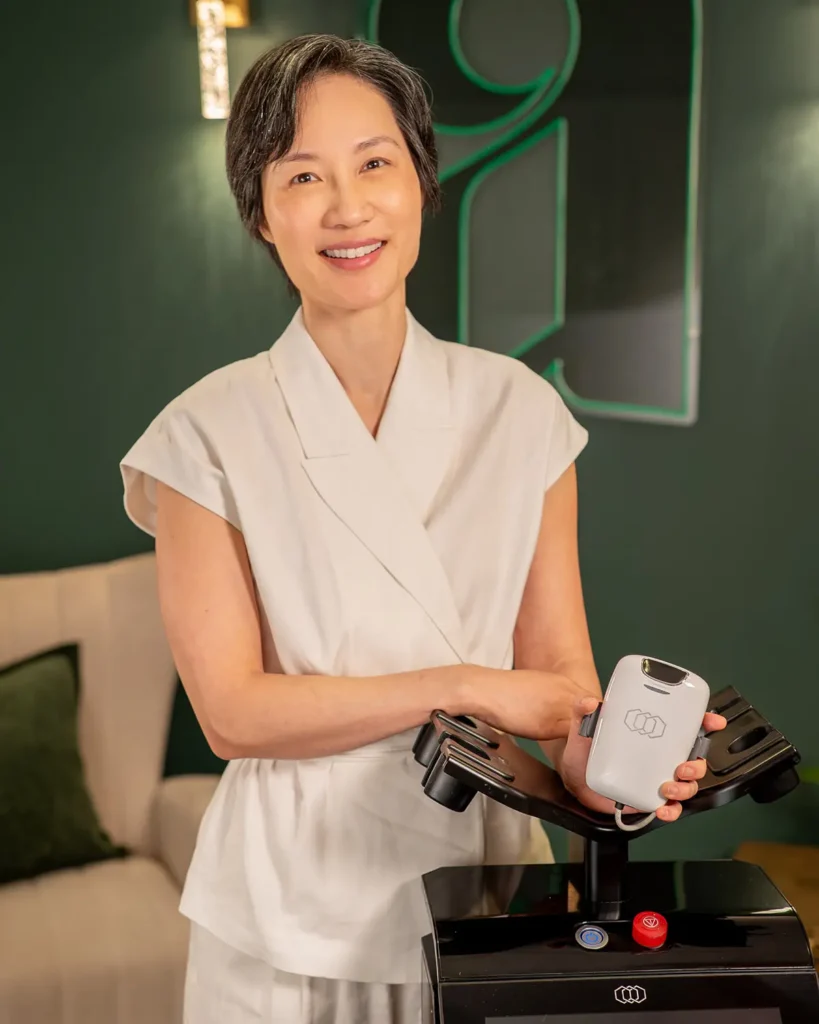
miraDry is an FDA-cleared, permanent treatment for hyperhidrosis that uses microwave energy to destroy sweat glands in the armpits to reduce underarm sweat, odor, and hair. Instead of temporarily masking sweat with deodorant or stopping it for a short time with Botox, miraDry is the first of its kind to address the root of the problem.
How Does It Work?
By using thermal energy, miraDry can safely target and eliminate the sweat and odor glands in the underarms.
Here’s what happens during treatment:
Numbing: A local anesthetic is applied to keep you comfortable throughout the treatment.
Marking: A customized “temporary tattoo”/stencil is applied to the treatment area to serve as a guideline and ensure that your provider is administering the treatment to the full area.
Energy delivery: The handheld device is applied to your underarm, where it delivers energy precisely to the sweat glands
Cooling protection: While heat is being applied to the glands, a cooling system protects the surface of your skin.
Permanent results: Once the treatment is complete, a percentage of the sweat glands are permanently gone, and they don’t grow back.
Think of it like removing weeds by the root – once you’ve addressed the root of the problem, they are gone and don’t return.
Is miraDry safe?
Yes. Safety is one of the biggest reasons patients choose miraDry. It is FDA-cleared, clinically proven, and performed worldwide with thousands of successful treatments every year.
The technology was designed with built-in safety features, including continuous cooling that protects the surface of your skin while the energy targets only the sweat and odor glands underneath.
Most patients experience only temporary side effects like mild swelling, soreness, or tingling in the treated area—these typically resolve within days to weeks. Serious complications are rare, and your provider will review everything with you during your consultation so you feel fully informed.
Because miraDry is non-surgical and doesn’t involve incisions, it avoids the risks that come with more invasive procedures, making it a safe and reliable option for lasting results.
The Results You Can Expect
Most patients experience an immediate reduction in sweat and odor after their first session, with results that are long-lasting and permanent. Studies show that after two treatments, patients typically achieve over 80% reduction in underarm sweating.
You can also expect:
Fewer sweat stains on clothing
Less body odor
Reduction in underarm hair growth (both light and dark hair are affected)
Boosted confidence in social and professional situations
No need for consistent deodorant use
The vast majority of patients require two treatments to meet their goals. Occasionally, patients are satisfied with one treatment, and a minority require three or more.
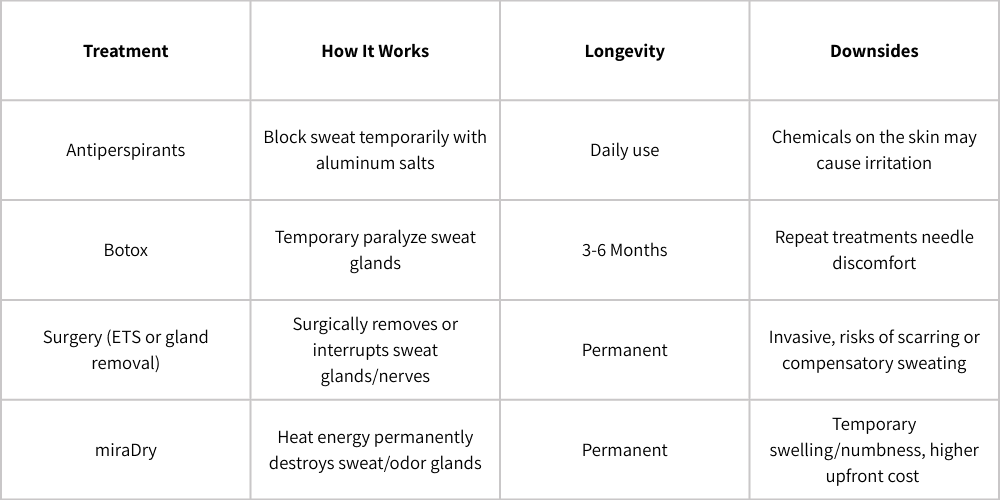
How Does miraDry Compare to Other Sweat Treatments?
For many patients, miraDry is the most convenient and cost-effective choice because it’s non-surgical, effective after one session, and permanent.
Frequently Asked Questions
Will I still sweat elsewhere? Yes. Your body continues to regulate temperature naturally. You just won’t sweat very much under your arms.
Is it painful? Most patients report minimal discomfort because numbing medication is used. You may feel mild soreness or swelling afterward.
How soon will I see results? Many patients notice a dramatic difference immediately after treatment. At three months, the patient will know the permanent results from that treatment session.
Does miraDry also help with odor? Yes, because odor glands are treated at the same time, most patients notice a significant odor reduction as well. In fact, in Asia, the treatment is mainly used for odor, rather than for moisture.
Why Patients Love miraDry
One-time treatment – Many achieve their results in just one session.
No downtime – Back to desk work or social life the same day.
No more deodorant or sweat stains – Save time, money, and confidence.
Permanent confidence – Mental energy freed up for other priorities. Sweat and odor glands do not grow back.
Ready to Feel Sweat-Free Confidence?
If you’re tired of planning your wardrobe around sweat stains or worrying about odor, miraDry may be the solution you’ve been waiting for. Safe, effective, and permanent—it’s a treatment that truly delivers confidence. Schedule your consultation with board-certified dermatologist, Dr. Melissa Chiang, in the Woodlands, TX, today!
An abdominoplasty in The Woodlands is one of the most transformative body contouring procedures and the best approach for addressing loose skin after pregnancy, significant weight loss, or stubborn abdominal concerns that diet and exercise can’t seem to touch.
At Integrated Aesthetics, we believe an informed patient is an empowered patient. During your consultation, asking the right questions can help you feel confident moving forward with your procedure. Here are 7 important questions to discuss with your plastic surgeon.
1. Are You Board-Certified by the American Board of Plastic Surgery?
This is your most critical question. Board certification by the American Board of Plastic Surgery means your surgeon completed rigorous training specifically in plastic and reconstructive surgery, passed comprehensive exams, and maintains continuing education requirements to maintain their certification status.
Only board-certified plastic surgeons have the specialized training to safely and effectively perform complex body contouring procedures like tummy tucks. Don’t settle for physicians from other specialties who may lack this essential expertise.
Integrated Aesthetics co-founder Dr. Young Cho is a board-certified plastic surgeon with more than 20 years in the aesthetics industry.
2. What Type of Tummy Tuck is Right for Me?
Your plastic surgeon should explain the differences between the various tummy tuck techniques:
Mini tummy tuck addresses skin and fat below the navel
Full tummy tuck treats the entire abdominal area with muscle repair
Extended tummy tuck includes the flanks and lower back
Fleur-de-lis tummy tuck removes excess skin both horizontally and vertically
Reverse tummy tuck removes excess skin in the upper abdomen
Dr. Cho evaluates your anatomy to recommend the technique that best addresses your specific concerns while achieving natural-looking results that complement your body proportions.
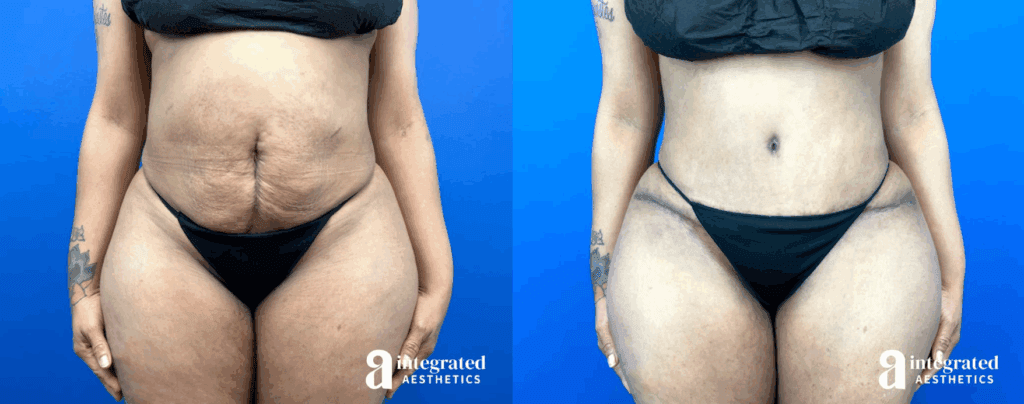
This 44-year-old patient wanted to address fullness and excess skin in her abdomen and flanks. Dr. Cho performed a customized tummy tuck. The after photo (right) was taken two months after surgery.
3. How Many Tummy Tucks Have You Performed, and Can I See Before-and-After Photos?
Experience matters tremendously in body contouring surgeries like tummy tucks. Ask to see multiple before-and-after photos of patients with similar body types and concerns to yours. Pay attention to scar placement and healing quality. The after photos should also reveal natural-looking contours and proportions that are consistent across different patients.
4. Will I Need Additional Procedures for Optimal Results?
Many patients benefit from combining their tummy tuck with complementary procedures such as liposuction to refine the waistline and flanks. For patients seeking more comprehensive rejuvenation, a mommy makeover can combine a tummy tuck with breast enhancement and body contouring. Your surgeon should provide honest guidance about which combination of treatments will help you achieve your aesthetic goals most effectively.
5. What Does My Recovery Timeline Look Like?
You’ll want to know how long you’ll need to take off work, when you can resume exercise and heavy lifting, what kind of help you’ll need at home, how long you’ll wear compression garments, and when you’ll see your final results. Recovery varies by individual, but a detailed timeline helps you set realistic expectations and plan for success.
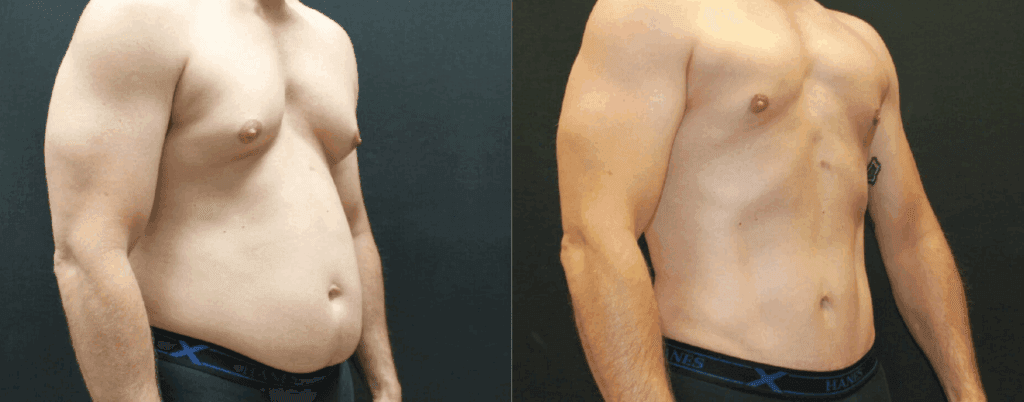
This male patient underwent a tummy tuck to remove sagging skin and excess fat in the abdomen, along with liposuction to create a masculine physique.
6. What Are the Risks and How Do You Minimize Them?
Every surgical procedure carries risks. Your plastic surgeon should discuss them openly, including infection, bleeding, and poor wound healing, scarring concerns and scar management strategies, seroma (fluid accumulation) and drainage protocols, changes in sensation and nerve healing, and the potential need for revision surgery.
In addition to being transparent about potential risks, your tummy tuck surgeon should candidly explain what steps they take to minimize these risks.
“I was amazed at the level of professionalism and kindness everyone in the office exuded. From start to finish, everything was explained to me and I was made to feel so at ease and comfortable with the treatment. I highly recommended coming here for your beauty needs. You will not only be satisfied with the results, but informed on how to maintain and be the best version of yourself. I won’t go anywhere else.”
—5-star Google review
7. How Will You Address My Abdominal Muscles?
Many patients, especially after pregnancy, have diastasis recti (separated abdominal muscles). Your tummy tuck surgeon should explain whether muscle repair is necessary in your case and how muscle repair affects your recovery and results. They should also discuss long-term expectations for core function and appearance. In many cases, proper muscle repair is often the key to achieving a truly flat, toned-looking abdomen.
Your Tummy Tuck Consultation at Integrated Aesthetics
The best tummy tuck consultation goes beyond just asking questions—you should feel heard, understood, and confident in your surgeon’s expertise. At Integrated Aesthetics, Dr. Cho combines surgical expertise with an artistic eye for natural, beautiful results.
Please call (281) 404-5454 to schedule your private consultation at The Woodlands or Spring, TX office. Let’s discuss your goals and create a customized plan that delivers the results you deserve.
Mommy Makeovers have become one of the most sought-after cosmetic procedures for women looking to restore or enhance their figure. For many women, changes to the body after pregnancy, weight fluctuations, or the natural effects of aging can be frustrating. Loose abdominal skin, sagging breasts, stubborn fat pockets, or a general feeling that your body no longer reflects how you feel inside are common concerns. It’s natural to ask: Is a mommy makeover really worth it? And what does recovery actually look like?
A mommy makeover is designed to address multiple areas of the body in one combined procedure. The goal isn’t just to enhance appearance but to help you feel more confident, balanced, and comfortable in your own skin.
What Is a Mommy Makeover?
The term “mommy makeover” can be misleading. It doesn’t refer to a single procedure, and it’s not just for moms. It’s a customized combination of surgeries tailored to address several areas of the body at once. Most often, it includes a tummy tuck to tighten abdominal muscles and remove excess skin, a breast augmentation or lift to restore volume and lift, and liposuction to target stubborn fat.
Some patients also opt for additional procedures like fat transfer, arm lifts, or body contouring to create a more complete transformation. The appeal is that it addresses multiple concerns in one surgical procedure, which means one coordinated recovery period, rather than undergoing multiple separate surgeries.
Whether you’re looking to restore post-pregnancy changes, enhance your silhouette after weight loss, or address the natural effects of aging, a mommy makeover can be tailored to your specific goals.
The Benefits Beyond the Mirror
A mommy makeover offers more than just aesthetic improvements. Many patients report a deep sense of renewed confidence. Clothing fits more comfortably, swimsuits feel more flattering, and even everyday movements can feel easier and more natural.
For some, the procedure is also about reclaiming a body that feels in harmony with their sense of self. Stretched abdominal muscles, sagging breasts, and stubborn fat deposits (issues that are resistant to diet and exercise) can be corrected in a way that improves proportion and balance.
The benefits extend into emotional well-being as well. Patients often describe feeling lighter, both physically and mentally, as though they’ve finally addressed changes that have bothered them for years. Because the procedures are customized to each patient, the results can look natural, avoiding the “overdone” appearance that some fear.
Recovery: What to Expect
Recovery is often the biggest question for women considering amommy makeover procedure, and understandably so. Because it’s a multi-area procedure, your body will need time to heal, and pacing yourself is critical.
The first week after surgery is often the most challenging. Swelling, bruising, and soreness are expected, and simple activities like lifting children, doing laundry, or even reaching for items can feel difficult. Most patients need support during this time, and resting while following the surgeon’s instructions is crucial, although light walking is encouraged.
By the second and third weeks, energy begins to return. Light activities, such as walking and gentle household tasks, are generally possible, though patients are advised to avoid anything strenuous. By week six, many can resume moderate exercise, though heavier lifting may still be restricted for optimal healing.
The final results are not instant, and they evolve over three to six months as swelling resolves, scars fade, and the body adjusts to its new contours. Following post-operative guidance, attending follow-up appointments, and pacing your return to normal activity are all necessary for a smooth recovery.
Is a Mommy Makeover Worth It?
The answer is deeply personal, but for many women, the results are transformative. Beyond physical changes, the procedure can restore confidence, comfort, and harmony with your own body. Clothing fits better, posture may improve, and patients often feel more aligned with how they see themselves internally.
Ultimately, the most important factor in achieving satisfying results is choosing a qualified plastic surgeon. Expertise, experience, and individualized care significantly influence both the safety of the procedure and the quality of the results. A skilled surgeon can guide you through your options, set realistic expectations, and design a treatment plan that fits your goals and lifestyle.
Considering a Mommy Makeover?
At Integrated Aesthetics, Dr. Young Cho specializes in mommy makeovers that are safe, personalized, and natural-looking. Whether your goal is post-pregnancy restoration or a comprehensive body transformation, every procedure is tailored to your anatomy and desired outcome.
If you’re ready to explore whether a mommy makeover is right for you, the most important next step is a consultation with a qualified plastic surgeon. During this appointment, you’ll discuss your goals, review potential procedures, and create a plan that prioritizes both safety and results that feel uniquely yours.
You’re dressed for the moment—whether it’s a big meeting or a night out—but underarm sweat pulls focus. Excessive sweating isn’t just inconvenient; it can affect your confidence, wardrobe, and daily comfort.
At Integrated Aesthetics, we prioritize effective, efficient, and cutting-edge treatments that put our patients first. If antiperspirants and deodorants aren’t enough, Botox and miraDry offer proven medical solutions for hyperhidrosis (excessive underarm sweating). Here’s how they compare.
How They Work
Botox
Temporarily blocks nerve signals to sweat glands. Results appear within 1–2 weeks and last about 4–6 months. Maintenance requires repeat treatments.
miraDry
Uses microwave energy to permanently eliminate sweat and odor glands. Most patients see results after one session, with some opting for a second to maximize dryness. Hair reduction is an added benefit.
miraDry: Long-term reduction in sweat and odor; permanent results visible within 3 months.
If you’re looking for a low-maintenance, lasting solution, miraDry delivers.
Cost Over Time
Botox may seem more affordable initially, but costs accumulate with repeat visits. miraDry is typically completed in one or two sessions, making it a more economical long-term investment.
Why Patients Prefer miraDry
Permanent results—no more sweat glands, no more sweat
No downtime—resume daily activities the same day
No more deodorant—save time and money
Boosted confidence—feel fresh in any situation
Who’s the Best Candidate?
Botox is ideal for short-term needs—special events, seasonal relief, or trying treatment before committing.
miraDry suits those seeking a long-term fix for sweat and odor, especially patients with active lifestyles or public-facing roles.
Common Questions
Is miraDry safe?
Yes. It targets only underarm sweat glands (about 2% of your body’s total), so your body still regulates temperature normally.
Does Botox hurt?
Most patients report mild discomfort. The procedure is quick—usually under 30 minutes.
What’s recovery like after miraDry?
Expect mild swelling or tenderness for a few days to a couple of weeks. Most return to regular activities immediately.
Can sweat return after miraDry?
No. Treated glands do not regenerate. Some patients choose a second session for optimal dryness.
The Bottom Line
Both treatments can improve quality of life. Botox offers quick, temporary relief, while miraDry provides a lasting, low-maintenance solution that many patients describe as life-changing.
At Integrated Aesthetics, Dr. Melissa Chiang and her team deliver personalized care with advanced technology and a patient-first approach.
Take the First Step Toward Sweat-Free Confidence
If you’re ready to stop planning your day around sweat stains and start focusing on what matters most, schedule your consultation with Dr. Melissa Chiang at Integrated Aesthetics in the Woodlands, TX.
Feel cooler, drier, and more confident—every day.
“I just didn’t feel like myself anymore,” or “I want to feel confident in my clothes,” are things many plastic surgeons hear from their patients who are interested in receiving a breast augmentation. For many women, these quotes sound far too familiar.
According to the American Society of Plastic Surgeons’ 2024 Cosmetic Procedures Trends Report, breast augmentation remains one of the most popular cosmetic surgeries in the U.S., with more than a total of 300,000 women choosing the procedure each year. But the motivations behind the decision are far more complex than simply wanting a bigger cup size.
So why do women choose breast augmentation? Experts say the reasons fall into two categories: deep personal goals and the subtle (or not-so-subtle) pressures of modern society.
The Personal Side of the Decision
For many women, the choice is rooted in personal empowerment. Pregnancy, breastfeeding, and weight changes often leave breasts looking deflated or asymmetrical. Others feel their breasts never quite matched the rest of their body and seek better balance and proportion.
“Most of our patients come in feeling like something’s changed—they want to reconnect with themselves, feel confident again, and be comfortable in their own skin,” explains Dr. Young Cho, a board-certified plastic surgeon at Integrated Aesthetics.
Women also mention the benefits of clothing fitting more comfortably, regaining a youthful figure after aging, or addressing asymmetry that has been present since childhood. For those who have had mastectomies or other breast surgeries, augmentation can also serve an important reconstructive purpose.
At its core, breast augmentation is often about alignment and bringing a woman’s outward appearance into harmony with how she already feels inside.
The Influence of Society
Still, it’s impossible to ignore the impact of cultural and social factors. From celebrity culture to Instagram filters, today’s beauty ideals are shaped and sometimes construed by the media.
It seems that we live in a world where comparison is constant, and social media can make women hyper-aware of how they look. But at the end of the day, the decision to have surgery should be one made for oneself, not to meet someone else’s expectations.
On the other hand, cultural norms also play a role. In many societies, fuller breasts are associated with femininity and youth, and for some women, those associations shape how they view their own bodies. And as cosmetic procedures have become more normalized, breast augmentation is often viewed as just another investment in self-care, similar to fitness, skincare, or wellness treatments.
Exploring Your Options: Types of Breast Augmentation
When it comes to breast augmentation, there’s no one-size-fits-all approach. Every woman’s body, goals, and lifestyle are unique, which is why today’s options are highly customizable.
Most patients choose between saline or silicone implants. Saline implants are filled with a sterile saltwater solution, offering a firmer feel and smaller incisions, while silicone implants are known for their natural look and softer texture.
Placement also matters. Implants can be positioned above or below the chest muscle, depending on your anatomy and goals—each approach has its own advantages, which your surgeon will discuss during your consultation.
For women who prefer a more natural option, fat transfer breast augmentation uses liposuction to transfer fat from another area of the body to the breasts, enhancing volume without implants.
A Choice That’s Ultimately Personal
While outside pressures exist, most women who undergo breast augmentation describe their decision as deeply personal. The motivations are layered, but the outcome is often the same: greater confidence, improved body harmony, and a stronger sense of self.
If you’re considering breast augmentation, the most important question is this: What do you want for yourself? Are you hoping to restore volume after pregnancy, balance your proportions, or feel more comfortable in your own skin? The answer should always begin and end with you.
Ready to Talk About What’s Right for You?
Breast augmentation isn’t just about size; it’s about confidence, balance, and self-expression. The next step is finding an experienced, board-certified plastic surgeon who will listen to your goals and guide you toward results that feel natural and uniquely yours.
Fall marks the start of “chemical peel season,” when cooler weather makes it the ideal time to refresh and renew your skin. Whether you’re gearing up for a special event or tackling concerns like wrinkles, pigmentation, or acne scars, chemical peels can deliver noticeable improvements. At Integrated Aesthetics, we offer a variety of peels customized to your skin type, goals, and lifestyle. Here’s what you need to know to confidently choose the best option for your skin.
The Superficial Chemical Peel (aka the “Lunchtime Peel”)
Short on time but craving a quick refresh? The superficial peel is your go-to. This light exfoliation works on the outermost layer of skin, making it ideal for first-timers, busy professionals, or anyone with mild concerns like dullness, fine lines, or breakouts.
What it treats:
Fine wrinkles
Mild acne
Uneven tone or texture
Dryness
Early sun damage
Popular ingredients:
Glycolic acid – brightens and smooths
Lactic acid – hydrates and softens
Salicylic acid – clears acne-prone skin
Mandelic acid – calms redness and pigmentation
Who should skip it: Avoid this peel if you have active skin infections, eczema, recent sunburn, or very sensitive skin.
Downtime: Minimal. Expect mild redness or light flaking for a day or two. A series of superficial peels can build up to a lasting, radiant glow.
The Medium Chemical Peel
If you are ready to address more stubborn skin issues, the medium peel penetrates the upper dermis, making it effective for moderate sun damage, acne scars, and more noticeable fine lines.
What it treats:
Stubborn pigmentation
Acne scars
Deeper fine lines
Uneven skin tone
Common solutions:
TCA (trichloroacetic acid)
Jessner’s solution
Sometimes combined with glycolic acid for enhanced results
Who is a good candidate: Typically best for lighter to olive skin tones. Darker skin types may be at risk for uneven pigmentation and should consult with our dermatologist before proceeding.
Downtime: Plan for 5–7 days of redness, swelling, and visible peeling.
Featured Treatment: At Integrated Aesthetics, Dr. Melissa Chiang offers an advanced medium peel using 35% TCA with solid CO₂ (also known as dry ice). This innovative combination allows deeper penetration and more dramatic improvements in clarity, tone, and texture, even after just one session.
Curious to see it in action?
Watch a TCA peel with CO₂ prep in action—step-by-step process, healing insights, and real patient results for smoother, rejuvenated skin.
The Deep Chemical Peel
For those seeking a dramatic transformation, the deep peel is the powerhouse of chemical peels. Using potent phenol-based solutions, it reaches the mid to lower dermis to address advanced signs of aging and sun damage.
What it treats:
Deep wrinkles
Severe sun damage
Persistent pigmentation
Downtime: Significant. Expect at least two weeks of healing with swelling, crusting, and strict aftercare.
Who is a good candidate: Best suited for lighter skin types with concerns like crow’s feet, smoker’s lines, and extensive sun damage. Because of its intensity, this peel should only be performed under a physician’s supervision.
Note: Deep peels are typically a one-time treatment, though touch-ups may help maintain results.
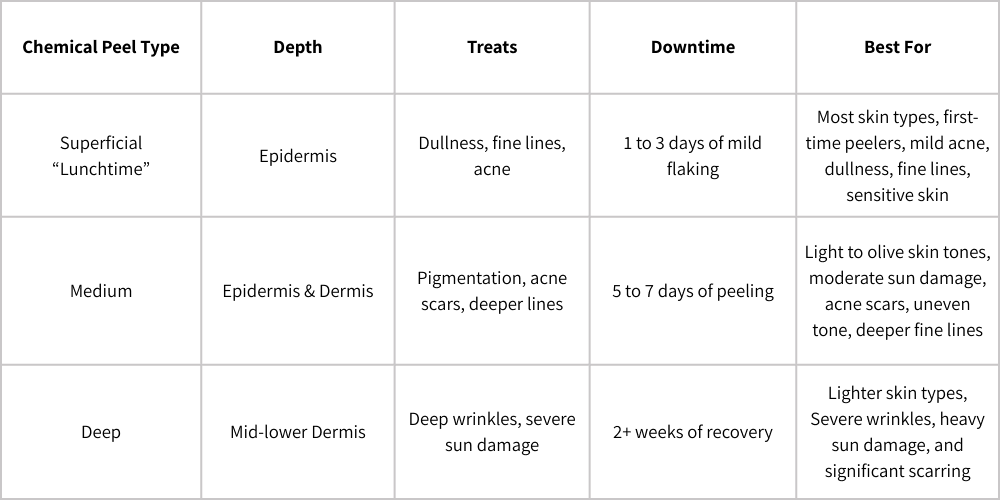
Quick Comparison Chart
Which Peel Is Right for You?
Want a quick glow-up? Go for the lunchtime peel.
Need a deeper reset? The medium peel may be your match.
Ready for a transformation? The deep peel delivers dramatic results.
At Integrated Aesthetics, every peel is customized to your skin type, comfort level, and goals. Whether you want a subtle refresh before the holidays or a more advanced treatment plan, our experts will guide you every step of the way.
Take the Next Step Toward Radiant Skin
Your healthiest, most confident skin starts with a consultation. Schedule your consultation today, and let us design a personalized plan to help you look as vibrant this fall as you feel inside.
We all want to look as refreshed on the outside as we feel on the inside. Wrinkle relaxers are one of the simplest and most effective ways to soften lines and restore a smoother, more youthful look without downtime.
Most people recognize Botox, but it’s not the only option anymore. Today, there are several choices, including Dysport, Daxxify, and Xeomin, each with its own advantages. Think of it like choosing skincare: there isn’t one “best” product, just the one that fits your goals and lifestyle.
Board-certified dermatologist and expert injector Dr. Melissa Chiang gives a straightforward breakdown of the four wrinkle relaxers, making it easier to understand your options and what sets each one apart.
Botox: The Gold Standard
Botox is often considered the original wrinkle relaxer. FDA-approved for cosmetic use in 2002, it remains the most widely used option because of its reliability and consistency. Providers are highly experienced with Botox, and patients trust its predictable results.
When results show: About 5–7 days
How long it lasts: 3–4 months
Best for: Anyone who wants a proven, dependable treatment with decades of experience behind it
Dysport: Fast & Far-Reaching
Dysport works very similarly to Botox but has a few differences. It tends to spread more under the skin, making it a strong choice for larger areas, like the forehead or crow’s feet, where smooth, even coverage is needed. Many patients also notice their results appear faster compared to Botox.
When results show: 2–3 days
How long it lasts: 3–4 months
Best for: Patients who want quicker results or are treating larger areas
Daxxify: Potentially Longer-lasting Upgrade
Daxxify is specially formulated to increase longevity. This longevity hasn’t been consistent in real-world applications, but there are some patients who will notice that Daxxify lasts significantly longer than other neuromodulators.
When results show: About 1 week
How long it lasts: 6 months on average, with some patients seeing results for up to 9 months
Best for: Patients who prefer fewer visits per year and longer-lasting results
Xeomin: The Clean Option
Xeomin is often referred to as the “clean” wrinkle relaxer. It contains only the active ingredient without additional accessory proteins found in other products. This simplified formula may be beneficial for patients concerned about building resistance to wrinkle relaxers over time.
When results show: 5–7 days
How long it lasts: 3–4 months
Best for: Patients who want a pure, straightforward formula or who may not have responded as well to other wrinkle relaxers
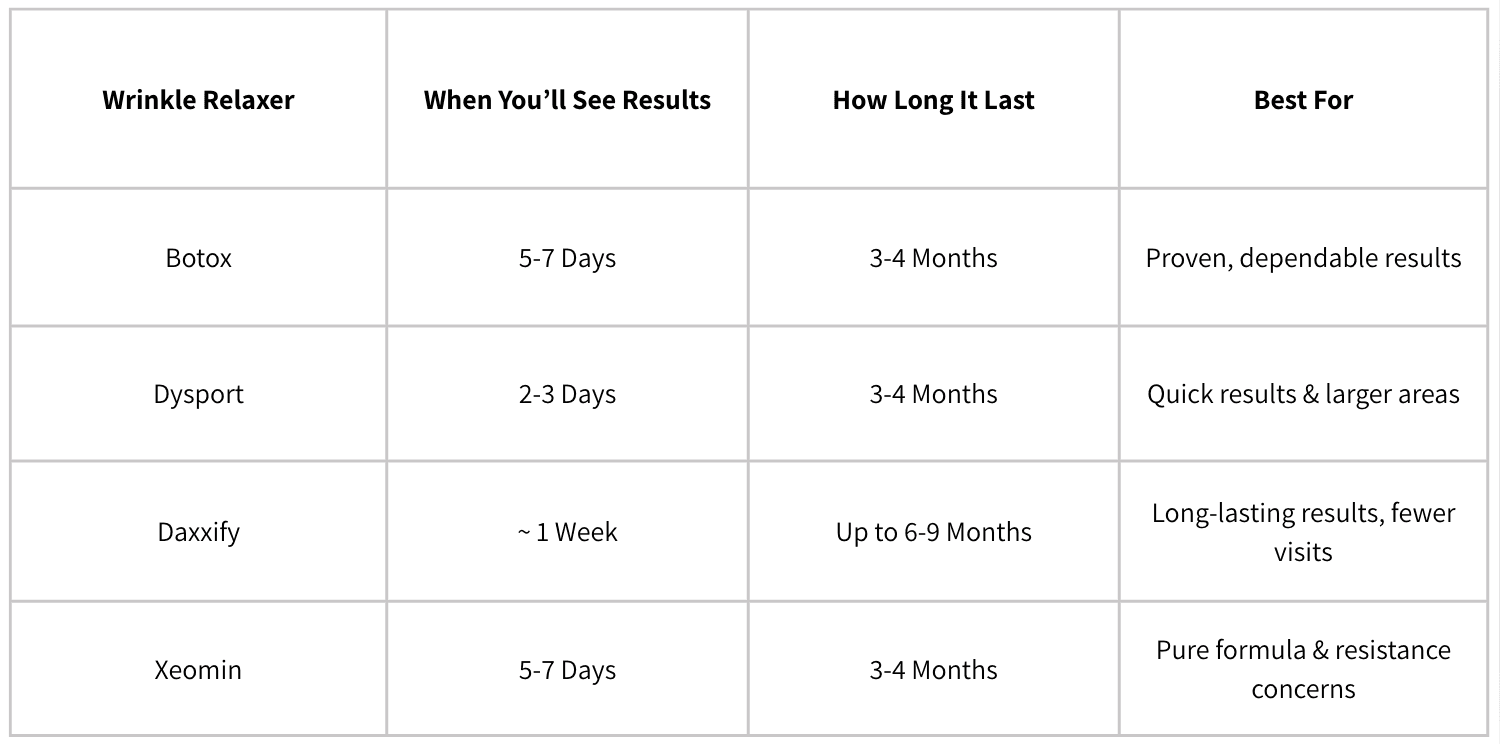
Quick Comparison Guide
FAQs Patients Often Ask
Will I look “frozen”? Not unless that’s your preference. With the right injector, wrinkle relaxers can soften lines while preserving your natural expressions.
Does it hurt? Most patients describe the treatment as a quick pinch. Appointments are typically very fast, often 15–20 minutes.
How do I know which one is right for me? The best choice depends on your lifestyle, goals, and how your body responds. An experienced provider can help guide you toward the option that best suits you.
Key Takeaways
All four wrinkle relaxers, Botox, Dysport, Daxxify, and Xeomin, are safe, effective, and proven to deliver smoother, younger-looking skin. The main differences lie in how quickly they work, how long results last, and which product aligns with your individual needs.
At Integrated Aesthetics in The Woodlands, Dr. Melissa Chiang specializes in creating natural-looking results tailored to each patient.
If you’re ready to take the guesswork out of wrinkle relaxers, schedule a consultation today and let us help you find the option that’s right for you.
Join us for an exciting in-person event, Shrink, Tighten, and Tone - Powered by InMode,
where we introduce the latest advancements in aesthetic treatments and cutting-edge technology coming to our
practice that are designed to help you look and feel your best!
Thursday, October 17, 2024 ‘Lunch and Learn’ (12PM -1PM) and Happy Hour
(4-7PM)
Accessibility: If you are vision-impaired or have some other impairment covered by the
Americans with Disabilities Act or a similar law, and you wish to discuss potential accommodations
related to using this website, please contact our Accessibility Manager at (281) 247-5142.
Promotions
At Integrated Aesthetics, we offer our clients many ways to accomplish their goals with us through
custom treatment plans and special offers.
View our Specials