Hair loss in women can be stressful and confusing, especially when it appears suddenly or without an obvious cause. The reality is that there isn’t just one type of hair loss—each type has unique patterns, underlying causes, and treatment options. Understanding what’s happening with your hair is the first step toward effective care. Consulting a board-certified dermatologist is essential, as they can accurately diagnose the type of hair loss, run any necessary tests, and recommend a personalized treatment plan to help restore hair health and confidence.
First Step: Scarring vs. Nonscarring Hair Loss
Dermatologists often start by asking: Is the hair loss scarring or nonscarring?
- Scarring alopecia: Hair follicles are permanently destroyed. This type requires urgent medical attention and prescription therapy.
- Nonscarring alopecia: Follicles remain intact, so regrowth is possible. The three most common nonscarring types are female-pattern hair loss, telogen effluvium, and alopecia areata.
Female-Pattern Hair Loss (FPHL)
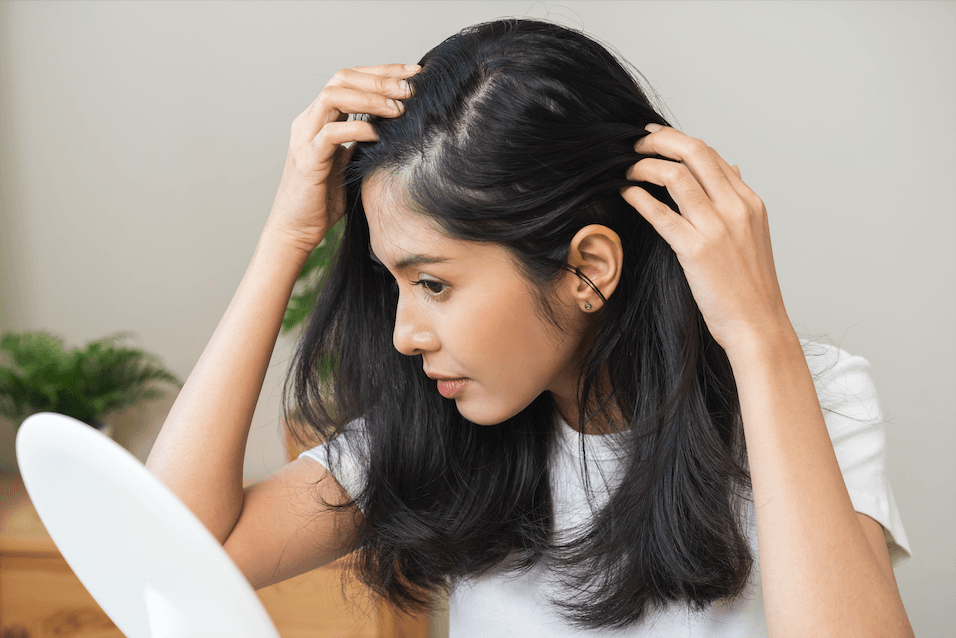
- What it looks like: Gradual thinning over the crown or midline part of the scalp. The frontal hairline is usually preserved.
- What to expect in evaluation: Dermatologists may examine the scalp with a dermatoscope, check for hormonal imbalances if symptoms like acne or excess hair growth are present, and sometimes recommend a biopsy if the diagnosis isn’t clear.
- Key point: This is the most common type of hair loss in women, and treatments can slow or even reverse thinning when started early.
Telogen Effluvium
- What it looks like: Sudden, diffuse shedding across the scalp. You may notice clumps of hair in the shower or on your pillow.
- Common triggers: Stress, illness, childbirth, surgery, or nutritional deficiencies. Shedding usually starts 2–4 months after the trigger.
- What to expect in evaluation: Your dermatologist will ask about recent life events, medications, and health changes. Bloodwork may be ordered to check thyroid function, iron levels, or vitamin deficiencies.
- Key point: Telogen effluvium is usually temporary. Once the trigger is addressed, hair often regrows within 6–9 months.
Alopecia Areata
- What it looks like: Sudden, round patches of smooth hair loss. Sometimes eyebrows, eyelashes, or other body hair are affected.
- What to expect in evaluation: Dermatologists look for “exclamation point hairs” (short broken hairs with tapered ends) and may check for autoimmune conditions like thyroid disease.
- Key point: Alopecia areata is unpredictable—hair may regrow on its own, but relapses are common. Dermatologists often use targeted treatments like corticosteroid injections to stimulate regrowth.
Hair Breakage (Not True Hair Loss)
Sometimes what looks like hair loss is actually hair breakage.
- What it looks like: Uneven hair lengths, frizz, or snapping strands.
- Causes: Heat styling, chemical treatments, tight hairstyles, or nutritional deficiencies.
- Key point: Since the follicles are intact, improving hair care practices and nutrition can make a big difference.
Restore Your Hair: Treatments Offered at Integrated Aesthetics
At Integrated Aesthetics, we take a comprehensive approach to hair restoration. Since every patient’s hair loss journey is unique, we tailor treatments to the underlying cause and individual needs. Here are the options we provide:
Correcting Nutritional or Hormonal Issues
Hair health often reflects overall health. We evaluate for deficiencies (iron, vitamin D, thyroid, etc.) or hormonal imbalances and correct them to support regrowth.
Topical Medications
Prescription-strength topical treatments can stimulate follicles, slow thinning, and encourage regrowth.
Prescription Oral Medications
For certain types of hair loss, oral medications can be highly effective. These may target hormones, inflammation, or immune pathways, depending on the diagnosis.
Platelet-Rich Fibrin (PRF)
PRF harnesses your body’s own growth factors to stimulate dormant follicles. It’s a natural, regenerative treatment with promising results.
Secretome from Acorn
Secretomes from Acorn is an advanced treatment that uses natural bioactive molecules to nourish hair follicles and support healthy hair growth.
Low-Level Light Therapy
Gentle, non-invasive light treatments that energize follicles and improve scalp circulation, encouraging healthier hair growth.
Surgical Restoration
In advanced cases, surgical hair transplantation with NeoGraft can restore hair permanently, creating natural-looking results by redistributing healthy follicles.
Finding the Right Treatment for Your Hair Loss
Hair loss in women isn’t one-size-fits-all. The first step is figuring out whether it’s scarring or nonscarring, and then identifying the specific type. Because treatments vary widely, seeing a board-certified dermatologist, like Dr. Melissa Chiang, is the safest and most effective way to get answers and start the right treatment.
At Integrated Aesthetics in Spring and The Woodlands, TX, we combine medical expertise with advanced technology to restore hair health and confidence. Schedule a consultation today to discover the best treatment plan for your hair and start your journey to healthier, fuller hair.