Deep Plane Facelift Case Study: Comprehensive Rejuvenation for a 35-Year-Old in The Woodlands, TX
Expertly Written By
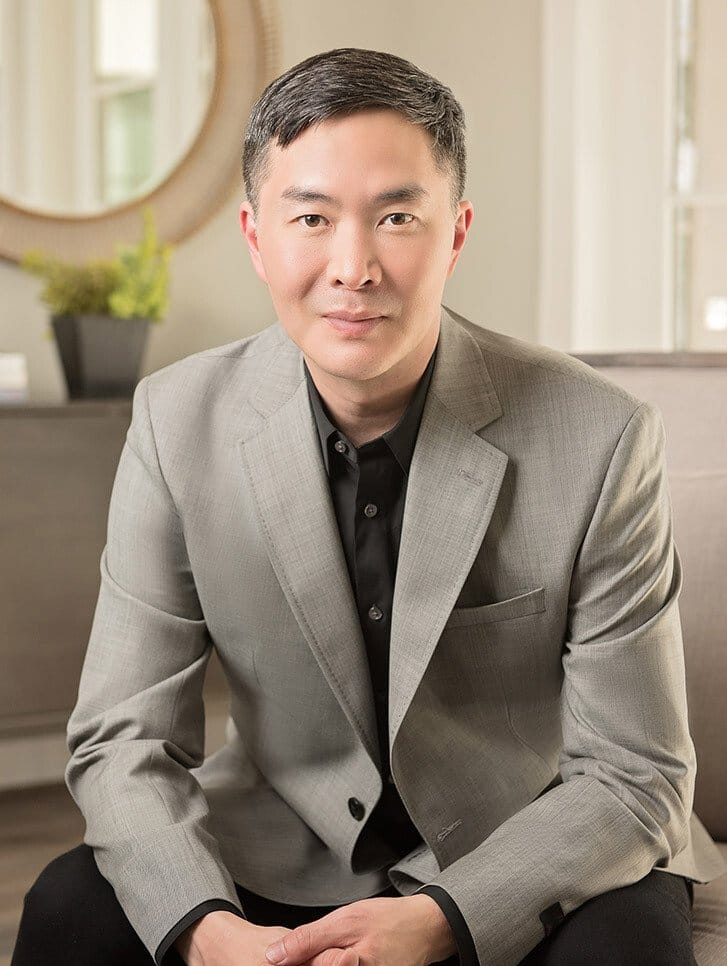
Board-Certified Plastic Surgeon & Facial Reconstructive Expert at Integrated Aesthetics | Yale-educated surgeon specializing in deep-tissue SMAS anatomy manipulation and complex facial aging reconstruction.
Published: June 15, 2026 | Updated: June 15, 2026
Procedure at a Glance
| Clinical Metric | Patient Case Specifications |
|---|---|
| Patient Profile | 35-Year-Old Female | Light Skin Tone |
| Anatomical Concerns | Early-onset facial aging, structural descent of the midface, loss of natural volume, heaviness in the lower eyelids, and brow descent. |
| Surgical Execution | Deep Plane Facelift & Combined Facial Rejuvenation |
| Treatment Modalities | Deep Plane Facelift, Facial Fat Grafting, Endoscopic Brow Lift, Bilateral Lower Blepharoplasty, and Morpheus8 (Face & Neck). |
| Result Timeline | Incredible natural contouring, smoothing, and volume restoration documented at just 1 month post-procedure. |
There is a common misconception that facelift surgery is strictly reserved for patients in their late 50s or 60s. However, biological aging is unique to everyone. When a younger patient experiences structural tissue descent—where the fat pads and deep muscular layers begin to drop—relying exclusively on dermal fillers can quickly lead to facial distortion, an “overfilled” appearance, or what the aesthetic industry calls “filler fatigue.”
At Integrated Aesthetics, we focus on treating the root cause of aging anatomically. In this clinical review, I will detail a comprehensive, custom-tailored facial rejuvenation demonstrating how a Deep Plane Facelift, combined with volume restoration and skin resurfacing, provided an incredible, natural result for a 35-year-old female patient from The Woodlands area.
Patient Presentation: Early Facial Aging and Structural Descent
This 35-year-old female patient presented to our practice seeking options for facial aging. Despite her younger age, she felt her face had taken on a tired appearance that did not reflect her energetic lifestyle.
Upon physical evaluation, her facial structure showed several complex concerns that went beyond simple surface wrinkles:
- Midface & Lower Face: Descent of the cheek fat pads and deep structural tissue, contributing to a heavier lower face and the very early stages of jowling.
- Periorbital Aging: Heaviness and tissue laxity under the lower eyelids, compounded by early brow descent (ptosis), which created shadowing around the eyes.
- Volume & Skin Quality: Loss of youthful facial volume (fat) and a need for generalized skin tone and texture refinement.
Because her concerns involved the descent of deep anatomical structures, non-surgical options alone would be insufficient. We crafted a highly customized, multi-modality surgical plan to restore her face to its natural, rested baseline.
The Surgical Plan: Deep Plane Repositioning & Synergistic Modalities
To safely lift and reshape her facial framework without creating a “pulled” or unnatural appearance, I utilized a Deep Plane Facelift. By moving beneath the SMAS layer and releasing the retaining ligaments, we can reposition the muscle and fat vertically, lifting the architecture of the face without putting tension on the skin.
Anatomical Details of the Combined Procedure
- Deep Plane Facelift: The midface tissues and deep cheek fat pads were elevated back into their youthful, convex position to restore smooth transitions across the jawline and midface.
- Facial Fat Grafting: To complement the structural lift, autologous fat was grafted into areas of volume depletion. This 3-D restoration returns the soft, natural plumpness inherent to a youthful face.
- Endoscopic Brow Lift: A minimally invasive brow lift was performed to gently elevate the forehead tissue, opening up the upper third of the face and removing the “heavy” look.
- Bilateral Lower Blepharoplasty: The lower eyelid fat compartments were repositioned and smoothed to seamlessly blend the transition between the eye and the cheek.
- Morpheus8 (Face and Neck): To refine the skin’s surface elasticity and promote ongoing collagen production, we completed the surgery with Morpheus8 radiofrequency microneedling across the full face and neck.
Clinical Results: A Naturally Restored Appearance at 1 Month
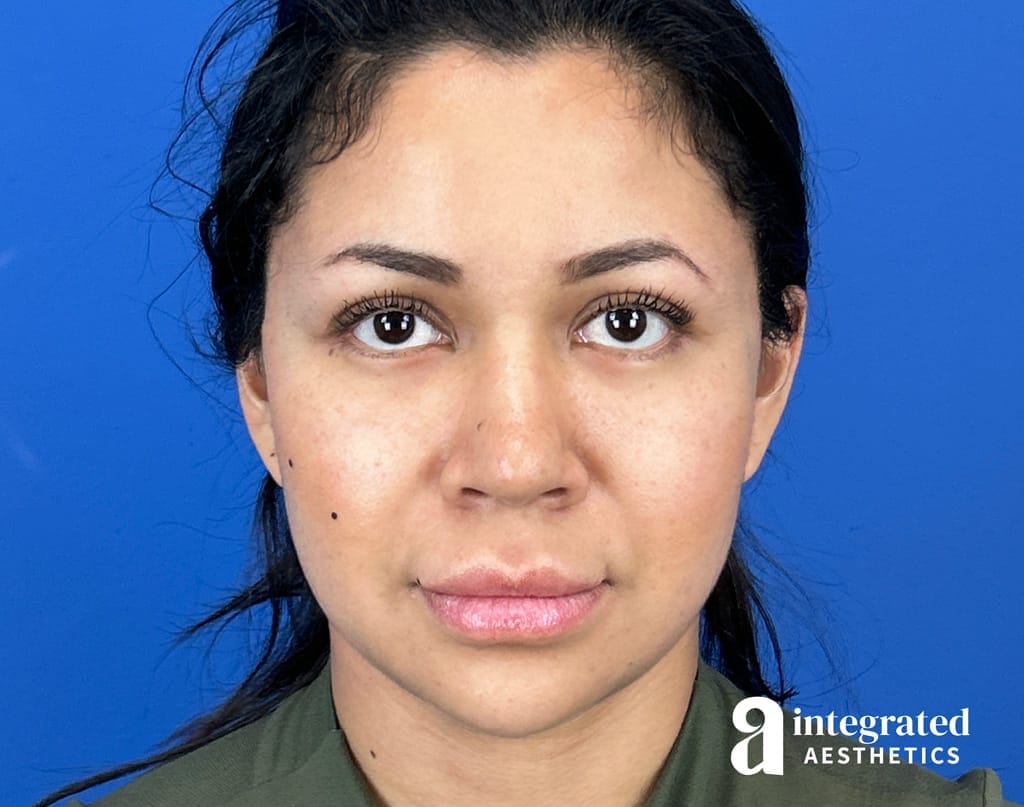
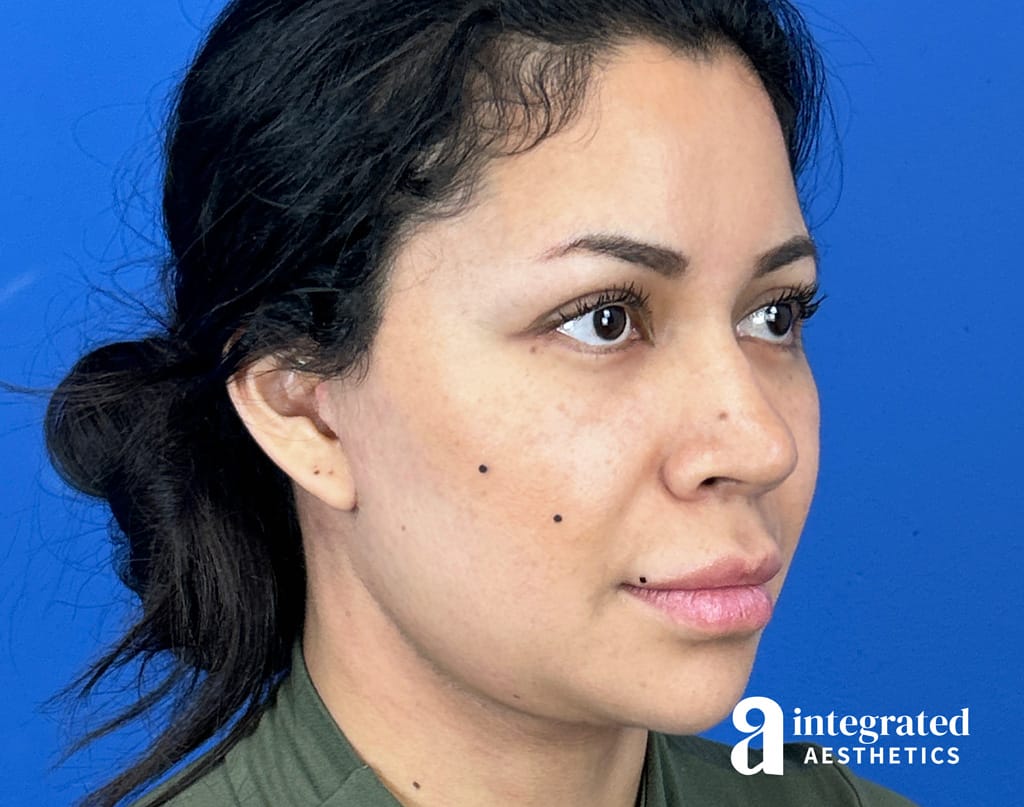
By comprehensively addressing the bone structure, muscle, fat, and skin simultaneously, the patient healed beautifully. Her facial contours look natural, refreshed, and completely un-operated on. Her outcomes at just one month post-procedure are documented below:
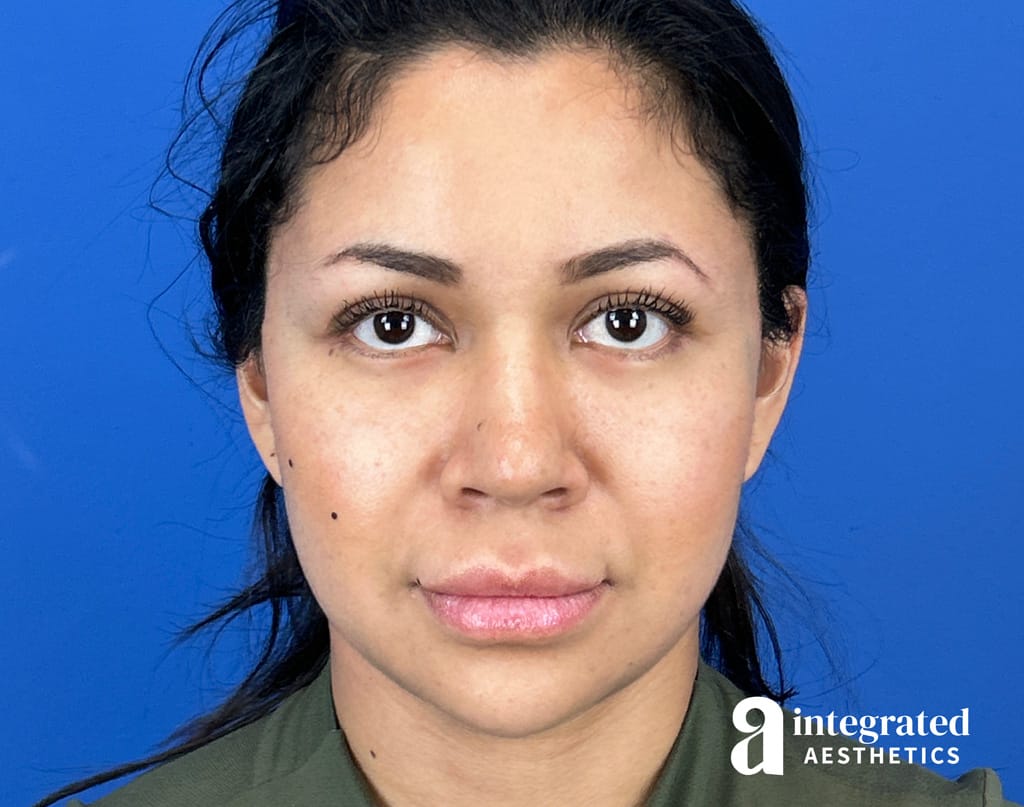
To view the full gallery of un-retouched clinical photos showing this patient’s transformation from multiple angles, visit our live Integrated Aesthetics Case Gallery (Patient #10676).
Want to Explore Our Complete Surgical Framework?
This case study proves that age is just a number when it comes to highly customized facial rejuvenation. To learn more about our surgical options, deep plane techniques, and patient safety protocols at Integrated Aesthetics, explore our primary service guide:
→ View More Facelift Transformations at Integrated Aesthetics
Frequently Asked Questions
Is 35 too young to get a Deep Plane Facelift?
Not necessarily. While 35 is younger than the traditional facelift demographic, candidates are chosen based on anatomical presentation, not chronological age. If you are experiencing structural descent that fillers cannot adequately or naturally correct, a deep plane facelift provides a definitive, natural-looking solution by treating the root cause.
Why combine fat grafting and Morpheus8 with a facelift?
A facelift addresses sagging tissues, but it does not restore lost volume or improve skin texture. By adding facial fat grafting, we replenish youthful volume that degrades over time. Simultaneously, Morpheus8 radiofrequency microneedling remodels the skin’s surface, improving elasticity and tone for a truly comprehensive rejuvenation.
What is the recovery like for these combined procedures?
Combining procedures is highly advantageous because it treats multiple aging vectors simultaneously and consolidates the healing process into a single recovery period. Swelling and bruising are typical during the first 1–2 weeks. As seen in this patient case, noticeable refinement and highly natural results are visible by the 1-month mark, with microscopic healing continuing to improve the final outcome over the following months.