Procedure at a Glance: Advanced Facial Balancing
| Clinical Metric | Patient Case Specifications |
|---|---|
| Patient Profile | 37-Year-Old Female | Resident from The Woodlands / Spring, TX Region |
| Primary Concerns | Visible asymmetry of the smile, characterized by uneven muscle pull and localized volume deficits that disrupted the natural balance of the lower face during movement and expression. |
| Treatment Modality | Combination Therapy: Botox® Cosmetic & Hyaluronic Acid Dermal Fillers |
| Corrective Approach | Dual-action using expertly-placed filler and Botox to weaken muscle contraction. |
| Downtime / Recovery | Minimal; minor localized swelling or pin-prick bruising resolving within 24 to 48 hours. |
| Result Timeline | Neuromodulator integration occurred over 7–14 days; final balanced, harmonious smile stabilization fully documented at 1 month post-treatment. |
A beautifully balanced smile is one of the most defining features of facial harmony. However, many individuals naturally experience asymmetry in their lower face, often caused by a combination of uneven muscle pull when talking or smiling, and subtle structural volume deficits. When treating these concerns in my cosmetic dermatology practice, a generic approach simply won’t suffice. Achieving a natural, fluid result requires a deep understanding of facial anatomy and a customized treatment strategy.
At Integrated Aesthetics, we specialize in advanced facial balancing that honors your natural features while addressing structural irregularities. This clinical case study highlights our approach to correcting lower facial asymmetry for a 37-year-old female patient using a precision combination of Botox and dermal fillers to achieve a harmonious, beautifully aligned smile.
Patient Presentation: Analyzing Lower Facial Asymmetry
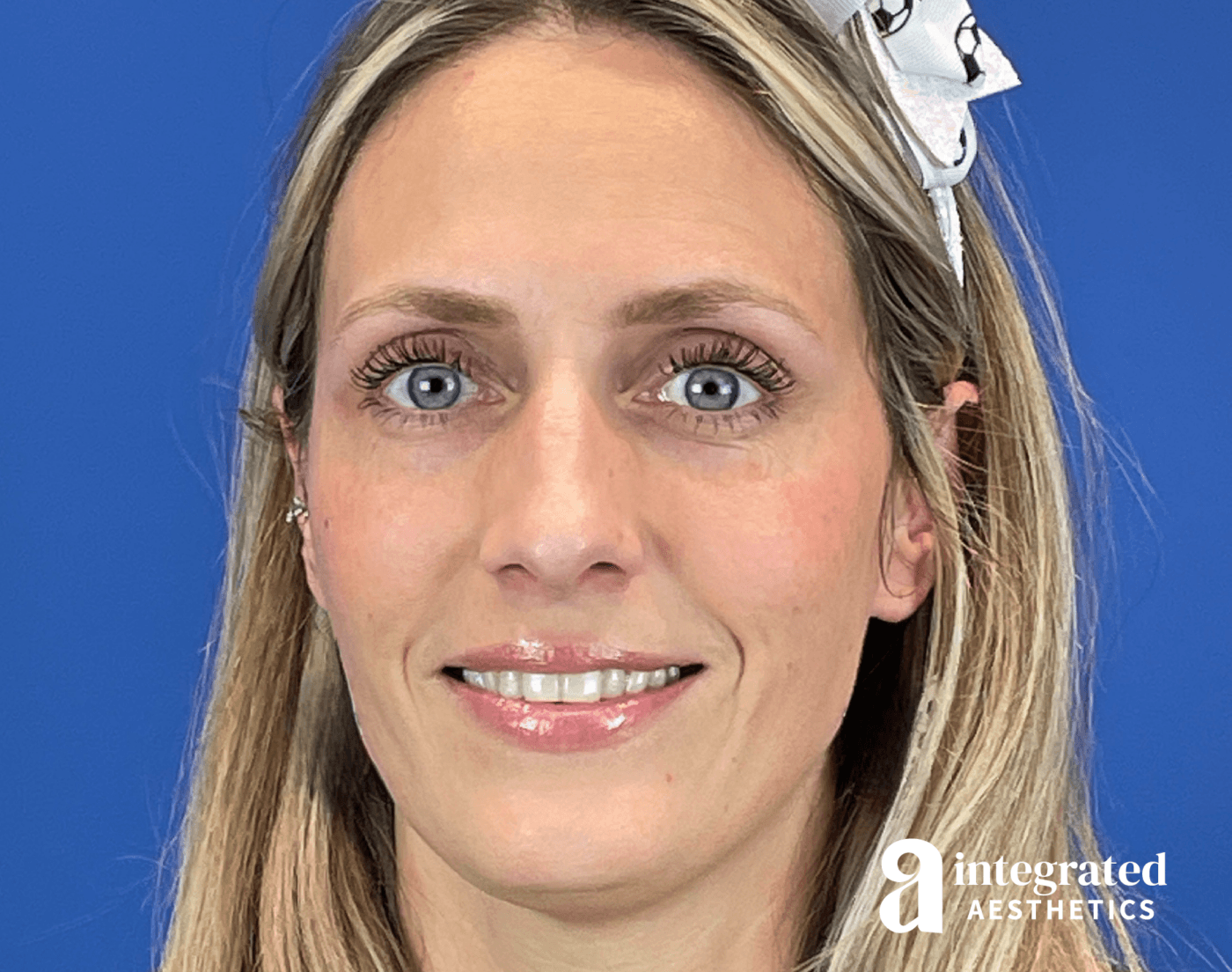
This 37-year-old female patient visited our practice in The Woodlands, TX, expressing concern over the noticeable asymmetry of her smile. She felt that one side of her mouth pulled higher and tighter than the other when she smiled, creating an unbalanced look that made her feel self-conscious in photos and daily interactions.
Upon a detailed clinical and dynamic movement evaluation, I identified two interconnected factors contributing to her concern:
- Hyperactive Dynamic Muscular Pull: Levator muscles on the left pull harder than the right, creating a visibly crooked smile line during movement.
- Static Volume Deficits: The asymmetry was further emphasized by subtle tissue deficiencies in the lower face and lip borders, which lacked the structural support needed to keep her features balanced at rest.
To fix this, we needed a multi-layered strategy that could simultaneously calm the overactive muscles and restore volume to the under-supported tissue layers.
The Corrective Strategy: Achieving Myomodulation
To deliver a comprehensive correction, I designed a tailored treatment plan using a combination of neuromodulators and dermal fillers. The goal with the filler was to achieve a long-lasting effect. I used a sophisticated technique where we placed filler on top of a strongly contracting muscle to weaken the contraction.
Anatomical Targeting and Clinical Execution
The non-surgical correction was performed in two precise phases during a single, comfortable in-office session:
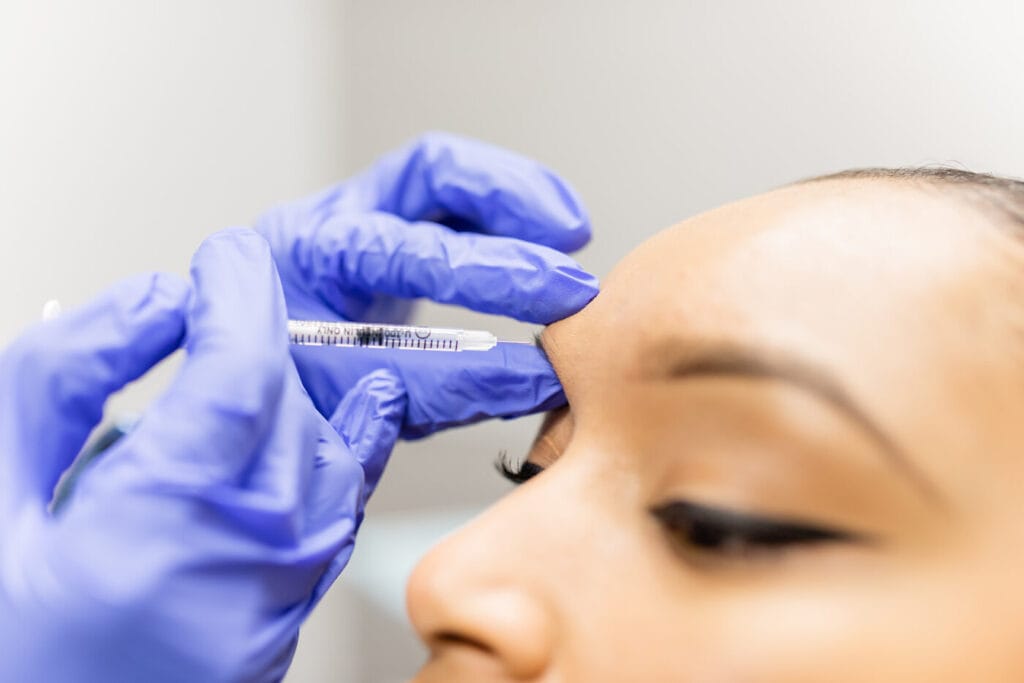
- Phase 1: Precision Botox Injections: I administered micro-doses of Botox into the specific, overactive muscles responsible for the uneven pull. By gently relaxing these targeted muscle fibers, we softened the dominant tug on one side of her mouth, allowing both sides of her smile to lift evenly and symmetrically.
- Phase 2: Strategic Dermal Filler Placement: Next, I utilized premium hyaluronic acid dermal fillers to address the underlying volume deficits. By carefully placing product into the areas lacking support, we built up the structural framework of the lower face and refined the contours around the lips. This provided the necessary support to keep her smile beautifully balanced, whether her face was at rest or in motion.
Clinical Documentation: Restoring Symmetrical Harmony at 1 Month
The true measure of a successful facial balancing treatment is a result that looks entirely natural, moves fluidly, and remains stable once the initial healing phase is complete. The clinical outcome below showcases the patient’s spectacular progress after the products had fully integrated into her tissues:
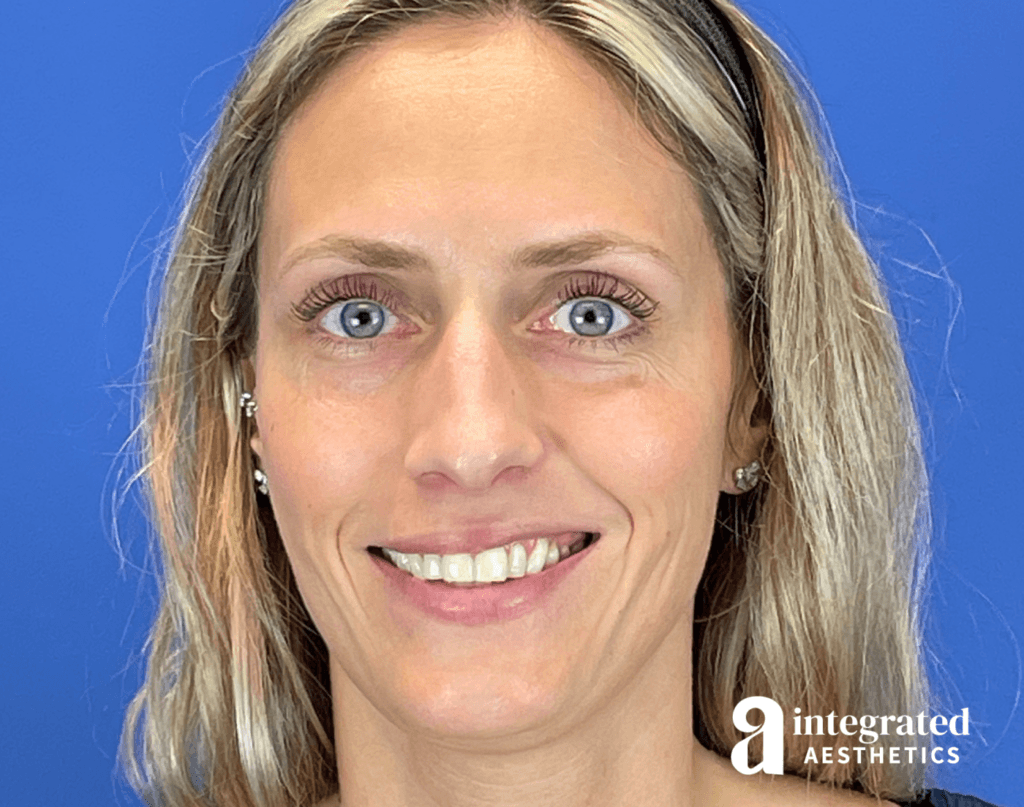
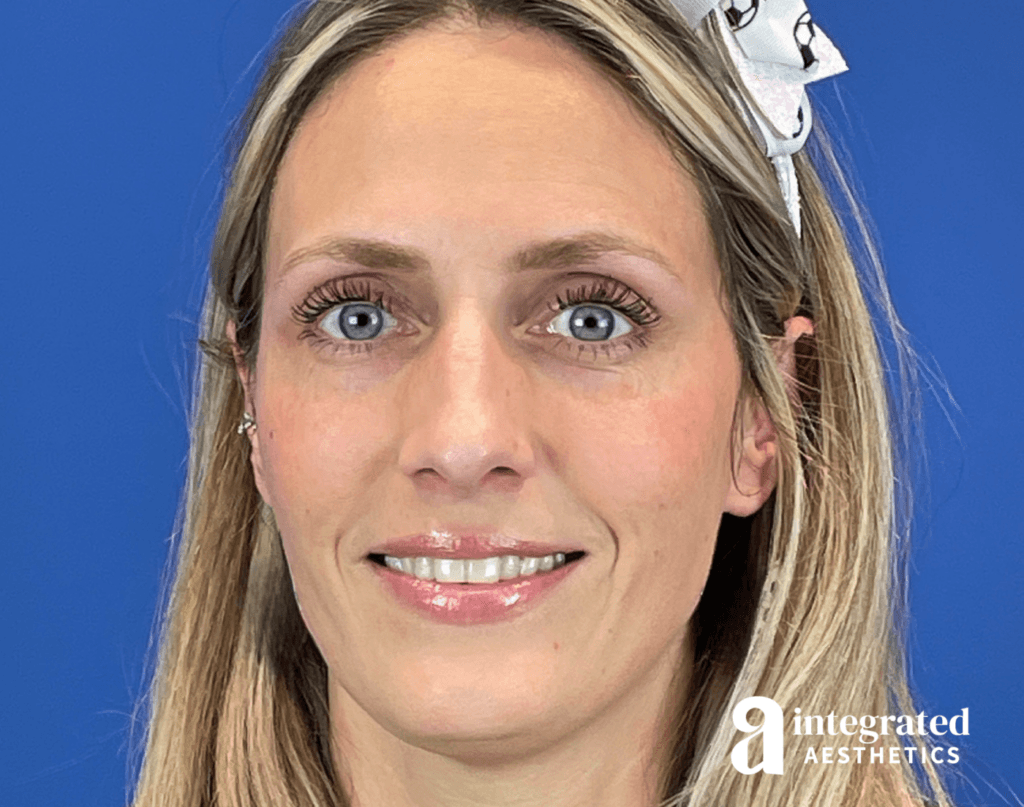
To view the official clinical progress photos showing this patient’s beautiful result at one month post-treatment, visit our live Integrated Aesthetics Case Gallery.
Ready to Balance Your Smile and Restore Facial Harmony?
If you are struggling with smile asymmetry or uneven facial contours, advanced non-surgical treatments can restore balance without the need for surgery or long recovery times. Trust your lower facial balancing to a Board-Certified Dermatologist who prioritizes precision and natural results. Learn more about our customizable injectables protocols:
→ Schedule a Comprehensive Smile Asymmetry Consultation at Integrated Aesthetics
Frequently Asked Questions
What exactly is dermal disengagement in facial aesthetics?
Dermal disengagement is an advanced cosmetic injection technique used to treat deep lines, asymmetry, or tethered skin tissue. By using a specialized approach with dermal fillers and neuromodulators, we gently detach or cushion the skin layer from the strong, restrictive pull of the underlying facial muscles. This allows the skin surface to look smooth, relaxed, and perfectly balanced.
Will fixing my asymmetrical smile with Botox make my face feel numb or frozen?
Not at all. When treating smile asymmetry, we use highly targeted micro-doses of Botox to only soften the specific muscle fibers that are pulling too hard. Your surrounding facial muscles retain their normal movement, allowing you to speak, smile, and express yourself naturally—just with much better symmetry and balance.
How long will the results of this combination treatment last?
The results of a combination smile correction depend on how quickly your body naturally breaks down each product. Typically, the Botox components will need a touch-up every 3 to 4 months to maintain ideal muscle relaxation. The dermal fillers used to provide structural support are longer-lasting, often maintaining their beautiful volume and contour for 6 to 12 months or more.