Feeling scatter-brained, slow to recall details, or stuck in a mental haze? You are not alone, and you are not without solutions. At Integrated Aesthetics, we embrace leading-edge technology to help you look and feel your best. Our newest regenerative wellness service, Exomind, uses patented ExoTMS stimulation to reactivate key neural pathways, giving you a fast, comfortable way to sharpen your thinking and lift your mood.
Below, we explain six ways Exomind transforms foggy mornings into clear, productive days.
1. Reactivates Your Prefrontal Cortex for Faster, Sharper Decisions
Exomind’s magnetic pulses are precisely calibrated to stimulate the left dorsolateral prefrontal cortex (DLPFC)—the brain’s “CEO” for planning, prioritizing, and impulse control. Within minutes of treatment, regional blood flow and glucose metabolism rise, allowing neurons to fire more efficiently. The result? Crisper judgment, shorter reaction times, and more mental bandwidth to juggle multiple tasks without overwhelm.
2. Clears Persistent Brain Fog So You Can Power Through the Day
Brain fog often stems from underactive neural circuits that leave mental gears “idling.” By increasing synaptic signaling in networks tied to sustained attention, Exomind restores the steady mental hum you need to read, write, or analyze data for hours. Many patients describe the experience as “a dimmer switch turning up the lights” and feel and look more alert, and chores that once felt draining become routine again.
Healthy brains constantly rewire, but stress, aging, and poor sleep slows the process. Exomind boosts levels of brain-derived neurotrophic factor (BDNF), a protein that primes neurons to form new connections. Higher BDNF translates to quicker skill acquisition, better memory consolidation, and a stronger cognitive reserve against future decline.
Clinical studies of ExoTMS showed that over 60% of patients reported noticeable cognitive improvement within three sessions.
4. Lifts Mood and Builds Emotional Resilience Without Medication
Because the DLPFC helps regulate limbic (emotional) circuits, stimulating it can rebalance neurotransmitters linked to low mood and anxiety. Exomind is FDA-cleared for major depressive disorder and shows response rates on par with—and often faster than—traditional Repetitive Transcranial Magnetic Stimulation (rTMS). Patients typically feel calmer and more motivated within two weeks, without the weight gain, sedation, or emotional numbing that can accompany some antidepressants.
5. Reinforces Self-Control to Support Healthy Habits & Addiction Recovery
Stronger executive function means fewer impulsive choices. By dampening “reward-seeking” signals and enhancing top-down control, Exomind helps patients stick to nutrition plans, resist cravings, and stay focused during recovery programs for alcohol, nicotine, or stimulant use. Early research also points to improved metabolic markers—lower cortisol and steadier blood glucose—after a six-session course, giving weight-management efforts an extra boost.
6. Fits Busy Lifestyles: Walk In—Walk Out
Each session lasts under 30 minutes, is non-claustrophobic, and requires no anesthesia or downtime. Our protocol of two treatments per week for three weeks fits seamlessly between work meetings or errands. You can drive yourself home, hit the gym, or jump back into Zoom calls immediately, making Exomind the most schedule-friendly brain-optimization therapy available.
Ready to trade fog for laser-sharp focus? Call Integrated Aesthetics at (281) 404-5454 to schedule your private Exomind consultation in Spring and The Woodlands, TX, and experience clear thinking the innovative way.
Looking for more regenerative wellness treatments? We would be happy to explain our services and help you find the right holistic approach to your aesthetic and wellness needs.
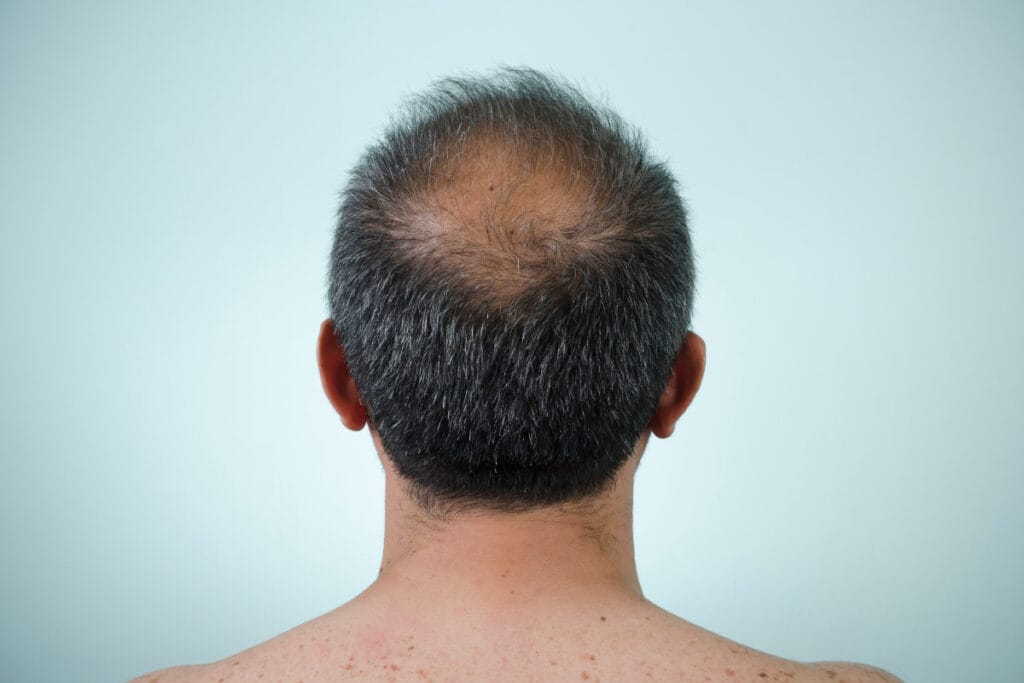
Hair thinning can feel like a blow to your confidence, but you are not out of options even after thinning has set in. At Integrated Aesthetics, our board-certified dermatologist, Dr. Melissa Chiang, and her team take a science-backed, customized approach to hair restoration for men and women. Below, we break down the most effective treatments—and when each makes sense—for different types of hair loss.
1. Start Strong: Topical & Oral Medications for Early-Stage Hair Loss
Medications remain the frontline defense against androgenetic alopecia (hair loss). Topical minoxidil (Rogaine) improves blood flow and prolongs the growth phase of individual follicles for both men and women. Oral low-dose minoxidil is gaining popularity for patients who want to avoid messy daily applications of foams or solutions to the scalp.
If you want to boost density without surgery, platelet-rich fibrin (PRF) and platelet-rich plasma (PRP) injections harness your body’s own growth factors to wake up sluggish follicles. Early studies show that exosome therapy—tiny messenger cells packed with essential proteins—may further amplify regrowth, making it ideal for patients who have plateaued on traditional treatments.
Secretomes With Stem Cell Preservation
At our practice, Acorn Stem Cell Preservation is a ground-breaking new regenerative option that taps into your personal “biological time capsule.” We harvest hair follicles by plucking 50 healthy strands from the back and sides of the head and send them off to Acorn’s lab to cryopreserve the stem cells and convert them into a potent secretome serum containing billions of your own exosomes and growth factors.
Compared with PRP/PRF, the secretome serum offers up to 34 times higher growth-factor levels, giving thinning follicles a powerful nudge back into the growth phase. We apply the serum during microneedling or scalp treatments to improve absorption and send you home with more serum to continue applying for stronger results.
3. The Gold Standard for Advanced Thinning: NeoGraft® FUE Hair Transplantation
When recession or crown thinning is significant, NeoGraft FUE offers the gold standard in natural, permanent hair restoration. We meticulously harvest individual follicular units (hair follicles) from the donor zone (areas of healthy, denser hair) and thoughtfully re-implant them to recreate youthful density and restore a natural-looking hairline—no linear scar, minimal downtime, and lifelong results.
“Dr. Chiang is hands down the best dermatologist I have ever had the pleasure of treating me. She is pleasant, knowledgeable, and is gentle in her treatment approach. She listens to my needs and gave a comprehensive treatment plan that gave natural results. Dr. Chiang also has a best in class support staff. Every single person is genuinely nice, professional and attentive. There’s no wait time and from start to finish, the experience was so amazing!”
—5-star Google review
Combination Therapy: Why One Size Never Fits All
Hair loss rarely has a single cause, so we often blend treatments—medication to halt progression, growth factor therapy to thicken existing strands and promote new growth, and hair transplants to restore density.
There are also other treatments we may recommend incorporating into your personalized procedure plan:
Low-Level Laser Therapy (LLLT): Low-level laser or red-light devices bathe the scalp in photobiomodulation, improving cellular energy and microcirculation. Used consistently, LLLT can complement medical or regenerative therapies, extending the lifespan of newly sprouting hairs.
Stress-Reduction Strategies: One of our newest treatments, Exomind, helps improve several mental health factors, including stress, which may help alleviate stress-related hair thinning. Learn more about Exomind »
Nutrition & Lifestyle Support: Physician-formulated supplements (Nutrafol® is a popular brand) may also be helpful, along with targeted lab testing to correct iron, vitamin D, or thyroid imbalances that can trigger telogen effluvium shedding.
When to See a Dermatologist (and What to Expect)
Aside from seeking hair loss treatments that actually work, red flags like sudden diffuse shedding, bald patches, or associated scalp redness warrant a professional evaluation.
During your concierge visit with dermatologist and hair loss treatment expert Dr. Chiang, she’ll review your medical history, order lab work if needed, photograph the scalp, and map a personalized plan that respects your anatomy, health, and goals.
The key to seeing optimal success with any hair loss treatment relies on your provider’s experience and assessment of why you are losing hair. For example, women dealing with postpartum shedding may require only short-term support, while men with genetic balding often benefit from an ongoing medical-plus-surgical strategy.
Hair Loss Treatments in The Woodlands & Spring, TX
Ready to reclaim thicker, healthier hair? Call Integrated Aesthetics at (281) 404-5454 to schedule your private consultation!
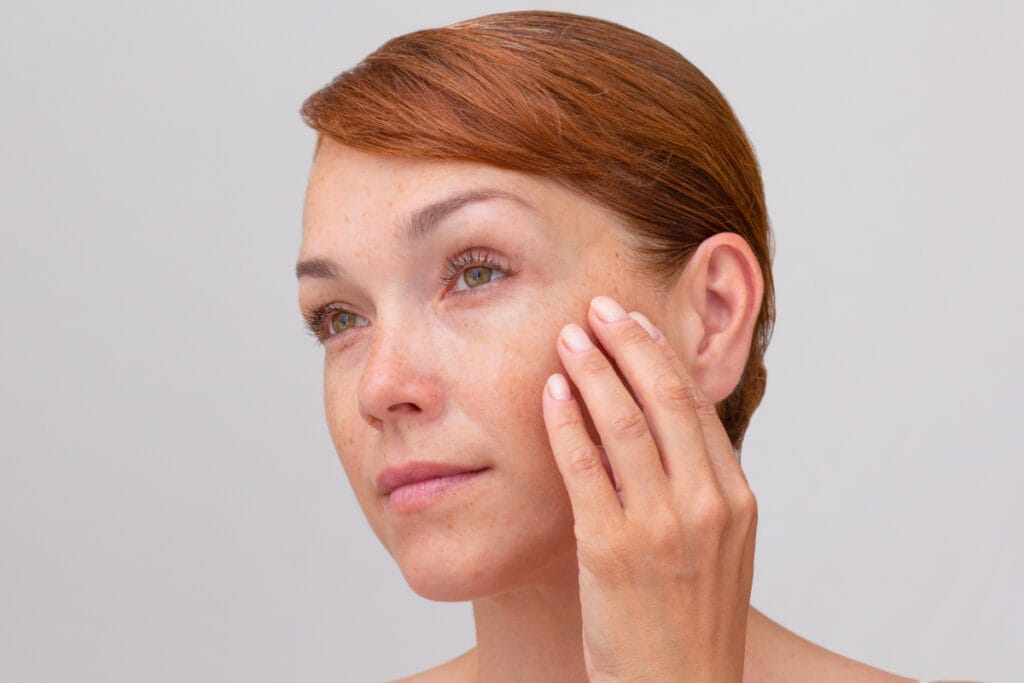
In recent years, there has been a major shift in skincare and aesthetic medicine. People are rethinking how they care for their skin, moving away from heavy, complicated routines and invasive enhancements toward approaches that respect the skin’s natural physiology and promote long-term health.
This shift is all about honoring your skin’s own biology and focusing on long-term wellness rather than quick fixes. Enter the rise of natural beauty, ‘skinimalism’, and clean beauty–fresh approaches that combine the science of healthy skin with the art of subtle, natural-looking enhancements.
‘Skinimalism’: The Science Behind Simplification
Skinimalism isn’t just a passing trend; it’s a smart, science-backed approach to skincare. Our skin is a complex organ with a delicate barrier that helps lock in moisture and protect us from environmental damage. When we overload our skin with too many products, especially ones with harsh ingredients, it can disrupt this barrier, causing irritation, inflammation, and other skin problems.
That’s where skinimalism comes in. It’s all about simplifying your routine and focusing on what truly matters: keeping your skin hydrated and protecting its natural barrier. Dr. Melissa Chiang often highlights three essentials for any effective skincare routine: a gentle cleanser, a good moisturizer, and daily SPF. These basics form the foundation of a minimalistic routine, delivering the key benefits your skin needs.
If you want to take it a step further, look for ingredients like ceramides, fatty acids, and cholesterol, which help reinforce the skin’s barrier and prevent moisture loss. Meanwhile, hyaluronic acid acts like a magnet for water, drawing in and holding moisture to keep your skin plump, healthy, and youthful.
Clean Beauty: Simple Ingredients That Work
Clean beauty is all about using products with ingredients you can trust, that are safe and gentle on your skin. This means avoiding common irritants like parabens, sulfates, and synthetic fragrances, which can sometimes cause irritation or allergic reactions.
Some specific ingredients to watch out for include:
Parabens: Used as preservatives but may disrupt hormones.
Sulfates: Strong detergents that can strip your skin’s natural oils and cause dryness.
Synthetic Fragrances: Often cause irritation or allergic reactions, especially for sensitive skin.
Phthalates: Chemicals used to help scents last longer; linked to hormone concerns.
Formaldehyde releasers: Preservatives that can cause irritation or allergic reactions over time.
Heavy oils (like mineral oil): Can feel greasy and clog pores, leading to breakouts.
Instead, clean beauty focuses on ingredients that actively support your skin’s health. Powerful antioxidants like vitamin C and niacinamide help protect your skin from everyday damage caused by pollution, UV rays, and stress. These antioxidants neutralize harmful molecules called free radicals that can speed up aging.
Clean beauty products also include anti-inflammatory ingredients to calm irritation and reduce redness, making them great even for sensitive skin. Plus, they use lightweight moisturizers that nourish your skin without clogging pores or causing breakouts.
By choosing clean beauty, you’re not just improving how your skin looks today; you’re also helping it stay strong and resilient against the signs of aging and environmental damage for years to come.
Beyond Fillers: Stimulating Your Skin’s Own Regenerative Capacity
While dermal fillers add instant volume by physically lifting the skin, more people are choosing biostimulatory treatments that help the body naturally rebuild and strengthen the skin from within.
Biostimulators and PRF: Helping Your Skin Help Itself
Biostimulators like Sculptra or Radiesse work by gently encouraging your skin to produce more collagen, the protein that keeps skin firm and elastic. They do this by triggering a natural, controlled response in your skin, so over a few months, you’ll begin to notice thicker, smoother, and more youthful-looking skin.
Platelet-Rich Fibrin (PRF) takes this idea a step further. PRF uses a concentrated mix of your own blood’s platelets and growth factors, which are natural healing agents. When applied to your skin, PRF boosts tissue repair, helps form new blood vessels, and supports the skin’s structure.
Exosomes: Cutting-Edge Regeneration
Exosomes are tiny messengers released by stem cells that carry important proteins and signals to help cells communicate and repair themselves. Treatments with exosomes, like those from Acorn Biolabs, deliver these powerful signals directly to your skin, speeding up healing, reducing inflammation, and activating collagen-producing cells.
Research shows exosome therapy can help your skin produce more collagen and elastin, making it firmer and smoother with fewer fine lines.
Why This Movement Matters
The science behind natural beauty and skinimalism supports a fundamental truth: healthy skin is the foundation of lasting beauty. By focusing on skin biology and regenerative therapies, we move beyond temporary fixes to sustainable, science-backed solutions that enhance your skin’s function and appearance over time.
Unlock Your Skin’s True Potential with Expert Care
Start your skincare journey by focusing on hydration and protecting your skin’s natural barrier with clean, effective products. If you’re interested in advanced treatments like PRF or exosomes that boost collagen and skin repair, it’s important to work with experienced experts who truly understand how these therapies work.
At Integrated Aesthetics, our board-certified dermatologist, Dr. Melissa Chiang, combines deep knowledge with personalized care to create treatment plans tailored to your skin and goals. Whether you want to simplify your routine, switch to clean beauty, or try cutting-edge regenerative treatments, Dr. Chiang and our skilled team are here to help you achieve natural, lasting results.
Erectile dysfunction is not just something that shows up as you get older; it can happen in many stages of life. If things aren’t working like they used to, you’re not alone. The good news is that you have options, and not just the “little blue pill”. Let us introduce you to ApexRF, a non-invasive, needle-free, medication-free treatment that uses advanced radiofrequency energy to improve blood flow, strengthen tissue, and help you feel like yourself again. No pressure, no awkward downtime, just real, lasting results.
First Things First: What Is Erectile Dysfunction?
Erectile dysfunction (ED) is the ongoing difficulty in achieving or maintaining an erection long enough for sexual performance. Having the occasional off night is normal, especially if you’re tired, stressed, or distracted. But when it starts happening regularly, it can impact your confidence, your relationships, and your overall well-being.
ED can be caused by several factors, from poor blood circulation and nerve damage to low testosterone or psychological stress. Some men experience it due to one clear issue, while others face a mix of physical and emotional causes.
Understanding what’s at the root of your symptoms is the first step toward treating them effectively.
What’s Causing ED? You Might Be Surprised
For most men, ED is the result of several overlapping issues. Physically, conditions like heart disease, high blood pressure, high cholesterol, diabetes, obesity, and even habits like smoking or heavy drinking can all disrupt blood flow and nerve sensitivity, which are critical for healthy erections. Hormonal changes, particularly declining testosterone, also play a major role, and these shifts can start as early as your 30s (Mayo Clinic, 2021).
Mentally, chronic stress, anxiety, and depression can interfere with the body’s natural sexual response. Add in relationship issues or low self-confidence, and ED can become even more persistent (Mayo Clinic, 2021).
It’s also worth noting that while ED becomes more common with age, it’s not inevitable. Studies show that about 5% of men in their 20s and 30s experience regular ED, but that number jumps to over 50% among men aged 40 to 70 (Lumen Learning, 2020; NCBI, 2019). The key takeaway? Age increases your risk, but it doesn’t have to define your experience.
What Are the Usual Male Enhancement Options?
If you have been dealing with ED, you’ve probably heard of or tried some of the common options. Over-the-counter supplements and herbal remedies are widely available, though their effectiveness is hit-or-miss and often not backed by science. Prescription medications like Viagra or Cialis work for many men by boosting blood flow, but they are not suitable for everyone and may come with side effects.
Other treatments include testosterone therapy (TRT), injections, or even urethral suppositories. Some men even use devices like vacuum pumps to force an erection by drawing blood into the penis and trapping it there. And in rare cases, others turn to surgery, either for implants or vascular procedures.
But what if you’re looking for something less invasive, without the daily medication or uncomfortable methods?
Meet ApexRF: A Modern, Non-Invasive Approach to ED
Unlike traditional treatments that manage the symptoms, ApexRF goes deeper to restore and strengthen the tissue involved in erections. Using radiofrequency (RF) energy combined with electrical muscle stimulation (EMS), it stimulates collagen production, boosts blood flow, and supports the body’s natural erectile mechanisms.
ApexRF targets critical structures like the corpora cavernosa and tunica albuginea, key components in achieving an erection. By improving the strength and responsiveness of these tissues, ApexRF helps enhance both performance and overall function.
The best part? It’s completely non-invasive, painless, and requires zero downtime. No pills, no needles, no awkward side effects.
Inside the ApexRF Experience
Each ApexRF session takes about 15 minutes. The device delivers precise RF energy to internal tissue of the penis, monitored in real-time to ensure the safety and consistency. Most men need a series of six sessions for optimal results. Many continue with the treatment intermittently to maintain their results.
The treatment is completely pain-free, and many describe it as warm and relaxing. Since it’s non-surgical, you won’t need recovery time, and your daily routine won’t be disrupted.
With the smart applicator, ApexRF precisely targets the treatment area while protecting the surrounding skin. It’s particularly effective for men with mild-to-moderate ED, especially those who haven’t had success with oral medications.
Most men begin noticing improvements within a few weeks, with continued enhancements over the next few months as collagen production and tissue remodeling take effect. Clinical studies show that men who complete the full treatment series often experience sustained results for at least six months.
Some may consider combining this with the P-Shot or P-Tox to further enhance blood flow to the penis. P-Shot works by leveraging the power of your platelets to stimulate new blood vessels resulting in more blood flow to the penis. While P-Tox uses a muscle relaxant to help open up the blood vessels to increase the flow of blood to the penis.
Is ApexRF Your Perfect Match?
If you’re struggling with ED or just want to improve performance without relying on medications, ApexRF could be the solution. It’s a great option for men who:
Haven’t had success with pills or prefer not to use them
Are looking for a longer-term solution with fewer side effects
Want to improve function naturally, without surgery
While ApexRF isn’t for everyone, many men report stronger, more reliable erections, and also a boost in confidence, energy, and quality of life.
Step Into Better Performance
At Integrated Aesthetics, we understand that ED isn’t just a physical problem—it affects how you feel, how you connect with others, and how you show up in life. Our expert providers offer a discreet, personalized experience from consultation to treatment, making sure you feel comfortable and well-informed to make the best decision for your sexual wellness.
If you’re ready to regain your strength, vitality, and achieve better performance, schedule a consultation today. We’ll create a tailored treatment plan designed to help you feel your best and perform at your peak.
Wrinkle relaxers like Botox have long been a go-to for smoothing expression lines and maintaining a youthful appearance. But with newer options like Daxxify and Letybo available, you may be wondering if it’s time to switch things up.
At Integrated Aesthetics, our expert injectors help patients choose the right wrinkle relaxer based on their goals, facial anatomy, and lifestyle every day. Here’s what to consider if you’re thinking about making a change.
How Do Wrinkle Relaxers Like Botox, Dysport, Jeuveau, and Daxxify Compare?
All wrinkle relaxers are neuromodulators that temporarily soften dynamic wrinkles by relaxing the underlying facial muscles, and most last around 3-4 months:
Botox is the most well-known and has decades of clinical use behind it. It works well for forehead lines, crow’s feet, and frown lines.
Dysport spreads slightly more than Botox, making it a good option for treating larger areas like the forehead.
Xeomin is a “naked” neurotoxin, meaning it contains no accessory proteins. This may be beneficial if you’ve developed a tolerance to other formulas.
Daxxify hit the market in late 2022, promising to have longer-lasting results for some patients.
Jeuveau is sometimes called “Newtox” and has been popular among patients looking for a Botox alternative.
They each have subtle differences, which may or may not be noticeable to you. Much of the differences depend on how your injector uses the toxins, such as with dosing choices and injection areas.
If you’re happy with your current results, there’s no need to switch. But if you’re looking for longer-lasting effects, faster onset, or have noticed a decrease in your results over time, it might be worth exploring your options.
What About Letybo—Is It Worth a Try?
Letybo is a new botulinum toxin that has just entered the U.S. market with the promise of offering somewhat lower-cost treatments. While it’s exciting to see innovation in the neuromodulator space, Letybo has not yet demonstrated any meaningful differences from well-established products like Botox or Dysport in terms of onset, longevity, or efficacy.
At Integrated Aesthetics, we’re keeping an eye on Letybo as more clinical data becomes available and as it rolls out to more practices. For now, we continue to recommend wrinkle relaxers with a longer track record of safety and consistent performance.
How Today’s Neuromodulators Compare
Product
Key Distinction
Typical Longevity*
Why We Might Recommend It
Botox (onabotulinumtoxinA) **
Industry gold standard with the most extensive safety data
~3–4 months
Reliable, versatile results for virtually any dynamic line
Dysport (abobotulinumtoxinA) **
Spreads slightly more, ideal for broad areas
~3–4 months
Smoother forehead coverage with fewer injection points
Xeomin (incobotulinumtoxinA) **
“Naked” toxin—no accessory proteins
~3–4 months
Great for patients who may have developed antibody‑related tolerance
Daxxify (daxibotulinumtoxinA‑lanm) **
First peptide‑stabilized neuromodulator; results can last 6 months
~3–6 months
Ideal for patients who want to reduce visit frequency
Jeuveau (prabotulinumtoxinA)
Marketed as “#Newtox” with quick onset
~3–4 months
Letybo (letibotulinumtoxinA‑wlbg)
Newest option just hitting the market
~3–4 months
*Longevity varies based on dosage, individual metabolism, and treatment area. **Formulas preferred by the Integrated Aesthetics team.
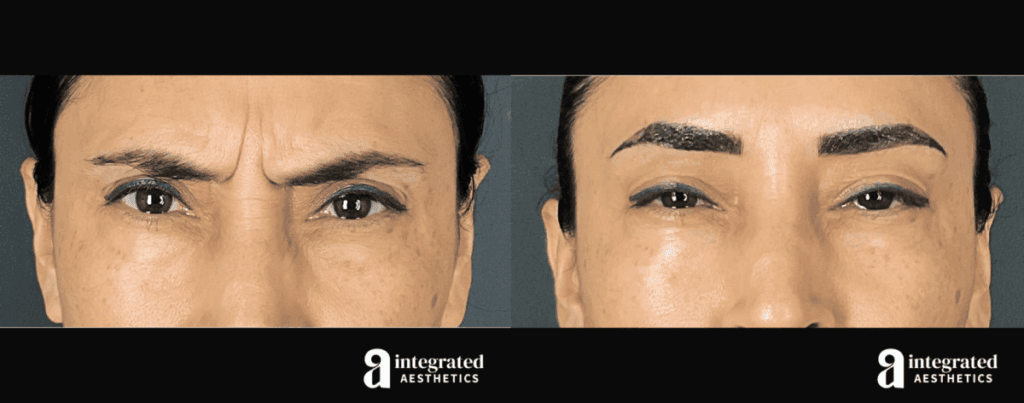
This 48-year-old patient wanted to proactively soften dynamic lines and wrinkles with Botox in the upper face. The treatment effectively prevents the formation of lines and wrinkles for 3-4 months, contributing to a more youthful and refreshed appearance.
Signs It Might Be Time to Try a Different Wrinkle Relaxer
Not sure if your current treatment is still the best fit? Here are a few signs that switching could be beneficial:
Shorter‑than‑usual longevity. If your results fade after only 6–8 weeks, your body may be metabolizing the product faster—or you may have developed antibodies against its complexing proteins.
Dose creep. Needing noticeably higher units each session can indicate emerging resistance or an imprecise dosing technique from another medical spa.
Scheduling fatigue. Patients balancing work, travel, and family often prefer Daxxify’s potential 6‑month span to quarterly touch‑ups. Note that each patient metabolizes each product on a unique timeline, so be sure to try Daxxify first before relying on it for 6 months of results.
Skin thickness changes. As we age, deeper creases may warrant a product with a wider spread or a complementary filler.
Plain old curiosity. Some patients simply enjoy comparing how each formula “feels” or looks on their unique anatomy, leading them to try a newer product like Dysport or Daxxify.
Can You Develop Resistance to Botox?
In rare cases, patients may develop a resistance to Botox due to the formation of neutralizing antibodies. This is more common with frequent or high-dose treatments. If you’ve noticed your usual results diminishing despite consistent technique and dosing, switching to a product like Xeomin (which lacks complexing proteins) may help restore effectiveness.
That said, most patients do not develop resistance, and changes in results are more often related to dosing, injection technique, or lifestyle factors. That’s why it’s so important to work with experienced injectors who understand the nuances of each product!
“Dr.Chiang and her staff listen to all my concerns and I always feel we’re on the same page when I go in for my treatments. I’ve had Botox throughout my forehead, eleven lines, crows feet, and Juveaderm in my lips. I bruise easily so I’ve had horrible bruises in the past from OTHER injectors that lasted a week or more but with Dr.Chiang it’s always gone within a day or so. 10/10 would recommend her for all your cosmetic needs!”
—Real patient review
How We Help You Choose the Right Neurotoxin
At Integrated Aesthetics, we customize every injectable treatment plan. Whether you’re seeing board-certified dermatologist Dr. Melissa Chiang or a highly trained aesthetic nurse, we evaluate:
Muscle mass & symmetry (Are your corrugator muscles overpowering a standard dose?)
Line depth & skin quality (Would combining a wrinkle relaxer with a resurfacing laser or dermal filler serve you better?)
Treatment history (How long did previous products last? Any side effects?)
Lifestyle & scheduling needs (Do you prefer quarterly maintenance or twice‑a‑year visits?)
Your injector may recommend a “test drive” of a different FDA-approved toxin, tweak your dose, or pair your wrinkle relaxer with energy‑based skin tightening to enhance results. Because our practice offers dermatology, cosmetic surgery, and medspa services under one roof, your recommended treatment plan is truly integrated.
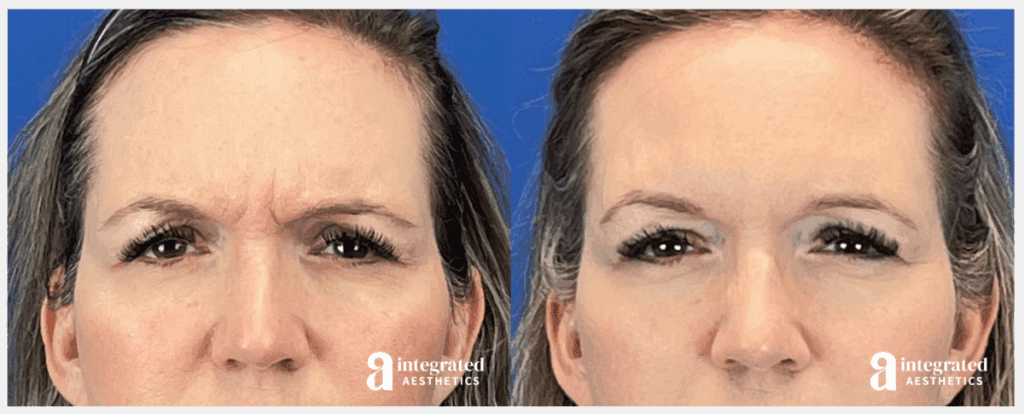
Dr. Melissa Chiang treated this 52-year-old Integrated Aesthetics patient with Botox in the glabella (between the eyebrows) to soften the fine lines on her upper face. Results are shown 2 weeks post-treatment.Ready to Explore Your Options?
If you’re wondering whether a different wrinkle relaxer could give you better results, or if you’re simply curious about the newer products on the market, schedule a consultation at Integrated Aesthetics!
Our medspa team is highly qualified to help you determine whether switching from Botox makes sense for you and create a personalized treatment plan to match your goals. Call us today at (281) 404-5454 to book your appointment!
Could a little bottle be the future of anti-aging? Let’s dive into the fascinating world of aging and the innovative treatments that are redefining how we think about looking and feeling youthful.
Aging: A Timeless Journey
Aging is as old as time itself, but the quest for effective anti-aging treatments is relatively new. From Cleopatra’s legendary donkey milk baths in 69 B.C. to explorers chasing the fountain of youth in the 1500s, we’ve always been on the lookout for ways to slow the clock. Fast forward to 2002, when the FDA approved Botox for frown lines, and you’ll see just how far we’ve come!
The Game Changers
Modern science has taken anti-aging to levels that even Cleopatra couldn’t have dreamed of. One of the biggest breakthroughs? PRP, or platelet-rich plasma, which gained fame thanks to the Kardashians and their infamous vampire facial. This treatment uses your own blood’s healing abilities to tackle fine lines and wrinkles and improve skin tone and texture.
But wait, there’s more! Enter exosomes—tiny particles from our own stem cells that are packed with over 400 growth factors, compared to PRP’s 25. These little wonders can help reduce inflammation, boost collagen, and even assist in hair restoration. However, there’s a catch: most exosomes come from donors, meaning you’re using someone else’s cells. For some, that can be a bit unsettling.
What If You Could Use Your Own Cells?
This is where Acorn Biolabs steps in. Acorn has developed groundbreaking technology that allows you to use your own tissue and cells to create personalized regenerative medicine. That’s right! They harvest stem cells from your own body, culture them, and derive powerful products tailored just for you. This means the components derived from your cells are much more potent than traditional PRP—some even up to 34 times more potent!
The Magic of Autologous Tissue
Using your own stem cells has significant advantages. When you extract the key elements from your own cells, you’re not just using something that reflects your current age; you’re effectively “freezing” your youth. As we age, our regenerative cells decline, but with Acorn’s technology, you can capture your current age’s vitality for future use.
How Does It Work?
It all starts with a quick visit to the clinic, where about 50-70 hairs are plucked from your scalp. Yes, you heard that right! From these hairs, your stem cells are collected and preserved. Essentially, we’re putting your aging on ice! This personalized regenerative skincare product can be used post-laser treatments or microneedling, improving skin healing and long-term rejuvenation.
What Sets It Apart?
Unlike other options on the market, Acorn’s secretomes are derived from your own stem cells, making them unique. While we can order exosomes from donors, Acorn focuses on using your personalized exosomes, which are tailored to enhance regenerative purposes. This means no guesswork and no donor material—just your cells helping your skin look and feel its best!
The Future of Anti-Aging
So, is this little bottle the future of anti-aging? It just might be! With the ability to harness your own body’s regenerative potential, the possibilities are endless. Imagine a world where you can not only preserve your youthful cells but also unlock powerful health benefits for the future. Your future self will undoubtedly thank you for it!
Ready to explore this innovative approach? Get started with Acorn Biolabs at Integrated Aesthetics today and take a step toward a more youthful you!
Face it, guys, modern life doesn’t make it easy to stay ripped. Between long work hours, family life, and the occasional “forget-the-gym” day (or week), the six-pack starts to feel more like a dad-bod. The good news? Advanced aesthetic treatments can give you the boost you need to feel like your best self again.
With cutting-edge technology like Emsculpt and Emsculpt Neo, men have the tools to build muscle, lose fat, and transform their physiques, leading to the ultimate transformation just in time to reclaim their best body.
Let’s break down exactly what these treatments are, why men love them, and how they can help lead you to your ultimate transformation, or better yet, “mansformation” just in time for summer or any special occasion.
Emsculpt vs. Emsculpt Neo
Think of Emsculpt as the ultimate gym hack. This non-invasive treatment uses High-Intensity Focused Electromagnetic (HIFEM) energy to trigger intense supramaximal muscle contractions in just one 30-minute session. No weights. No soreness. Just rapid-fire muscle building that works while you relax.
Now take everything awesome about Emsculpt and upgrade it with radiofrequency (RF). That’s Emsculpt Neo, the next-level version that combines muscle building and fat burning in one session. While Emsculpt builds muscle, Emsculpt Neo burns up to 30% of fat in the targeted area and builds up to 25% more muscle. Your abs (or arms, or glutes) will thank you.
Why Men Are Choosing Emsculpt Over Challenges
Today, more men than ever are blending science-backed treatments with their fitness routines to accelerate their results. Whether you are looking to sculpt your core, define your arms, or finally target that stubborn belly fat, here is why Emsculpt and Emsculpt Neo are true game-changers:
1. Real Muscle Gains
As mentioned above,Emsculpt and Emsculpt Neo use HIFEM technology to induce intense muscle contractions; something you simply can’t achieve through regular workouts. During a short 30-minute session, your muscles contract up to 20,000 times, mimicking an intense strength-training workout.
These contractions cause deep muscle fiber activation and remodeling, leading to increased muscle thickness and improved definition. It is ideal for men who are already active but want to break through plateaus or fine-tune specific areas.
2. Fat Loss Where You Need It Most
By combining HIFEM and radiofrequency (RF) Emsculpt Neo heats the fat cells, damaging them and prompting your body to eliminate them naturally over the following weeks. For men, this is especially useful for hard-to-target fat zones like:
Lower abdomen (often resistant to diet and crunches)
Love handles (where fat lingers even with cardio)
Back fat (hard to isolate with exercises)
Also, it’s not just about aesthetics; removing excess fat in these areas can also support better posture, mobility, and overall physical performance.
3. Time-Efficient and Hassle-Free
Busy schedule? No problem. Due to each session only taking about 30 minutes, there’s no need for anesthesia, incisions, or recovery time. You can walk in during your lunch break, get treated, and head right back to your day with zero downtime. Unlike traditional workouts that often lead to post-exercise soreness, Emsculpt sessions leave you feeling activated, not exhausted. Over a series of treatments, you’ll start to see visible improvements without rearranging your entire routine.
4. Targeted Treatment Zones for Male Physique Goals
Emsculpt and Emsculpt Neo are not one-size-fits-all. These technologies are designed to target and enhance specific muscle groups based on your goals.
Common treatment areas for men include:
Abs: Define your six-pack and strengthen your core for both aesthetics and improved stability.
Arms: Focus on your biceps and triceps for that athletic, well-rounded upper body look.
Glutes: Improve power and posture with stronger glutes, which are essential for everything from lifting to running.
Legs: Add balance and symmetry to your lower body, especially if your legs lag behind your upper body gains.
It’s about feeling stronger, performing better, and showing up as your best self. With advanced body-sculpting tools like Emsculpt and Emsculpt Neo, you can fast-track your progress and finally achieve the results your hard work deserves.
What to Expect from Your Emsculpt Treatment
Thinking about booking an Emsculpt or Emsculpt Neo session but not sure where to begin? Let’s break down what you can expect from start to finish, so you’ll feel confident and prepared every step of the way, from your first appointment to the moment your results start to take shape.
Step 1: Personalized Consultation
Your journey kicks off with a quick, no-pressure consultation. You’ll meet with an expert and trained provider who will:
Talk through your fitness goals and areas of concern
Assess your body composition and muscle tone
Recommend the right treatment plan (Emsculpt or Emsculpt Neo)
Explain the number of sessions needed.
This step ensures the treatment is completely tailored to your body and your goals.
Step 2: Time to Relax (and Build Muscle)
Here’s a brief overview of what treatment looks like:
You will lie down on a treatment table—fully clothed (or with the area exposed, depending on where you are being treated).
The applicator is strapped onto the treatment area (abs, arms, glutes, etc.).
When the machine starts, you’ll feel a series of intense, deep muscle contractions.
The contractions come in cycles, followed by tapping to help break up lactic acid (so you don’t feel sore afterward).
During your session, you can scroll your phone or close your eyes during the session. This is hard work made easy.
Step 3: No Downtime, All Grind
When treatment is complete, you can get up and return to your regular activities immediately. There is:
No recovery time
No redness or bruising
No need to skip the gym (unless you want to)
You might feel like you just finished a serious workout, but with no soreness or next-day regret.
Step 4: Watch the Results Roll In
While some men feel tighter and stronger after the first session, the real magic happens over the next few weeks:
2 to 4 weeks post-treatment: You will start to see visible muscle definition and improved tone.
6 to 12 weeks: Fat reduction becomes noticeable (for Emsculpt Neo users), and full results peak.
With ongoing maintenance (a session every few months), you can keep those gains going strong.
Think of this as a body composition investment, and you are building a foundation for long-term, head-turning results.
Is This the Right Treatment for You?
Emsculpt and Emsculpt Neo are not just for fitness models or influencers, they are for men who want real results. Whether you are starting from scratch or just trying to tighten things up, this treatment is designed for men from all walks of life. If you’re ready to level up, this is for you.
Here is a breakdown of the types of guys who benefit most from these treatments:
The Busy Professional
You are juggling work, meetings, deadlines—and let’s be honest, gym time is the first thing to get sacrificed. Emsculpt gives you a power-packed, no-sweat muscle session, helping you stay on top of your game physically without compromising your schedule.
The New Dad
Between sleepless nights and chasing toddlers, hitting the gym consistently isn’t exactly easy. The treatments can help jumpstart your comeback, rebuild core strength, tighten up your midsection, and help you reclaim your confidence.
The Gym Regular (Hitting a Plateau)
You lift, you run, you eat clean, but that last layer of fat or lack of definition isn’t showing. Emsculpt and EmsculptNeo can break through that plateau, targeting stubborn areas and pushing your muscles beyond what your usual workouts can reach.
The Man That Just Wants to Look Better
Emsculpt is not just for the everyday gym guy; it is also for the guy who just wants to look better in a t-shirt, have a flatter stomach, or feel more confident shirtless. It’s a low-commitment, high-reward way to improve your physique without changing your entire lifestyle.
The Fit-Over-40 Crowd
As we age, testosterone dips and metabolism slows. That doesn’t mean you have to settle. Emsculpt Neo helps preserve lean muscle, melt stubborn fat, and fight back against the dad bod, giving you the edge to stay lean and strong.
The Transformation Seeker
You are ready for a change. Maybe it’s been a rough year, or maybe you’ve never really felt “in shape.” Either way, this is your chance to make a visible and measurable change.
If your goal is to build muscle, burn fat, and take control of your physique, without logging endless hours at the gym, Emsculpt and Emsculpt Neo offer powerful solutions for people of all fitness levels. To ensure the best results, it’s essential to consult with a qualified provider who can help determine which treatment is the right fit for your body and goals.
Emsculpt & Emsculpt Neo = Modern Body Transformation
We are no longer in the era of “just work harder.” We are in the era of working smarter. And when it comes to body transformation for men, Emsculpt and Emsculpt Neo are the smartest tools in the shed to help you shred.
If you are ready to build muscle, shred fat, and finally see the results you’ve been grinding for, or want a fast track to reclaiming your body, this is your sign.
Book your consultation with us at Integrated Aesthetics today and see what your future self looks like.
Let’s talk about the ever-growing list of facelift buzzwords that have taken the cosmetic world by storm! Terms like “ponytail facelift,” “cat-eye facelift,” “mini facelift,” “deep plane facelift,” and “preservation facelift” have all entered the aesthetic lexicon, often leaving patients wondering how they differ from the traditional facelift—a surgical procedure that addresses wrinkles and loose skin in the lower face, jowls, and neck.
At Integrated Aesthetics, we believe that knowledge is key to making informed decisions about cosmetic surgery. Let’s take a closer look at the language of modern facelifts.
Ponytail Facelift
The “ponytail facelift” gets its name from the lifted, refreshed appearance you might achieve by pulling your hair up in a tight, high ponytail. Generally, plastic surgeons use the term ponytail facelift to refer to surgery that reverses signs of aging in the midface and cheeks, giving you a youthful, elevated look without drastic changes (and without affecting the neck or jawline).
Our take: The technique often involves shorter incisions, like a mini facelift (more on that below). And because it’s generally less comprehensive than a full facelift, the ponytail facelift can be a good fit for younger patients or those seeking early intervention before more significant signs of aging appear. Most patients we see require lifting in the neck, as well, for comprehensive, harmonious results.
The Cat-Eye Facelift (or, Fox-Eye Facelift)
A cat-eye or fox-eye lift targets the outer corners of the eyes, aiming for an elongated, almond-like shape. Using various methods—from sutures and threads to surgical lifting—can help those who want to address downward-turned eyes or drooping lids or achieve a more cat-like and youthful eye appearance.
Our take: While the cat-eye lift can offer a dramatic cosmetic effect, it is misleading to call it a facelift! This surgery may be more closely related to an eyelid lift or brow lift. Still, rather than asking for this procedure specifically, it is vital to discuss the outcome you want with a qualified, experienced plastic surgeon first and foremost. From there, they can recommend the ideal technique for your anatomy and goals.
The Mini Facelift
A mini facelift provides subtle rejuvenation by focusing on the lower face and jawline. It typically involves shorter incisions and less tissue manipulation than a full facelift, making it an excellent option for those with mild to moderate signs of aging who do not require the full effects of a facelift to reach their goals.
Our take: Because the surgery is less extensive, downtime and recovery are often shorter. Results tend to be more conservative, and thus better suited for patients in their 40s and early 50s who want a gentle refresh of early signs of aging rather than a dramatic transformation (or removal of excess skin).
The Deep Plane Facelift
A deep plane facelift goes beyond just tightening the superficial layers of the face. It involves lifting and repositioning the deeper facial structures and ligaments (the “deep plane”) to achieve more comprehensive, longer-lasting results. Unlike many of the trending terms in this list, the deep plane facelift is actually an established technique with several published studies about the technique.
Whether you are interested in a ponytail, deep plane, or preservation facelift, the right approach will always be the one that aligns with your individual needs and vision.
While this type of facelifting is a distinct technique, note that what some surgeons may call a “deep plane” may differ slightly from what another calls the same. Be sure to look at the surgeon’s before-and-after photos for a true sense of what they can accomplish with this (or any) technique!
Our take: This approach can deliver truly natural-looking rejuvenation. Lifting the facial tissues from a deeper level can address more pronounced sagging and restore youthful fullness, especially around the midface and cheeks. We recommend that patients pair this technique with skin resurfacing—especially laser, which can be performed while they are still under anesthesia—to address aging skin texture, as well, for a harmonious result. Many patients also benefit from a combined facial fat transfer.
The Preservation Facelift
The preservation facelift focuses on maintaining as much of your natural anatomy as possible. Instead of aggressively repositioning or removing tissues, it subtly reshapes and repositions them, aiming to preserve your unique facial structure and appearance.
Our take: This option appeals to those who value very natural results and seek to retain their authentic facial expressions and contours and achieve an age-appropriate enhancement. However, before taking such a subtle approach, we will go over before-and-after photos with our patients to learn what level of transformation appeals to them. In most cases, if you are making the investment of time and cost in a facelift, a natural-looking deep plane facelift will better achieve the effects you have in mind by creating a refined jawline while preserving most of your features (without any change in the upper face!).
The Non-Surgical or “Liquid” Facelift
Not everyone is ready for surgery! Non-invasive facelifts, accomplished with treatments like dermal fillers, Botox®, or energy-based skin tightening, can help maintain youthful contours and delay the need for a facelift. These treatments may also provide touch-ups or maintenance if you want to refine results after a surgical facelift.
Our take: While these options are incredible for younger patients and those with early signs of aging, it is impossible to achieve the results of a surgical facelift without surgery at this time. If we meet a patient who is hoping to address jowls, wrinkles, and crepe-like skin in the neck, we will almost always recommend a facelift.
Choosing the Right Facelift for You
Navigating these buzzwords and techniques can feel overwhelming! Whether you’re intrigued by a ponytail facelift, considering a deep plane or preservation facelift, or are more interested in non-surgical options, the right approach will always be the one that aligns with your individual needs and aesthetic vision.
A consultation is key to creating a tailored treatment plan based on your goals—not based on what you saw online.
That’s why a consultation with an experienced plastic surgeon is essential. At Integrated Aesthetics, Dr. Young Cho, Dr. Mihail Climov, or Dr. Melissa Chiang will assess your unique anatomy, discuss your goals, and recommend the best surgical (or non-surgical) plan for you. We serve both The Woodlands and Spring, Texas. Call (281) 404-5454 to get started today!
If you are looking for a long-lasting, natural way to restore volume and rejuvenate your skin, Sculptra may be just the injectable for you! Sculptra isn’t just a filler—it’s a collagen stimulator that restores lost volume over time rather than providing instant, short-term results.
Here, we explain how Sculptra is different from other fillers, how the treatment works, and what you can expect before and after your injections.
The Science Behind How Sculptra Works
Sculptra’s active ingredient is poly-L-lactic acid (PLLA). PLLA is a biocompatible and biodegradable polymer that has been safely used in medical applications for decades, like orthopedic implants and dissolvable sutures.
When injected into the skin, PLLA microparticles trigger a controlled inflammatory response that activates fibroblasts—the specialized cells that produce collagen. Over the next several weeks, the body gradually rebuilds the collagen framework to create natural volume and noticeably improve skin texture. See our Sculptra before and after photos »
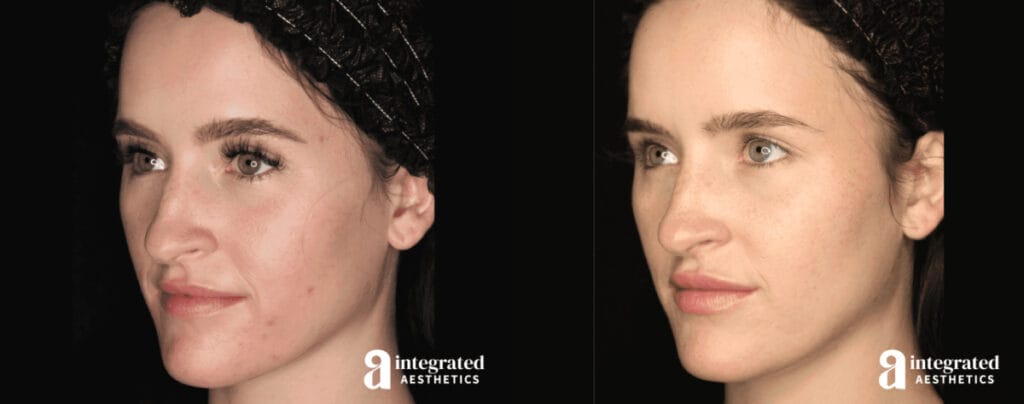
This 25-year-old female patient expressed concerns about hollow areas of her face. After a thorough evaluation, Dr. Chiang recommended a session of Sculptra for overall facial volume enhancement. The after photo was captured six months after receiving Sculptra injections.
Why Collagen is Key
Collagen is the primary structural protein in the skin that is responsible for its firmness, elasticity, and youthful resilience. However, collagen production declines with age:
By age 30, collagen production begins to slow.
By age 40, we’ve lost around 20% of our collagen.
By age 50, collagen loss can reach up to 30%.
This gradual depletion leads to hollowed cheeks, deeper nasolabial folds, and a general loss of skin firmness. That’s where Sculptra comes in—this collagen-boosting filler effectively reverses the structural loss beneath the skin.
Sculptra addresses the root cause of volume loss for a long-term solution to skin rejuvenation.
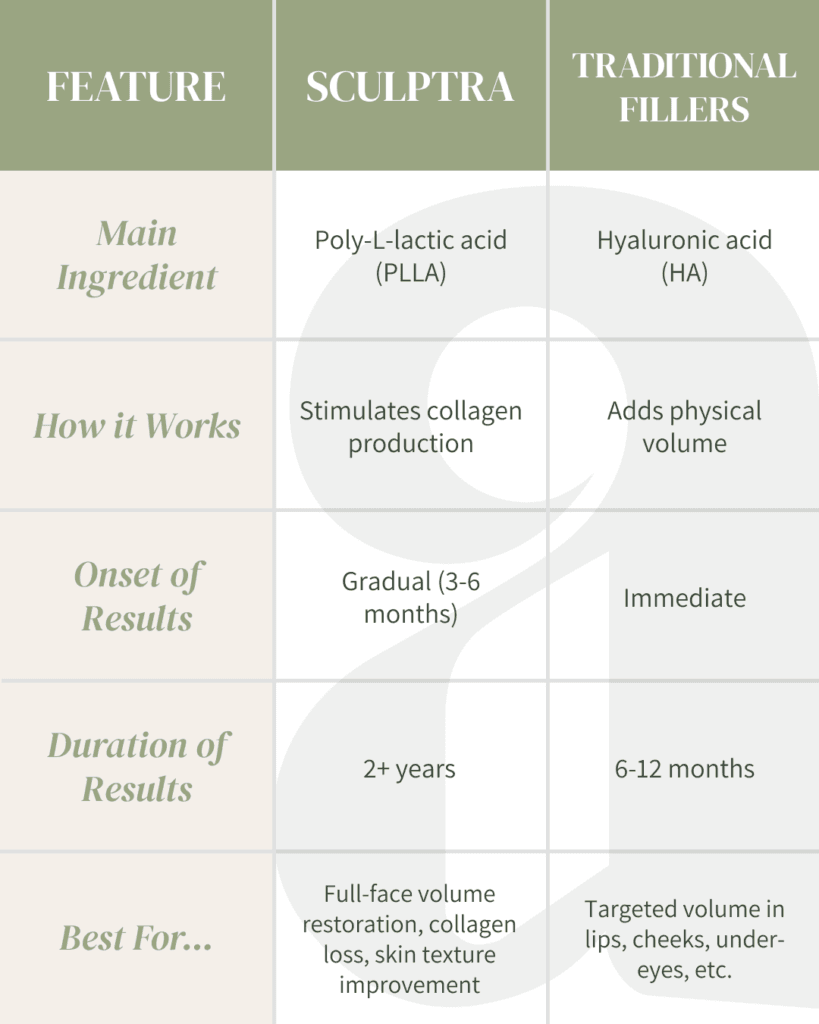
Sculptra vs. Fillers
Both Sculptra and HA dermal fillers are excellent choices for enhancing your appearance. The right one for you depends on your aesthetic goals.
Sculptra injections are an ideal choice for patients who want a gradual, softenhancement. We recommend HA fillers if you’d prefer an instant effect.
By choosing Sculptra, you’re not just filling wrinkles, you’re actively rebuilding the foundation of youthful skin. The approach to rejuvenation has several benefits:
Long-lasting results. Sculptra continues working for up to 2+ years by regenerating your own collagen. The effects of HA fillers diminish after 6 to 12 months.
Improves skin quality. Sculptra supports better skin texture, firmness, and elasticity in addition to restoring lost volume.
Natural-looking transformations. Because results appear gradually, there’s no sudden, “overfilled” look—just a smoother, firmer, more youthful skin over time.
Versatility. We see wonderful results after placing Sculptra injections around the temples, cheekbones, and jawline to enhance the midface. We also use Sculptra to treat crepey skin on the neck, décolletage, and hands, and we even use it to visibly improve the appearance of cellulite.
“I’m an injection newbie but I’ll definitely be going back for more! They literally held my hand through the whole entire process and I couldn’t be happier with my results — even though it’s probably too early to fully tell, I already see a huge difference. Overall, a 5 star experience for sure. My only regret is that I waited so long! I was impressed with everyone’s knowledge in not only injections but in overall skin care and maintenance!”
—5-star Google review
What to Expect Before, During & After Sculptra Injections
Before Your Treatment
We ask that you avoid blood thinners and alcohol for at least 24 hours before your appointment to minimize bruising—this is a standard guideline for all injectables. You and your injector will thoroughly discuss the areas you wish to improve and where your Sculptra injections will go. Your injector will then apply topical numbing cream before the injections to keep you comfortable.
During the Procedure
Sculptra filler is administered using a very fine needle to ensure ideal placement into the targeted areas. Once placed, your injector will gently massage the area for smooth distribution.
The procedure takes about 30 to 45 minutes.
Aftercare & Results
You will have mild swelling immediately after Sculptra injections, but this and any tenderness fade quickly. You’ll be asked to massage the treated areas (the “5-5-5 rule”): five times a day, for five minutes, over five days to promote even distribution—your injector will demonstrate and ensure you feel confident in your aftercare instructions!
Collagen production takes time, so you’ll notice a gradual improvement over the next few months. Most patients need 2 to 3 sessions spaced several weeks apart for optimal collagen stimulation and ideal results.
Sculptra filler is an excellent solution for men and women experiencing volume loss due to aging, weight loss, or genetics. You might be a great candidate if you:
Want a long-term solution for facial rejuvenation
Prefer gradual, natural results rather than an instant change
Have concerns about hollow cheeks, deep folds, or mild loose skin
Are looking for an alternative to traditional fillers
Traditional fillers are the way to go if you desire a more dramatic volume increase, as the effects of Sculptra are more limited than HA fillers. A consultation with one of our experienced injectors will help you determine which type of filler is right for you.
Ready to see what Sculptra injections can do for you?
If you are no stranger to the world of injectables, you probably have your go-to Botox treatments down to a science—forehead lines, crow’s feet, and frown lines. But what if we told you that Botox can do so much more than just smooth out wrinkles? From refining your jawline to stopping excessive sweating, this versatile treatment has a wide range of surprising uses that go beyond the face.
Get ready to take notes and book your next appointment, because in this blog, we are revealing all the unexpected ways Botox can enhance not just your beauty, but your overall well-being.
What is Botox and How Does It Work?
Before we dive into all the unique areas Botox can treat, let’s start with the basics. Botox is a neuromodulator that temporarily blocks nerve signals to muscles. This means it relaxes those muscles, preventing them from contracting and forming wrinkles. While it is most famous for smoothing out fine lines, its muscle-relaxing powers extend far beyond just aesthetic purposes. It is also important to know that while Botox is the most widely known brand name for neuromodulators there are others that work similarly such as:
When most people think of Botox, they immediately picture forehead lines and crow’s feet. And they are not wrong! The FDA has approved Botox for treating:
Forehead lines
Frown lines (between the eyebrows, aka “11s”)
Crow’s feet (around the eyes)
These are the most common areas people treat, but its potential goes way beyond just keeping your face looking youthful. Botox was even recently approved by the FDA to treat platysmal bands (neck bands).
Beyond Wrinkles: Unique Botox Treatment Areas
Now for the fun part! Did you know that Botox can be used for a variety of other cosmetic enhancements? Here are some unexpected areas Botox can be injected:
Jawline & Masseters: If you grind your teeth or want a slimmer jawline, Botox can relax the masseter muscles to create a more sculpted look.
Lip Flip: A little Botox above the upper lip can make lips appear fuller without the need for fillers.
Bunny Lines: Those cute (but pesky) little lines that appear when you scrunch your nose? Botox smooths them out in a snap.
Gummy Smile: If you show a lot of gum when you smile, a small dose of Botox can relax the upper lip for a more balanced look.
Chin: Botox in the chin smooths out dimpling or “orange peel” texture, softens deep lines, and relaxes an overly tense or projected chin for a more balanced, natural look. It’s a subtle tweak with a noticeable impact.
Neck Bands: Horizontal lines across the neck? Botox can help smooth them out and give them a youthful look.
Underarm & Palm Sweating: Excessive sweating (hyperhidrosis) can be a real struggle, but Botox helps by blocking sweat glands.
Shoulder Slimming & Posture Improvement: Injecting Botox in the trapezius muscles can give a more elegant neckline and relieve tension.
Medical Conditions Botox Can Treat
Botox isn’t just for beauty—it’s got some pretty impressive medical benefits too! It has been FDA-approved and widely used to treat conditions such as:
Chronic Migraines: Regular Botox treatments can significantly reduce the frequency and severity of migraines.
TMJ Disorder & Jaw Clenching: If you suffer from jaw pain, Botox can help relax the muscles and provide relief.
Hyperhidrosis (Excessive Sweating): As mentioned earlier, Botox can block overactive sweat glands in areas like the underarms, hands, and feet.
Lazy Eye & Eye Twitching: Botox can correct muscle imbalances around the eyes, reducing twitching and improving eye alignment.
What Does a Typical Botox Treatment Look Like?
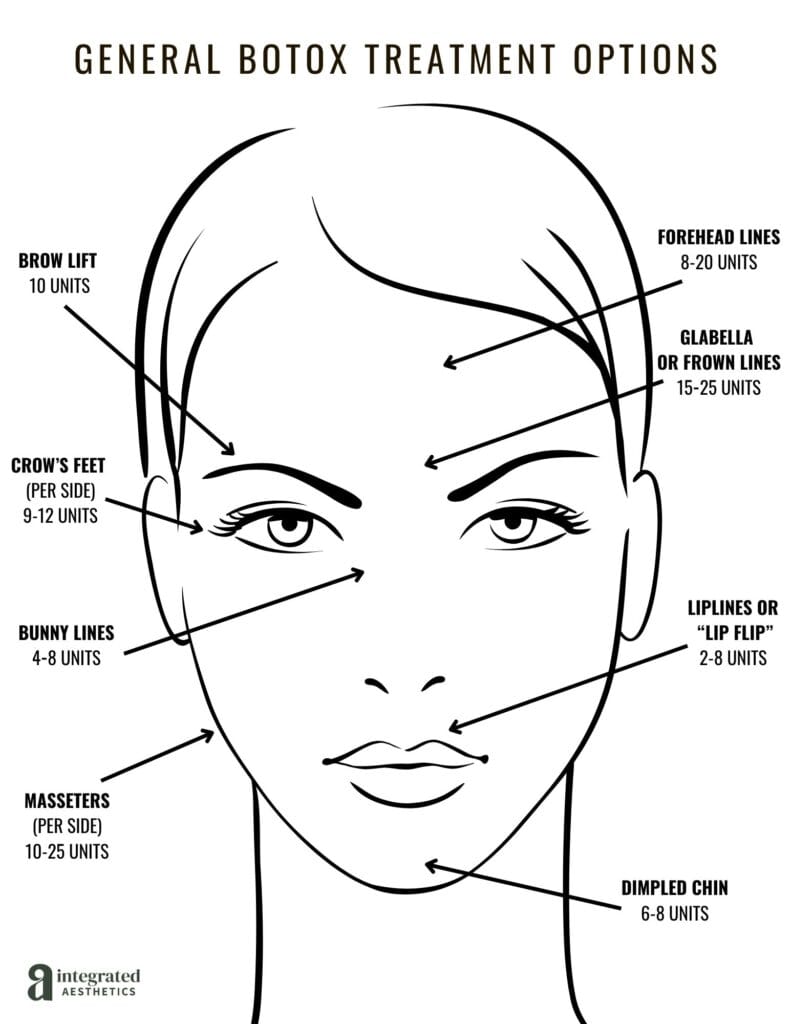
Now that we know the general and additional uses of Botox you may be wondering what a typical treatment consists of. At Integrated Aesthetics, we personalize Botox treatments based on your unique features and what you are hoping to achieve. Everyone is a little different, but the diagram below gives a general idea of the typical dosage ranges we use for most patients in the most common areas to treat the face.
Is It Worth Going Beyond the Face for Botox?
Botox is a game-changer not just for aesthetics but for overall well-being. Whether you are looking to refine your jawline, stop sweating through your favorite shirts, or finally get relief from migraines, there may be a solution for you.
If you are curious about expanding your injectable treatments beyond your face, book a consultation with one of our expert injectors today and discover how this powerful treatment can enhance more than just your skin and align with your beauty and wellness goals.
Join us for an exciting in-person event, Shrink, Tighten, and Tone - Powered by InMode,
where we introduce the latest advancements in aesthetic treatments and cutting-edge technology coming to our
practice that are designed to help you look and feel your best!
Thursday, October 17, 2024 ‘Lunch and Learn’ (12PM -1PM) and Happy Hour
(4-7PM)
Accessibility: If you are vision-impaired or have some other impairment covered by the
Americans with Disabilities Act or a similar law, and you wish to discuss potential accommodations
related to using this website, please contact our Accessibility Manager at (281) 247-5142.
Promotions
At Integrated Aesthetics, we offer our clients many ways to accomplish their goals with us through
custom treatment plans and special offers.
View our Specials