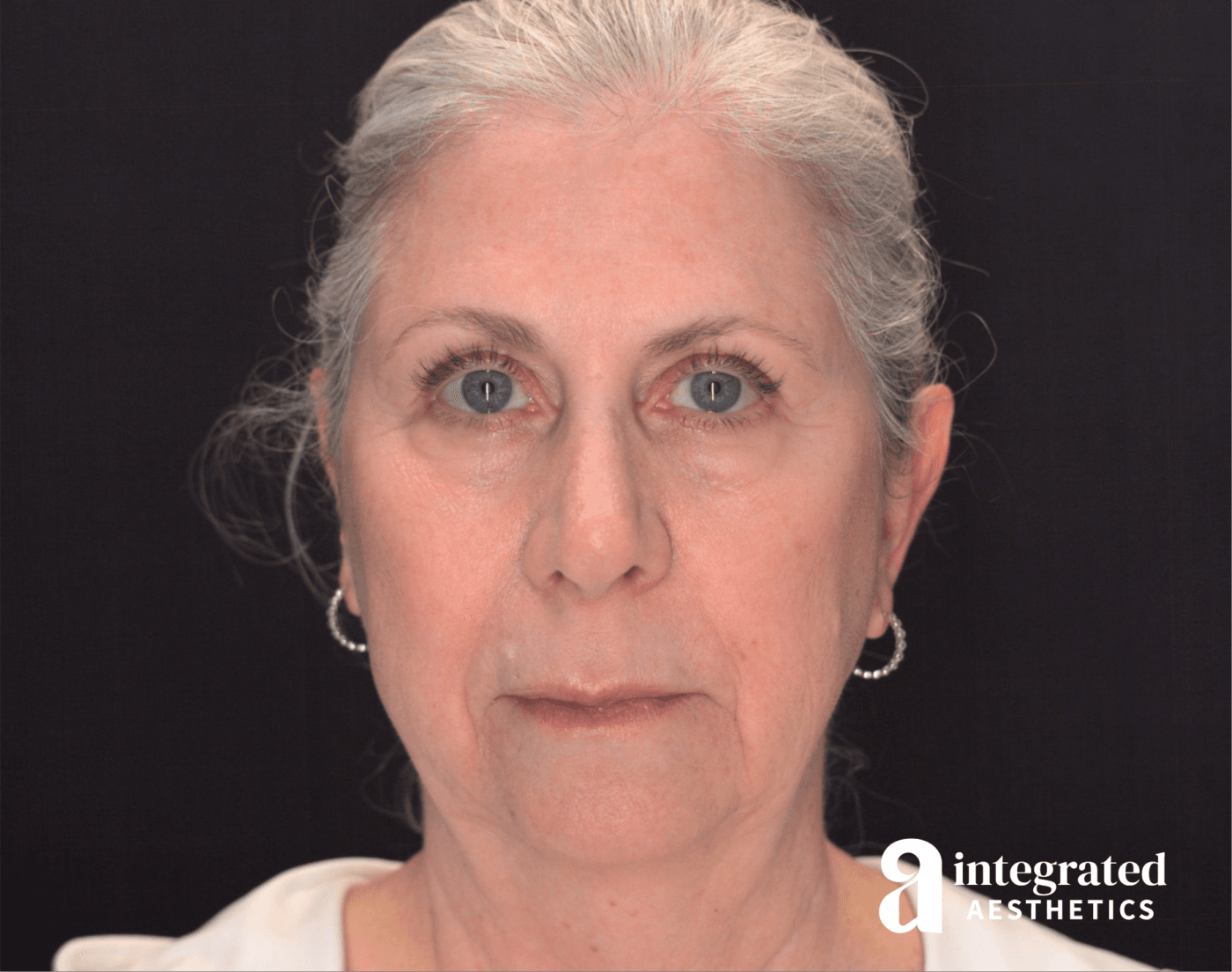
Procedure at a Glance
| Clinical Variable | Patient Case Specifications |
|---|---|
| Patient Profile | 66-Year-Old Female | Resident of Spring / The Woodlands, TX |
| Primary Concerns | Loss of lower face structural support, prominent jowling, and down-turned mouth corners creating an artificial sad resting expression. |
| Treatment Modalities | Advanced Injectable Lift: Dermal Fillers (Juvéderm® Voluma™ XC) |
| Anatomical Methodology | Full-Face Multi-Layered MD Codes™ Structural Vectoring Architecture |
| Total Product Dosage | Dermal Filler: 7 Syringes of Voluma XC (3 in midface/cheeks, 4 in chin/pre-jowl sulcus). |
| Downtime / Recovery | Minimal social downtime. Patient experienced mild localized swelling and light point-tenderness which resolved entirely within 48 hours. |
| Result Profile | Restored midface projection, crisp jawline contour, and elongated neck profile documented at 1 month post-injection. |
For patients looking to achieve significant facial rejuvenation without undergoing standard surgery, modern cosmetic medicine offers precise, multi-layered alternatives. Many patients in their 60s who come to my North Houston plastic surgery practice assume that a surgical facelift is their only option to treat a heavy jawline or sagging neck tissue. However, by applying a surgical understanding of deep facial anatomy to non-surgical structural injection techniques, we can achieve substantial lifting directly in the office.
At Integrated Aesthetics, we approach structural aging through our signature 5Rs Framework to Facial Rejuvenation. In this case study, I outline how I used R2 (Replenishing Lost Volume) using advanced injectables to design a non-surgical liquid facelift for a 66-year-old female patient from our local Spring and The Woodlands community.
Patient Presentation: Assessing the Structural Deficits of the Lower Face
When this 66-year-old patient presented to me, she expressed frustration with a heavy, tired appearance in her lower face and neck. She noted that her jawline definition had blurred over the past decade and that the down-turned corners of her mouth gave her an artificial “sad” expression at rest.
Even when designing a non-surgical treatment plan, I evaluate the face with a reconstructive surgeon’s eye. I look past surface wrinkles to examine the interconnected system of bone and deep fat pads. My clinical assessment revealed several key anatomical changes:
- Midface Deflation: Atrophy of the deep malar fat pads, which removes structural support from the midface and causes soft tissues to slide downward toward the mouth.
- Mandibular Bone Resorption: Natural bone thinning along the chin and jawline, which reduces the skeletal framework needed to keep the skin taut.
The Execution: The Precision of MD Codes Facial Balancing
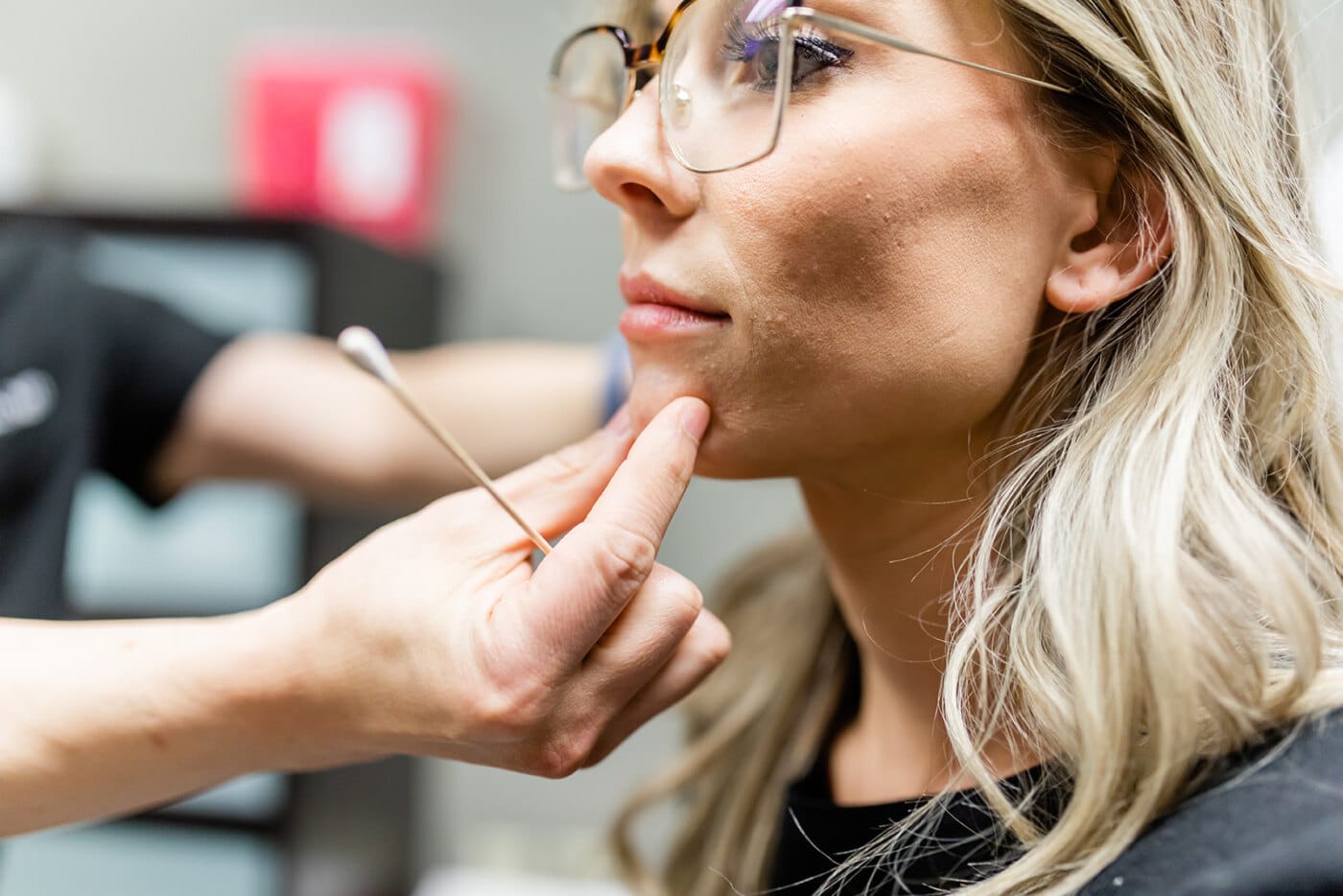
To address these underlying causes of aging without surgery, I used the MD Codes System. As a plastic surgeon, I highly value this system because it maps precise structural points across the face to rebuild support where it has been lost. This allows us to structurally “lift” the face rather than simply chasing lines, completely avoiding the overfilled, puffy appearance associated with older injection styles.
Structural Volumization and Deep Tissue Lifting (R2 – Replenish)
I began by placing Juvéderm Voluma XC, a highly cross-linked hyaluronic acid gel designed for deep structural augmentation, directly over the skeletal framework:
- Cheeks (3 Syringes total): Formulated across the lateral zygomatic arch and sub-orbicularis oculi fat pad. Rebuilding the midface structure lifts the tissues below, softening the nasolabial appearance and marionette lines without filling them directly.
- Chin and Jowls (4 Syringes total): Directed into the mental mentum, pre-jowl sulcus, and along the mandibular angle. This step projects the chin forward and strengthens the jawline, smoothing the appearance of jowls and tightening the skin along the upper neck line.
Clinical Documentation: Before and After Progress
The success of an injection treatment relies on creating natural, balanced results. This patient’s transformation shows how a customized liquid facelift can restore structure and definition to the lower face and neck, delivering a beautiful outcome that delays her need for the operating room.
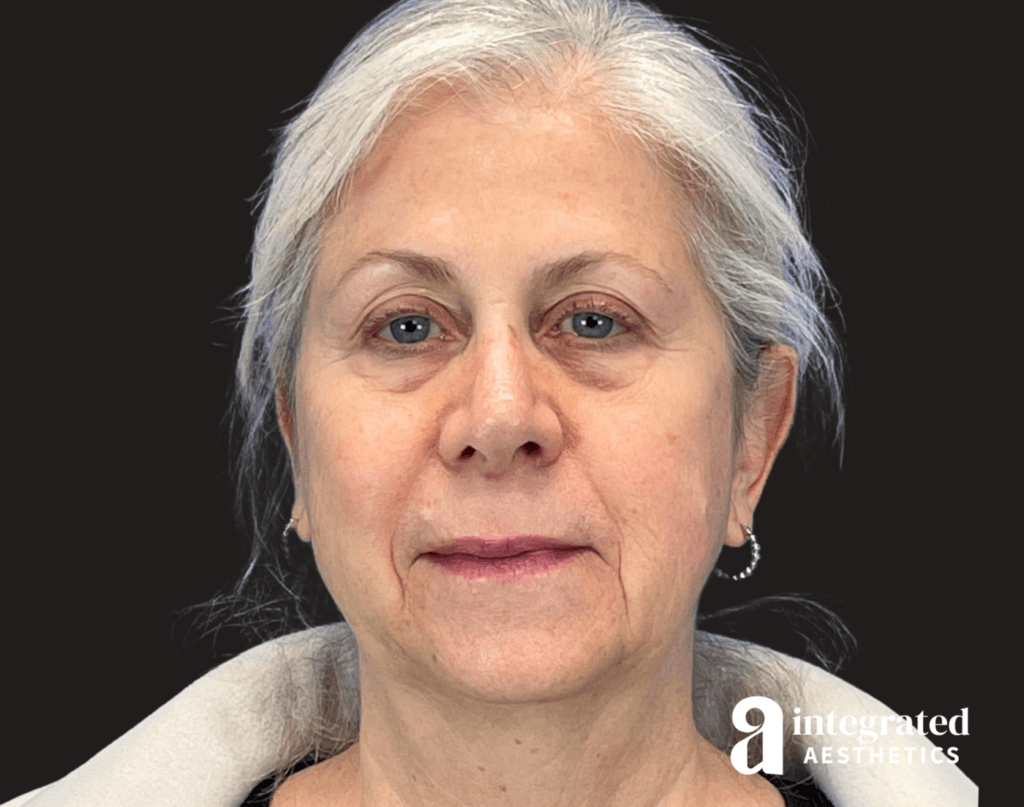
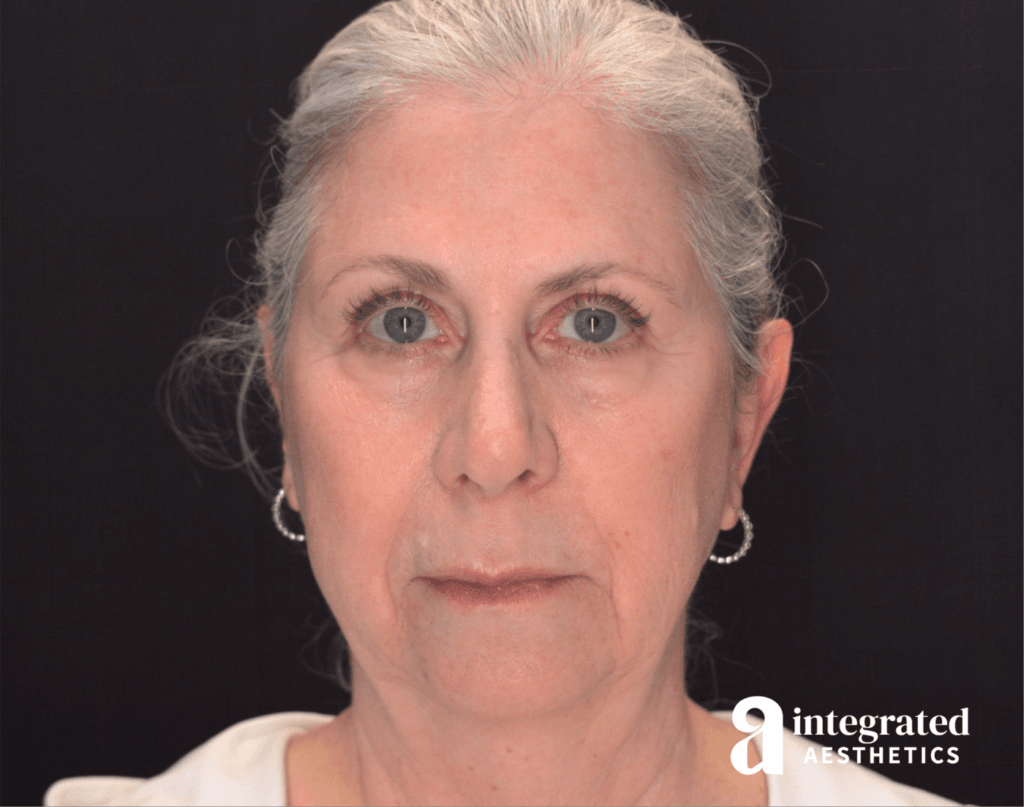
To view the un-retouched clinical photos showing this patient’s results at two months post-treatment, visit our live Integrated Aesthetics Case Gallery.
Want the Full Picture on Facial Rejuvenation?
This case study highlights what can be achieved using non-surgical injectables alone. To learn more about how we combine both surgical and advanced non-surgical treatments to completely refresh your look, read our comprehensive guide to facial optimization at Integrated Aesthetics:
→ The Complete Guide to the 5Rs of Facial Rejuvenation in Spring and The Woodlands
Frequently Asked Questions
How long do the results of a liquid facelift last?
When using a thick, premium structural filler like Juvéderm Voluma XC with the MD Codes method, the structural support along the cheeks and jawline can last up to 18 to 24 months.
Is a liquid facelift painful?
Patient comfort is our absolute priority. We apply a strong medical-grade topical numbing cream before the treatment, and the dermal fillers themselves are formulated with lidocaine (a local anesthetic) that continuously numbs the area during the injection process. Most patients describe the feeling as a mild pressure rather than sharp pain.
As a plastic surgeon, when do you recommend a liquid facelift over a surgical facelift?
A liquid facelift is an excellent option for patients with mild-to-moderate tissue laxity who want an anti-aging reset without surgical downtime, or for those who are not medical candidates for surgery. However, if a patient has severe skin redundancy and deep muscular separation in the neck, I will discuss a surgical extended facelift to achieve their long-term structural goals.