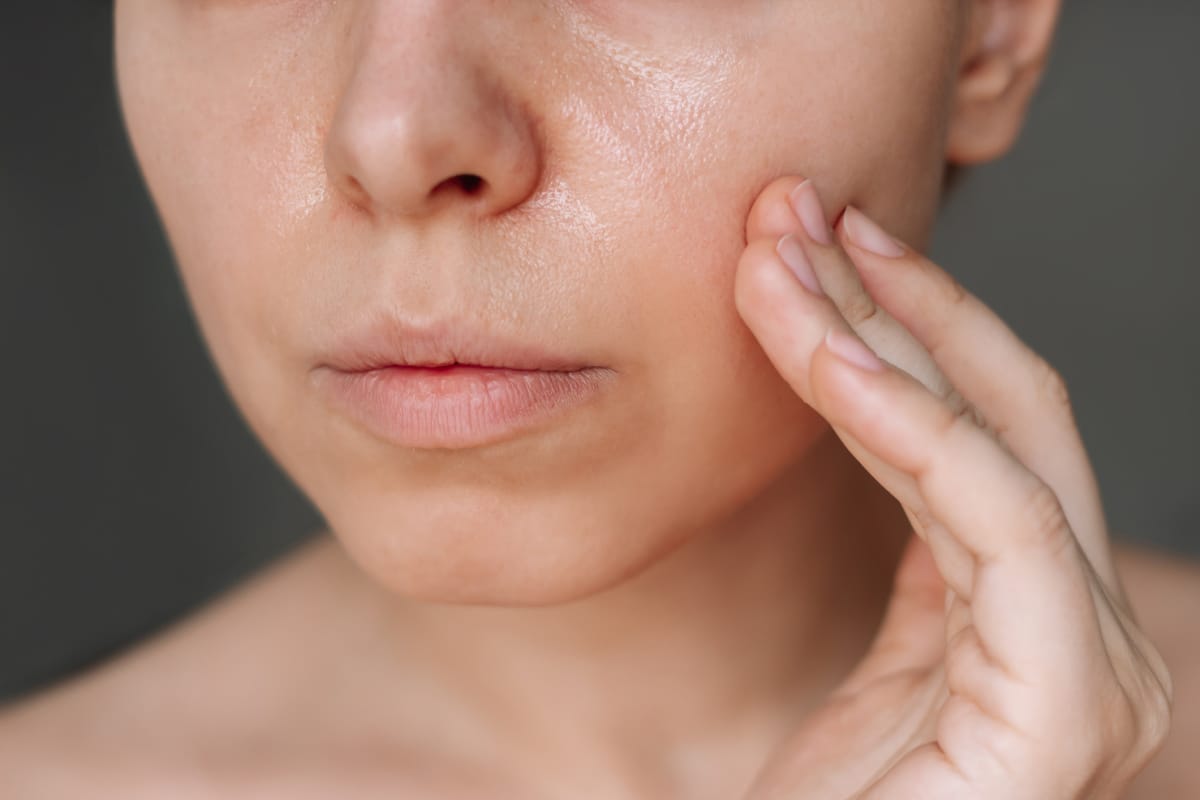
Sagging cheeks are not just about getting older. Genetics, significant weight fluctuations, sun exposure, and even sleeping position can accelerate the process. From hollowness in the temples to jowls around the jawline, skin laxity in the cheek area can take many forms, and may be treatable with a range of solutions—including some with very little to no downtime.
At Integrated Aesthetics, our team brings together plastic surgery, dermatology, and advanced medspa services under one roof. This approach means we evaluate your concerns from every angle and recommend the treatment—or combination of treatments—that works with your lifestyle and desired outcome.
From lasers to facelifts and beyond, here are seven ways we treat sagging in the cheeks.
Non-Ablative Fractional Laser Skin Resurfacing
Non-ablative fractional laser resurfacing improves skin texture without downtime. The laser energy, applied in a checkboard or “fractional pattern,” passes through the surface to stimulate collagen remodeling in the deeper layers. Because the device bypasses the outer skin layer, recovery is minimal (typically mild redness that resolves within a day or two). This process gradually improves skin texture and mild laxity.
Fractional, non-ablative laser treatments work well for patients with early signs of cheek descent who want to address fine lines and surface irregularities simultaneously. Multiple sessions spaced several weeks apart produce cumulative improvements. Non-ablative lasers won’t dramatically lift significantly sagging tissue, but they provide noticeable tightening for those with early concerns and can enhance results from other procedures.
Ablative Fractional Laser Skin Resurfacing
When sagging cheeks present alongside deeper wrinkles and significant sun damage (dark spots and discoloration), ablative fractional CO2 laser resurfacing delivers more dramatic results. This technology removes targeted columns of damaged skin while leaving surrounding tissue intact, triggering an intensive healing response that rebuilds collagen from the inside out.
Ablative laser resurfacing is best for treating:
- Deep wrinkles and creases around the cheeks
- Uneven skin texture and tone
- Moderate skin laxity
- Sun-damaged skin with pigmentation irregularities
Recovery takes longer than non-ablative treatments, so expect about a week of visible healing with redness that fades over several weeks. The trade-off is significant, however: one ablative treatment often achieves results beyond what is possible even with multiple non-ablative laser treatment sessions.
Microneedling
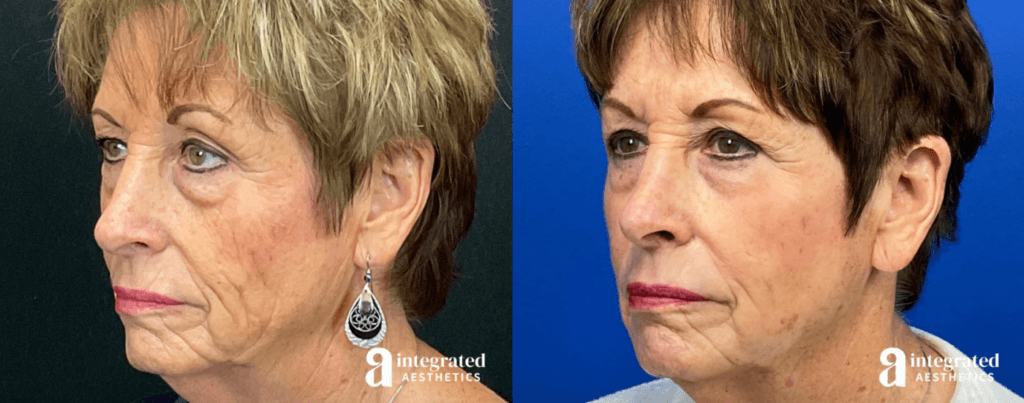
Microneedling, sometimes called the “vampire facial” when combined with platelet-rich plasma (PRP), creates controlled micro-injuries that stimulate your body’s natural repair mechanisms, flooding the treated area with increased collagen and elastin production. It works similarly to laser treatment, but instead of laser beams, it uses many very fine needles applied to the skin’s surface.
For sagging cheeks, microneedling addresses the surface-level component of skin laxity. It tightens pore appearance, smooths texture, and creates a subtle firming effect that accumulates with each session. Most patients who come to us hoping to see improvements for saggy cheeks complete a series of three to six treatments, which can be scheduled about four to six weeks apart.
The procedure takes 30 to 45 minutes, and most patients experience a day or two of mild redness and sensitivity after treatment.
Microneedling + Radiofrequency
Adding radiofrequency (RF) energy to microneedling takes collagen stimulation to a deeper level. RF microneedling devices like Morpheus8 deliver RF energy through microneedles directly into the deeper skin layers, tightening tissue from within, rather than just on the surface.
RF microneedling allows us to:
- Tighten skin at multiple depths simultaneously
- Treat both skin laxity and textural concerns in one session
- Produce results that continue improving for several months
The treatment is particularly effective for the lower face, including sagging cheeks, but also in the jowls and jawline area. Patients typically see noticeable improvement after one to three sessions, with three to five days of mild swelling and redness after each session.
Non-Surgical “Liquid” Facelifts
When patients hear “facelift,” many assume we are referencing surgery. Non-surgical facelift approaches combine highly strategic, thoughtful use of dermal fillers and collagen stimulator injections to restore volume and create lift completely without incisions or significant downtime.
A liquid facelift uses hyaluronic acid fillers and biostimulators placed at key points along the cheeks, temples, and jawline. By restoring lost volume, the skin can appear naturally lifted. The cheek area responds particularly well to this approach because much of what we perceive as “sagging” is actually loss of fat pads and skin volume in this area.
Products like Sculptra® and Radiesse® go beyond simple filling—they stimulate your body’s own collagen production for results that improve over time and can last two years or more. Together with hyaluronic acid fillers, the tools allow our expert injectors to create an artful plan based on your unique anatomy.
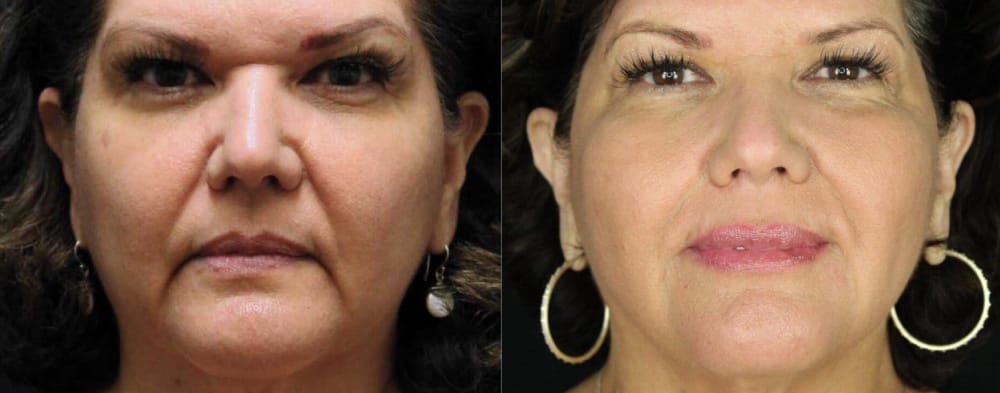

“Dr. Cho is nothing short of an artist with fillers. My face looked so much younger after he injected my tear troughs, cheeks, and nasolabial folds. He was also very patient in answering my questions in a way that was easy to understand, and I never felt rushed. The patient coordinator was great too. It was a 5-star experience!”
Non-Surgical Skin Tightening
Energy-based skin-tightening devices have advanced dramatically in recent years. Several technologies now offer significant lifting and firming with minimal downtime and without traditional surgery.
Sofwave (Non-Invasive)
Sofwave uses synchronized ultrasound parallel beam (SUPERB™) technology to heat the mid-dermal tissue layer at a precise depth of 1.5mm—the optimal zone for stimulating new collagen production. It’s built-in cooling mechanism protects the skin surface while delivering effective energy to deeper tissues. The result is a treatment that tightens and lifts with virtually no downtime. Most patients return to normal activities immediately after their session.
For sagging cheeks specifically, Sofwave addresses mild to moderate laxity and can also improve the appearance of jowling along the jawline. Results begin appearing within one week and continue improving for up to 12 weeks as collagen regenerates. Many patients achieve their desired outcome with a single treatment.
Ultherapy (Non-Invasive)
Ultherapy uses focused ultrasound energy to target the deep foundational layers of facial tissue with a device applied to the skin’s surface. By heating tissue at precise depths, Ultherapy triggers a natural lifting and tightening response.
The treatment is FDA-cleared for lifting the cheeks, brow, and neck. Results develop gradually over two to three months as new collagen forms. While one treatment is often sufficient, some patients benefit from a second session.
FaceTite (Minimally Invasive)
FaceTite uses radiofrequency-assisted lipolysis (RFAL) to tighten skin from the inside. A tiny probe inserted beneath the skin delivers controlled RF energy while an external electrode monitors temperature for optimal safety and effectiveness.
FaceTite produces results comparable to a surgical facelift for appropriate candidates—those with moderate skin laxity who aren’t ready for surgery. The treatment requires only local anesthesia, and recovery takes about one to two weeks.
Thread Lifts
PDO thread lifts and Silhouette InstaLift use dissolvable threads placed beneath the skin to provide an immediate, direct lift of the cheek skin while stimulating collagen production throughout the treated area.
Thread lifts work by:
- Physically repositioning descended tissue
- Creating a scaffolding that supports the cheeks
- Stimulating elastin and collagen where the threads are placed
- Producing results that last 12 to 18 months or longer
The procedure takes about 30 to 60 minutes under local anesthesia. While there is some initial swelling and potential bruising, most patients return to normal activities within a few days. Thread lifts are particularly appealing to patients who want more of a vertical lift than fillers provide, but are not ready for surgical intervention.
Surgical Facelift
When sagging has progressed beyond what non-surgical options can effectively address, a surgical facelift provides the most comprehensive, customized, and long-lasting correction.
Dr. Young Cho, our board-certified plastic surgeon with more than 20 years in aesthetics, customizes each facelift to your specific anatomy and goals. Modern techniques address not just skin but the deeper muscular layer (SMAS), repositioning tissues for natural-looking results that age gracefully.
Who Benefits Most from Surgical Facelifts
- Individuals with jowling and neck sagging in addition to cheek sagging
- Those seeking long-lasting results (typically 10+ years)
- Patients with significant skin laxity that does not respond adequately to non-surgical treatments
- Patients who have maximized results from non-surgical options and want more dramatic improvement
Recovery from a facelift takes approximately two weeks before returning to most activities, with continued healing over several months. When performed by an experienced surgeon, results look refreshed and natural rather than “done.”
“Great experience as a first timer. I barely waited to be helped when I checked in. The staff and Dr. Young Cho were all very friendly and helpful. I especially loved how Dr. Young Cho really took his time to explain my procedures with me as well as my treatment options. I had a great visit and the doctor’s demeanor has really put me at ease so I highly recommend this medical spa, whenever you need to discover the new you!”
Every face tells a different story, and every treatment plan should be equally individual. Our practice combines aesthetic dermatology expertise from Dr. Melissa Chiang alongside Dr. Cho’s surgical precision. As our patient, you are not limited by one provider’s specialty perspective—you get recommendations based on what will actually deliver the results you want.Contact us via our online form or call (281) 845-6083 to schedule your consultation. We see patients at our Spring and The Woodlands locations.